 EN
EN

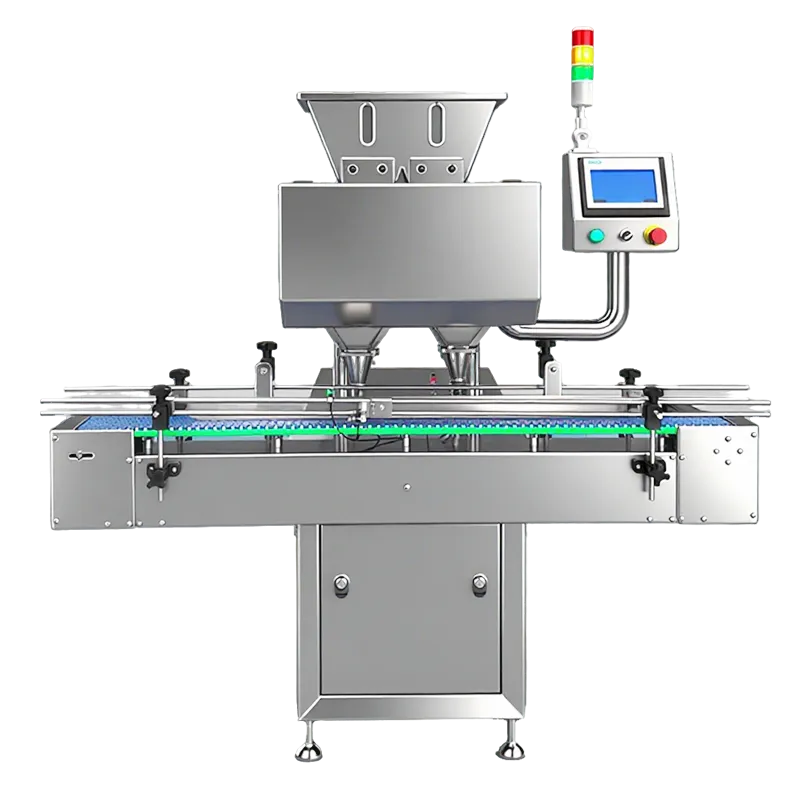
Maintenance Tips to Extend the Life of Your Tablet Counting Machine
By Dr. Mei Lin Chen — Pharmaceutical Equipment Maintenance Engineer
Properly maintained tablet counting machines deliver 10–15 years of reliable service. Those receiving inconsistent or neglectful maintenance develop accuracy drift, unplanned downtime, and premature component failure within 3–5 years. The difference between these outcomes comes down to systematic maintenance discipline—not expensive service contracts, but consistent execution of fundamental care practices that any production team can implement.
Daily Maintenance Tasks
These tasks take 15–20 minutes at the start and end of each production shift. Consistency matters more than duration.
- Clean counting heads and detection channels: Use compressed air (filtered, oil-free) to blow out tablet dust and powder residue from optical sensor windows, counting channels, and vibratory feeder tracks. Powder buildup is the leading cause of counting inaccuracy drift over time.
- Wipe down product contact surfaces: Use lint-free wipes with 70% isopropyl alcohol on all stainless steel surfaces that contact tablets or capsules. This prevents cross-contamination between batches and maintains GMP compliance.
- Inspect and empty the reject collection bin: Verify the reject mechanism is functioning by observing at least one automatic rejection cycle during startup. A blocked reject chute causes off-count bottles to proceed downstream.
- Check compressed air supply: Verify air pressure meets the manufacturer's specification (typically 0.4–0.6 MPa). Low air pressure weakens rejection mechanisms; excessive pressure causes premature wear on pneumatic seals.
- Run a verification count: Count a known quantity of tablets (typically 100) through the machine and verify accuracy. Record results in the daily maintenance log. Any deviation exceeding 0.1% triggers investigation before production begins.
Weekly Maintenance Tasks
Weekly tasks require 30–45 minutes and should be performed during a scheduled maintenance window, typically during the least productive shift or a planned changeover.
- Inspect vibratory feeder tracks: Remove the feeder assembly and inspect for wear, pitting, or coating damage on the track surface. Worn tracks cause tablet tumbling and inconsistent feeding, degrading counting accuracy. Replace tracks showing visible wear patterns.
- Calibrate optical sensors: Use the manufacturer's calibration tool or reference standard to verify each counting head's sensor alignment. Misaligned sensors cause double-counting or missed registration of small tablets.
- Lubricate moving components: Apply food-grade lubricant to guide rails, bearings, and sliding surfaces. Avoid over-lubrication, which attracts powder buildup. Follow the manufacturer's lubrication chart for specific points and grease types.
- Verify servo motor positions: Run the machine through a positioning cycle and verify gate timing accuracy using the diagnostic display. Servo drift causes tablets to misdirect during bottle positioning.
- Review error logs: Download and review the machine's error log for the week. Recurring fault codes (e.g., "feeder overload," "sensor blockage," "reject mechanism timeout") indicate developing issues that warrant investigation before they cause unplanned downtime.
Monthly and Quarterly Maintenance
Deeper maintenance activities require 2–4 hours and should be planned in advance with spare parts on hand.
Monthly Tasks
- Inspect and tighten electrical connections: Vibration from production gradually loosens terminal blocks and connector plugs. Systematically check and tighten connections in the control cabinet, paying particular attention to sensor cables and motor power leads.
- Check and adjust belt tension: Drive belts on conveyor sections and transfer mechanisms stretch over time. Loose belts cause slippage and timing errors; over-tensioned belts accelerate bearing wear. Adjust to manufacturer's deflection specification.
- Inspect pneumatic system: Check air filter elements, regulator function, and pneumatic cylinder operation. Replace filter elements quarterly—clogged filters reduce air quality and damage pneumatic components.
- Test emergency stop circuits: Verify all e-stop buttons and safety interlocks function correctly. Record test results in the safety system log as required by OSHA and GMP documentation standards.
Quarterly Tasks
- Replace wear components: Counting track inserts, vibrator dampers, and reject mechanism seals have defined service intervals. Replace proactively rather than waiting for failure. According to QYResearch, consumables and replacement parts represent 10–15% of recurring revenue for counting machine manufacturers.
- Perform full accuracy validation: Run a statistically significant sample (minimum 1,000 bottles) and verify counting accuracy against a reference standard. Document results for regulatory audit purposes.
- Update firmware and software: Install manufacturer-recommended firmware updates. These often include improved counting algorithms, enhanced error detection, and security patches.
- Inspect frame integrity: Check for loose frame bolts, cracked welds, or structural deformation. Machine vibration over months can cause structural fatigue that affects alignment and accuracy.
Annual Maintenance and Calibration
Annual maintenance should be performed by a qualified technician—either in-house or from the manufacturer's service team. This comprehensive review requires 1–2 days.
| Task | Purpose | Typical Duration |
|---|---|---|
| Full optical system recalibration | Restore original detection sensitivity and eliminate accumulated drift | 2–3 hours |
| Servo motor calibration | Re-zero positioning references and verify movement accuracy | 1–2 hours |
| PLC program backup | Create complete backup of machine parameters, recipes, and logic | 30 minutes |
| Comprehensive mechanical overhaul | Replace all wear items, inspect bearings, verify alignment | 4–6 hours |
| Validation requalification (OQ) | Re-document that the machine meets specified performance criteria | 2–4 hours |
Common Maintenance Mistakes to Avoid
Production teams frequently develop habits that seem efficient but cause long-term damage:
- Using unfiltered compressed air: Shop air containing oil, water, or particulate contamination blows contaminants directly into optical sensors and precision mechanisms. Always use filtered, oil-free air for cleaning.
- Spraying cleaning solution directly on sensors: Liquid entering optical housings causes corrosion and short circuits. Spray cleaning solution onto wipes, not onto the machine.
- Skipping the verification count: Production pressure often tempts operators to skip the startup verification count. This single omission allows accuracy drift to persist undetected for entire shifts.
- Deferring error log review: Error logs reveal developing problems before they cause downtime. Reviewing logs weekly—rather than when a breakdown occurs—transforms reactive maintenance into preventive maintenance.
- Using incorrect spare parts: Substituting non-OEM counting tracks or sensors may save 20% on parts cost but introduces dimensional variations that degrade accuracy and accelerate wear.
Building a Maintenance Culture
Equipment longevity depends as much on organizational culture as on technical procedures. The most successful pharmaceutical manufacturing facilities share these characteristics:
- Maintenance logs are treated as regulatory documents—completed, reviewed, and retained with the same discipline as batch records.
- Operators are trained not just to run the machine but to perform daily maintenance tasks and recognize early warning signs of developing issues.
- Spare parts inventory is maintained at documented minimum levels, with automatic reordering triggers when stock falls below threshold.
- Service intervals are scheduled in the production planning system, not deferred indefinitely when production demand is high.
A machine receiving disciplined maintenance produces accurate counts year after year, passes regulatory inspections without findings, and operates at peak efficiency throughout its service life.
Source: QYResearch Global Tablet and Capsule Counter Market Report, 2025; FDA 21 CFR Part 211 Subpart G (Dec. 2024)
Get Expert Maintenance Support
Whether you need spare parts, technical manuals, on-site maintenance service, or guidance on setting up a preventive maintenance program for your tablet counting equipment, our technical support team is available. With 20+ years of pharmaceutical machinery manufacturing experience and equipment in 50+ countries, we provide comprehensive after-sales support including remote diagnostics, annual service visits, and OEM spare parts. Contact us at tel: +86-13868159610 or email: [email protected] to discuss your maintenance requirements.