 EN
EN

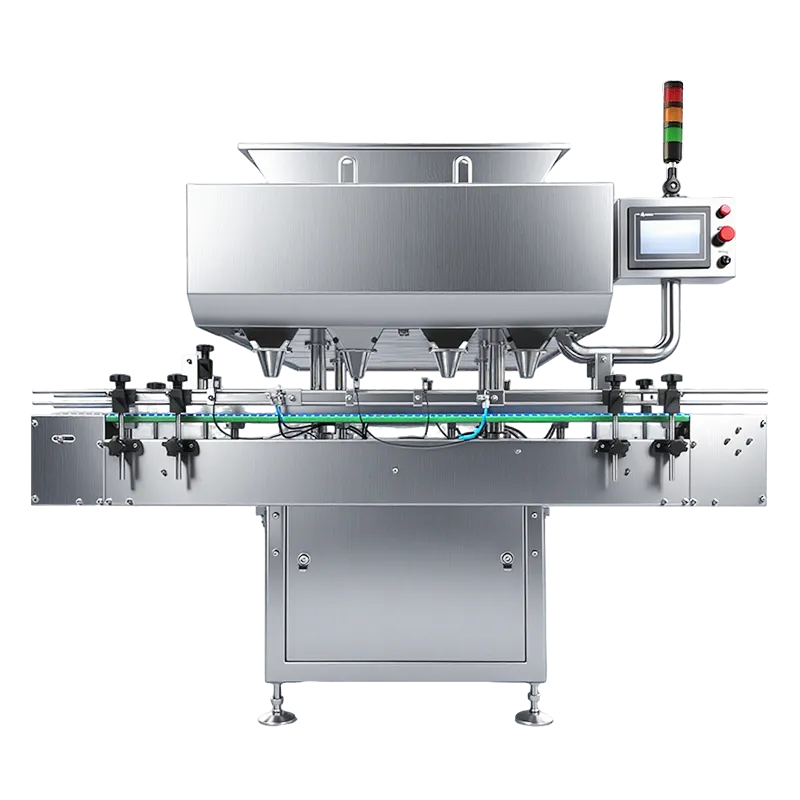
The Evolution of Capsule Counting Equipment in Pharma Industry
By Oliver Hoffmann — Pharmaceutical Machinery Historian and Industry Analyst
Capsule counting equipment has evolved from hand-operated tray counting in the 1940s to today's fully automated multi-lane systems processing 500+ capsules per minute with 99.95% accuracy. This progression mirrors the pharmaceutical industry's broader transformation from craft-scale production to industrial-scale manufacturing serving global markets. Understanding this evolution helps procurement teams appreciate the engineering behind modern equipment and make informed decisions when investing in counting technology.
The Manual Era: 1940s–1970s
For the first three decades of pharmaceutical capsule production, counting was entirely manual. Operators used counting trays with etched grids, visually verifying counts before filling bottles by hand. This method had several inherent limitations:
- Variable accuracy: Fatigue, distraction, and visual similarity between capsule sizes produced error rates of 3–5%. Pharmacists routinely overfilled to compensate.
- Throughput ceiling: A skilled operator counted 20–40 capsules per minute, limiting daily output to a few thousand bottles per shift.
- No documentation: Counting results existed only in the operator's memory and handwritten batch records. Statistical verification was impossible.
- Contamination exposure: Open tray handling exposed capsules to environmental contamination and operator-borne particulates.
- Format limitations: Each capsule size required a different tray grid. Changeovers involved locating and cleaning the correct tray—a manual, error-prone process.
Despite these limitations, manual counting persisted well into the 1970s because pharmaceutical production volumes had not yet reached the scale that would justify automated investment. The regulatory landscape also lacked the explicit accuracy documentation requirements that would later drive automation adoption.
The Semi-Automatic Transition: 1970s–1990s
The introduction of vibratory feeding technology in the 1970s marked the first significant departure from manual counting. Semi-automatic machines used a vibratory bowl feeder to singulate capsules, passing them through a mechanical or photoelectric counting gate. The operator loaded product and handled bottle placement, but the machine performed the actual count.
Key milestones during this period included:
- Photoelectric counting: Infrared beam interruption technology replaced mechanical counters, enabling non-contact detection and significantly reducing wear-related accuracy drift.
- Automatic bottle positioning: Pneumatic cylinders positioned bottles under the counting chute, eliminating manual placement variation.
- Batch documentation: Electronic counters displayed total counts on digital readouts, enabling operators to record production data more accurately than handwritten logs.
- Multi-lane introduction: Two-lane configurations appeared in the late 1980s, doubling throughput without doubling floor space requirements.
- Stainless steel construction: Adoption of 304 and 316 stainless steel for product contact surfaces addressed growing GMP requirements for cleanable, non-reactive materials.
Semi-automatic machines reduced error rates to 0.5–1% and increased throughput to 100–300 capsules per minute. This was the first generation of equipment that made pharmaceutical-grade counting accessible to mid-sized manufacturers and contract packaging organizations.
The Automatic Revolution: 1990s–2010s
The 1990s brought the transition from semi-automatic to fully automatic counting systems. Several converging factors drove this revolution:
- Production scale-up: Global pharmaceutical demand grew rapidly, particularly in generic drug manufacturing. Facilities producing millions of capsules daily required counting systems that could keep pace.
- Regulatory pressure: FDA enforcement of 21 CFR Part 211 intensified through the 1990s, with specific emphasis on packaging accuracy documentation. Automatic machines with electronic audit trails satisfied these requirements in ways manual processes could not.
- Servo technology: The availability of affordable, reliable servo motors enabled precision positioning that pneumatic systems could not match. Gate timing accuracy improved from ±5mm to ±0.1mm.
- PLC integration: Programmable Logic Controllers (PLCs) replaced relay logic, enabling recipe storage for different capsule formats, automatic format changeover sequences, and real-time production monitoring.
| Era | Counting Method | Throughput | Accuracy | Key Innovation |
|---|---|---|---|---|
| 1940s–1970s | Manual tray | 20–40 /min | 95–97% | Etched grid trays |
| 1970s–1990s | Semi-automatic (photoelectric) | 100–300 /min | 99–99.5% | Vibratory feeding + IR detection |
| 1990s–2010s | Fully automatic (multi-lane) | 300–500 /min | 99.8–99.9% | Servo drive + PLC control |
| 2010s–Present | Vision-based automatic | 400–500+ /min | 99.95%+ (±0.1%) | CCD/CMOS camera + AI vision |
The Current Generation: Vision Systems and Industry 4.0
Modern capsule counting machines represent the convergence of multiple advanced technologies. According to Dataintelo's 2025 market analysis, automatic counting machines hold 58.3% of the global market share, valued at approximately $1.63 billion. The global tablet and capsule counting machine market is projected to grow from $618 million in 2025 to $816 million by 2032, driven by regulatory requirements and automation demand.
Defining features of current-generation equipment include:
- High-resolution vision systems: CCD or CMOS cameras capture individual capsule images during counting, enabling real-time verification of shape, color, size, and integrity. Fragments, halves, and wrong-color capsules are automatically rejected at production speed.
- AI-powered defect detection: Machine learning algorithms trained on thousands of defect images identify subtle quality issues that traditional threshold-based detection misses—hairline cracks, surface blemishes, and dimensional variations within tolerance.
- Serialization integration: Camera-based reading of 2D data matrix codes on individual bottles supports track-and-trace compliance under the Drug Supply Chain Security Act (DSCSA) and EU Falsified Medicines Directive (FMD).
- Industry 4.0 connectivity: OPC UA and MQTT protocols transmit real-time production data to MES and SCADA systems, enabling OEE monitoring, predictive maintenance alerts, and remote diagnostics by manufacturer service teams.
- Modular architecture: Systems designed for incremental expansion—adding lanes, vision inspection, or serialization modules—as production volumes grow, protecting capital investment.
Regional Market Evolution
The geographic center of capsule counting equipment manufacturing has shifted significantly. European manufacturers (Cremer, IMA Group) dominated the premium segment through the 2000s, commanding prices of $200,000–$500,000+ for fully automatic systems. Japanese manufacturers (Kirin, Seikan) occupied a mid-tier position.
Since 2010, Chinese manufacturers have emerged as a competitive force. According to IndexBox, China's automatic tablet counting system market grew at 8–11% annually from 2020 to 2025, driven by the country's pharmaceutical modernization plan. Chinese manufacturers now offer fully automatic systems at $80,000–$150,000—delivering comparable throughput and accuracy to European systems at 40–60% of the price, while increasingly matching the compliance documentation and certification packages that regulated markets require.
Asia Pacific holds 38.2% of the global tablet counters market share in 2025, with pharmaceutical manufacturing hubs in India, China, Vietnam, and Japan driving demand. The nutraceutical segment is growing at 8.3% annually, faster than the overall market rate of 6.2%.
What the Future Holds
Several trends will shape the next decade of capsule counting equipment development:
- Further AI integration: Machine learning models will move from defect detection to predictive process optimization—automatically adjusting vibratory feed parameters based on capsule characteristics and environmental conditions.
- Sustainability engineering: Energy-efficient servo systems, reduced compressed air consumption, and equipment designed for component-level repairability rather than module-level replacement will respond to environmental regulatory pressures.
- Continuous manufacturing alignment: Counting systems will evolve from batch-oriented operation to continuous flow, integrated directly with upstream capsule filling and downstream packaging without batch-level interruptions.
- Small-batch flexibility: Modular, tool-less changeover systems will make fully automatic counting economically viable for manufacturers producing multiple small-batch products, a segment currently served by semi-automatic equipment.
Source: Dataintelo Global Electronic Tablet and Capsule Counting Machine Market Report, 2025; QYResearch Global Tablet and Capsule Counter Market Report, 2025; IndexBox China Automatic Tablet Counting System Market Analysis, 2025
Choose Equipment Grounded in Decades of Innovation
The evolution of capsule counting technology has produced machines of remarkable precision, reliability, and compliance capability. Selecting a manufacturer that understands this evolution—and builds equipment incorporating lessons learned across decades—ensures your investment delivers value throughout its service life. With 20+ years of manufacturing experience, CE and ISO 9001 certifications, and equipment operating in 50+ countries, our engineering team designs counting systems that represent the current state of the art. Contact us at tel: +86-13868159610 or email: [email protected] to discuss your capsule counting requirements.