 EN
EN

Accuracy, Speed, and Reliability: Evaluating Core Performance of a Tablet Counting Machine
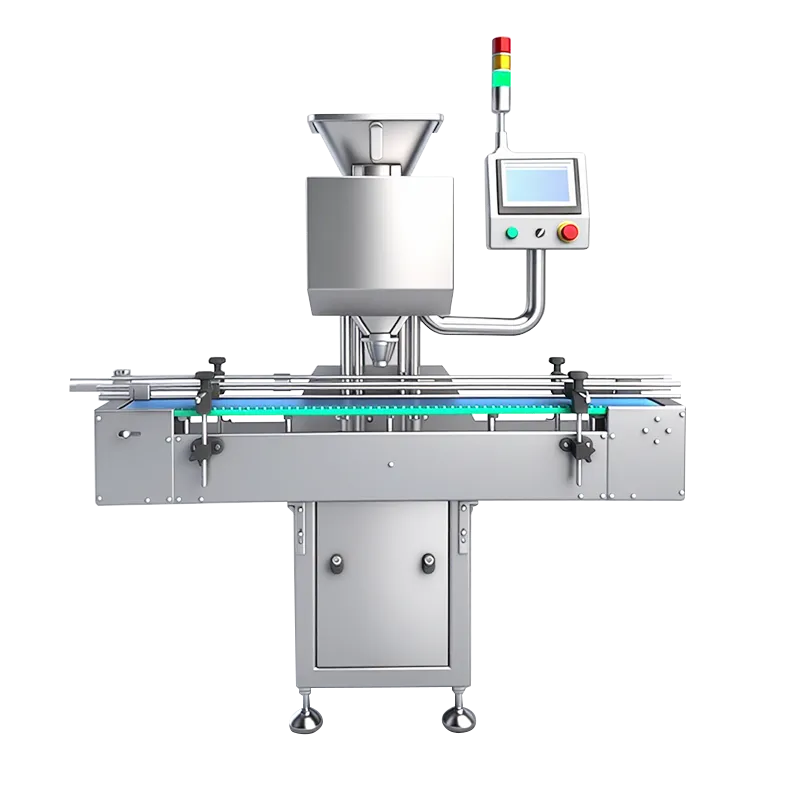
Pharmaceutical vs. Nutraceutical Requirements: Accuracy Thresholds and Regulatory Implications
The pharmaceutical industry needs at least 99.9% accuracy when counting pills because getting this wrong can literally cost lives. The FDA requires this level of precision for good reason. If companies fail to meet these standards, they face serious problems like product recalls and massive fines sometimes running into hundreds of thousands of dollars according to recent FDA reports. Nutraceutical makers don't need such strict controls though. Most supplement producers work with around 98 to 99% accuracy since their products aren't intended to treat diseases. Still some smart companies in the nutrition space are starting to adopt stricter standards similar to those in drug manufacturing. Why? Well consumers want better quality control these days, and nobody wants bad publicity from defective products. The difference between these industries comes down to how regulatory bodies classify errors. Mistakes in medication counting are considered major safety issues under pharmacopeia guidelines, while supplements fall into a different category with much looser rules governing them.
Real-World Performance Gaps: Why Lab-Claimed 99.9% Accuracy Often Falls Short with Mixed-Size Tablets
Lab tests just don't capture how things really work out there in the field. Take mixed tablet processing for instance. When dealing with different sizes at once like those 5mm round ones alongside 10mm oblong tablets, sensor calibrations tend to drift off track, cutting accuracy somewhere around half a percent to maybe 1.2%. The Ponemon Institute looked into this back in 2023 and found similar results. Photoelectric sensors struggle when faced with shiny coatings on pills, while vibration feeders get stuck trying to handle all sorts of odd shapes. Even though manufacturers are rolling out fancy multi-spectrum sensors these days along with AI that adjusts itself dynamically, most plants still see their output drop by about 15 to 22% whenever they switch between different sized batches compared to running everything uniform. What works best? Getting that mechanical calibration right from the start and keeping it consistent over long production runs helps keep errors below 0.1%, which finally brings laboratory promises closer to what actually happens on factory floors.
Pill Compatibility and Physical Adaptability of the Tablet Counting Machine
Handling diverse dosage forms: tablets, capsules, softgels, and fragile or irregularly shaped pills
Today's tablet counters need to handle all kinds of oral meds without messing up counts or damaging products. We're talking everything from regular pills to those tricky softgels and capsules that can roll away if not handled right. The weird shapes like scored tablets or ones that are concave really throw off the count sometimes. Softgels get squished easily when there's too much shaking or pressure during processing. Good quality machines tackle these issues with settings that adjust how they vibrate, special hopper designs that stop tablets from piling up, and counting areas that rotate gently so things line up properly. Before buying, it's smart to actually test run the machine with whatever products will be used daily. Reading specs alone won't tell the whole story because real world batches of mixed medications behave completely differently compared to what happens in clean lab conditions.
Sensitivity to size, color, texture, and surface reflectivity – and how modern sensors compensate
Old school counting systems had real trouble dealing with different physical characteristics. Dark colored tablets would soak up infrared light, shiny surfaces caused all sorts of false reflections, and textured finishes just confused the sensors completely. These issues led to error rates as high as 5% in many older machines according to a study from PharmaTech Journal back in 2023. Modern top tier equipment now combines multiple sensing technologies together. They integrate high resolution cameras with photoelectric sensors and special polarized lighting setups to cancel out these problems. Smart software looks at color changes and how objects relate to each other in space when counting pills that overlap. For those tricky porous or matte finish tablets, 3D depth sensors create detailed maps of their surfaces. All this tech adds up to better than 99.5% accuracy even when dealing with all kinds of different tablet types, and no need for constant manual adjustments anymore.
Operational Integration: Capacity, Changeover, and Packaging Flexibility
Matching throughput to production scale – from pilot batches to high-volume cGMP lines
Getting the right throughput means matching it to actual operations rather than just looking at paper numbers. Equipment made for small test runs under 50 thousand units daily focuses on being adaptable, but these same machines can't keep up when things ramp up to over half a million units per day on full scale cGMP production lines. When companies underestimate their needs, they end up waiting forever for products to come out. On the flip side, buying way bigger machinery than needed costs extra money and takes up valuable factory space that could be used elsewhere. That's where modular setups really shine because they let businesses grow incrementally by simply adding new counting stations as demand increases. Big production lines need reliable machines capable of handling between 100 to 300 bottles every minute while keeping errors below 0.1 percent. Even tiny mistakes here can lead to product recalls which are incredibly expensive. According to recent research from Ponemon in 2023, each recall incident costs manufacturers around seven hundred forty thousand dollars a year. This makes getting the throughput right not just important for running smooth operations, but also critical for protecting company finances.
Seamless changeover between bottle, blister, and pouch packaging formats
These days packaging flexibility isn't just nice to have anymore but absolutely necessary if companies want to stay compliant with regulations while keeping costs down. When workers manually switch between different packaging formats, each change takes anywhere from half an hour to almost forty five minutes every single shift. Multiply that across all shifts throughout the year and we're talking about well over 260 wasted hours annually. Switching to automated systems that don't require tools cuts those changeover times down to less than five minutes total. According to recent data from Operations Benchmark 2024, this saves manufacturing plants upwards of fifty eight thousand dollars just on labor costs alone. What makes these systems work so well? They come equipped with smart sensors capable of identifying various container shapes automatically, plus they use servo motors instead of traditional mechanical parts which means no tedious readjustments when switching between products either.
Compliance, Support, and Total Cost of Ownership for Your Tablet Counting Machine
When looking at costs beyond what's listed on the price tag, there are really three main things worth considering: how well something meets regulations, the level of support from suppliers, and what it actually costs to own over time. Regulatory compliance isn't just ticking boxes once and forgetting about it. Companies need to keep records updated, be ready for audits at any moment, and set aside money for new validations as business practices change through the years. Vendor support makes all the difference when machines stop working. Look for suppliers who can diagnose problems remotely fast, provide hands-on training sessions, and promise parts will be available whenever needed. This kind of support helps keep operations running smoothly without unexpected shutdowns costing thousands each day.
TCO comprises three layers:
- Acquisition costs: Machine price, installation, and integration fees
- Operational expenses: Energy use, consumables (e.g., sensor lenses, belts), and preventive maintenance contracts
- Compliance overhead: Staff training time, validation software licenses, and quality documentation management
A 2023 pharmaceutical operations survey found that 62% of facilities underestimated TCO by 30–40%, primarily due to unplanned maintenance and unanticipated compliance updates. Always request vendor-provided lifecycle cost projections–including five-year maintenance forecasts and software update commitments–before finalizing procurement.
Future-Proofing Your Investment: Technology Options and Scalability
Photoelectric, mechanical, and AI-powered image recognition – trade-offs in precision, adaptability, and maintenance
Photoelectric sensors work great for counting regular shaped tablets but struggle when dealing with odd shapes or shiny surfaces. Mechanical counters are pretty tough and straightforward for basic products, though they just can't handle complicated drug formulations properly. The new AI vision systems have changed things completely by using deep learning models trained across many different pill types. These smart systems adjust automatically to variations in tablet size, colors, surface textures, and how they're positioned during production. Sure, photoelectric options tend to be cheaper to run day to day, but AI powered systems need regular software patches to keep their accuracy above about 99% when handling mixed batches. Most forward thinking manufacturers are building in ways to upgrade existing setups now. Instead of buying entirely new equipment, companies can convert old mechanical or photoelectric systems into AI vision platforms over time. This approach keeps operations compatible with evolving regulations like the FDA's recent guidelines from 2023 about verifying polymorphic drugs and improving tracking at the batch level throughout manufacturing processes.
FAQ
What accuracy levels are required for tablet counting in pharmaceuticals?
The pharmaceutical industry requires at least 99.9% accuracy for tablet counting to ensure patient safety and comply with FDA regulations.
How do modern tablet counting machines handle different pill types?
Modern machines use advanced sensors and software to accommodate various tablet types, including softgels and irregular shapes, ensuring accurate counts without damaging the products.
What are the benefits of automated changeover systems?
Automated changeover systems significantly reduce the time and labor required to switch between packaging formats, leading to considerable cost savings in manufacturing processes.
Why is TCO significant when purchasing a tablet counting machine?
Considering the total cost of ownership (TCO) is crucial as it includes acquisition costs, operational expenses, and compliance overhead, impacting long-term financial planning.
How do AI-powered systems enhance tablet counting operations?
AI-powered systems improve accuracy by adapting to variations in tablet size, color, and texture, offering future-proofing options for evolving regulations and product types.
Table of Contents
- Accuracy, Speed, and Reliability: Evaluating Core Performance of a Tablet Counting Machine
- Pill Compatibility and Physical Adaptability of the Tablet Counting Machine
- Operational Integration: Capacity, Changeover, and Packaging Flexibility
- Compliance, Support, and Total Cost of Ownership for Your Tablet Counting Machine
- Future-Proofing Your Investment: Technology Options and Scalability
-
FAQ
- What accuracy levels are required for tablet counting in pharmaceuticals?
- How do modern tablet counting machines handle different pill types?
- What are the benefits of automated changeover systems?
- Why is TCO significant when purchasing a tablet counting machine?
- How do AI-powered systems enhance tablet counting operations?