 EN
EN

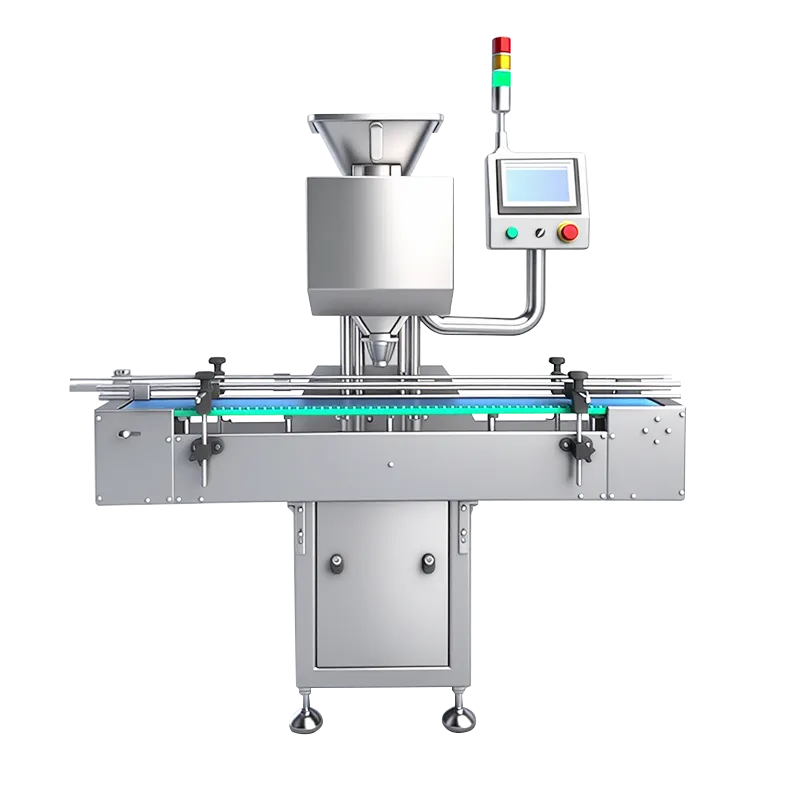
The Non-Negotiable Role of Automatic Counting in Modern Pharmaceutical Manufacturing
Every pharmaceutical company that produces solid-dose products — tablets, capsules, softgels, or pill combinations — needs an automatic counting machine. This is not a matter of scale or budget: even small-scale manufacturers producing 5,000 bottles per day face the same accuracy, compliance, and efficiency requirements as large-scale producers running 100,000 bottles per day. The difference is only in machine size and configuration, not in the fundamental need for automated counting technology.
The reason is straightforward: manual and semi-automatic counting cannot reliably achieve the ±0.1% counting accuracy that modern pharmaceutical quality standards demand, nor can they generate the verifiable production documentation that regulatory bodies require. A single underfilled bottle reaching a patient can trigger a product recall, regulatory investigation, and reputational damage that costs far more than a counting machine. Hangzhou Ruiyi Machinery Technology Co., Ltd., with 20+ years of pharmaceutical machinery experience, CE and ISO 9001 certifications, and an installed base across 50+ countries, provides counting solutions scaled to match every manufacturer's production volume and budget.
The global pharmaceutical packaging equipment market reached $10.5 billion in 2025 (MarketsandMarkets, July 2025), with automatic counting and filling equipment representing one of the largest equipment segments. This market scale reflects an industry consensus: automatic counting is standard equipment, not optional equipment, for pharmaceutical manufacturing.
Reason 1: Patient Safety and Count Accuracy
In pharmaceutical manufacturing, the count of tablets or capsules in each bottle is not merely a packaging specification — it is a patient safety issue. A bottle labeled as containing 30 capsules of an antibiotic must contain exactly 30 capsules. An underfill means the patient may not complete their prescribed course of treatment, potentially leading to treatment failure and antibiotic resistance. An overfill means the patient has access to excess medication, which for controlled substances represents a safety and regulatory risk.
Manual counting, even when performed by trained operators under supervision, cannot reliably achieve better than ±2% to ±3% accuracy. For a 30-count bottle, this means some bottles may contain as few as 29 or as many as 31 capsules. Automatic counting machines from Ruiyi Machinery achieve ±0.1% accuracy — meaning a 30-count bottle will contain between 29.97 and 30.03 capsules, effectively guaranteeing that every bottle contains exactly 30 capsules with a margin of error that is statistically negligible.
| Counting Method | Accuracy Range | Impact on 30-Count Bottle | Patient Safety Risk |
|---|---|---|---|
| Manual counting | ±2% to ±3% | 29–31 capsules (1 in ~33 bottles off) | High — underfill risks incomplete treatment |
| Semi-automatic | ±0.5% to ±1% | 29.7–30.3 (1 in ~150 bottles off) | Moderate — occasional count deviations |
| Automatic (Ruiyi, previous gen) | ±0.2% | 29.94–30.06 (1 in ~1,500 bottles off) | Low — rare count deviations |
| Automatic (Ruiyi, 2025 gen) | ±0.1% | 29.97–30.03 (1 in ~10,000 bottles off) | Negligible — statistically robust |
Reason 2: GMP Compliance Is Impossible Without Automated Documentation
Good Manufacturing Practice (GMP) regulations in every major pharmaceutical market — including the U.S. FDA's 21 CFR Part 210/211, the EU GMP Guidelines (EudraLex Volume 4), and the WHO GMP Guidelines — require pharmaceutical manufacturers to maintain complete, verifiable records of all production processes. For counting and filling operations, this means documenting:
- The target fill count for each product and batch
- The actual fill count for every bottle produced
- Any deviations from the target count and the corrective action taken
- The identity of the operator(s) who operated the counting equipment
- Any parameter changes made during the production batch, with timestamps and operator identification
- Equipment calibration status and maintenance records
Generating this documentation manually — through paper batch records filled in by operators — is labor-intensive, error-prone, and increasingly insufficient for regulatory inspections that expect electronic data with audit trails. Modern automatic counting machines generate all of this documentation automatically as an integral function of the counting process, with data stored in structured electronic formats that can be directly imported into the facility's quality management system.
Ruiyi Machinery's counting machines support GMP compliance through:
- Automatic electronic batch record generation with all required data fields
- 21 CFR Part 11 compliant electronic signatures and audit trails (configurable)
- Role-based access control (operator, supervisor, administrator) with password protection
- Calibration certificates for all sensors and measurement devices, traceable to national standards
- IQ/OQ/PQ documentation packages provided with each machine
Reason 3: Production Economics Demand Automation
The economic case for automatic counting is compelling at virtually any production volume above 2,000 bottles per day. The combination of labor savings, product giveaway reduction, and increased throughput capacity delivers a return on investment that typically ranges from 12 to 18 months for mid-volume operations.
| Financial Metric | Manual Counting (8 operators) | Automatic Counting (1 operator) | Annual Difference |
|---|---|---|---|
| Annual labor cost (2 shifts, 250 days, $12/hr) | $384,000 | $48,000 | $336,000 saved |
| Annual product giveaway (10,000 bottles/day, 60 count, $0.05/capsule) | $225,000 (±3%) | $7,500 (±0.1%) | $217,500 saved |
| Annual reject/rework cost | $45,000 | $3,000 | $42,000 saved |
| Annual quality documentation labor | $24,000 (dedicated QA clerk) | $0 (automated) | $24,000 saved |
| Total annual operating cost | $678,000 | $58,500 | $619,500 saved |
Against a typical machine investment of $55,000 to $65,000, the annual operating savings of $619,500 deliver a payback period of approximately 1 month for a mid-volume manufacturer transitioning from manual to automatic counting. Even for manufacturers already using semi-automatic equipment, the incremental upgrade to fully automatic counting typically pays back within 8 to 12 months through improved accuracy and throughput.
Reason 4: Competitive Market Pressures Require Production Scalability
The pharmaceutical industry is experiencing sustained growth driven by aging populations, increasing chronic disease prevalence, and expanding healthcare access in emerging markets. The World Health Organization estimates that 1 in 6 people globally will be over 60 years of age by 2030, driving demand for medications that will require production capacity expansion across the industry. Manufacturers that cannot scale production to meet growing demand will lose market share to competitors with more efficient, higher-capacity operations.
Automatic counting machines provide the scalability that pharmaceutical manufacturers need. A single Ruiyi Machinery RY-CM-250 Pro can process up to 72,000 bottles per day across two shifts — enough to support a mid-volume pharmaceutical manufacturer's entire production output. When demand growth requires additional capacity, a second machine can be installed alongside the first, sharing the same upstream bottle feeding and downstream capping and labeling equipment through a simple conveyor bypass configuration.
For manufacturers in growth markets — particularly Southeast Asia, where generic drug manufacturing capacity is expanding rapidly, and Africa, where local pharmaceutical production is being established to reduce import dependence — the ability to start with a single counting machine and scale incrementally as demand grows is a critical strategic advantage. Ruiyi Machinery's modular equipment design and standardized interfaces make this incremental expansion straightforward, without requiring a complete line redesign at each capacity increase.
Reason 5: Supply Chain Resilience Through Localized Production
The COVID-19 pandemic exposed the vulnerability of global pharmaceutical supply chains, particularly the dependence on imported finished pharmaceutical products. In response, governments in emerging markets are implementing policies to promote domestic pharmaceutical manufacturing — including India's Production Linked Incentive (PLI) scheme, Egypt's national drug manufacturing program, and Nigeria's pharmaceutical import substitution initiative.
For companies establishing or expanding domestic pharmaceutical manufacturing capacity in these markets, automatic counting machines from a supplier with global experience and local support capability are essential. Ruiyi Machinery's equipment, exported to 50+ countries with CE and ISO 9001 certifications, meets the equipment qualification requirements of these national programs while providing the technical support infrastructure needed to maintain production reliability in new manufacturing environments. The company's remote diagnostic capability and regional spare parts network ensure that manufacturers in emerging markets receive the same level of after-sales support as those in established pharmaceutical manufacturing regions.
Reason 6: Serialization and Track-and-Trace Readiness
Pharmaceutical serialization — the assignment of a unique serial number to every saleable unit — is now mandated in over 40 countries worldwide, including the United States (DSCSA), the European Union (FMD), India, China, Brazil, and Saudi Arabia. Serialization requires packaging equipment that can integrate with serialization systems to capture and record the serial number associated with each bottle at the point of filling and sealing.
Modern automatic counting machines are designed as connected devices that integrate with serialization systems through standard industrial communication protocols (OPC UA, EtherNet/IP). The counting machine records the fill count, timestamp, and batch identifier for each bottle; the serialization system records the serial number applied to that bottle. This data linkage creates the parent-child relationship between batch and individual unit that is the foundation of pharmaceutical track-and-trace systems.
For pharmaceutical manufacturers in markets where serialization is not yet mandated but is anticipated — including many countries in Africa, Southeast Asia, and South America — investing in a counting machine with native connectivity capabilities ensures future readiness without requiring equipment replacement when serialization requirements are eventually implemented.
Conclusion: Not a Choice, but a Necessity
The question for pharmaceutical manufacturers is no longer whether to invest in an automatic counting machine, but which machine and which supplier best meet their specific requirements. Patient safety, GMP compliance, production economics, market competitiveness, supply chain resilience, and serialization readiness all converge on the same conclusion: automatic counting is a non-negotiable component of modern pharmaceutical manufacturing.
Hangzhou Ruiyi Machinery Technology Co., Ltd. offers counting solutions for every production scale — from semi-automatic machines for pilot and small-scale production to high-speed multi-channel automatic machines for large-volume manufacturing. With 20+ years of industry experience, 70+ employees, CE and ISO 9001 certifications, and an installed base spanning 50+ countries, Ruiyi Machinery is positioned to support pharmaceutical manufacturers at every stage of their growth journey.
Start Your Counting Machine Evaluation Today
Contact our application engineering team to discuss your production requirements. We will provide a detailed machine recommendation, configuration proposal, and ROI analysis within 24 hours — tailored to your specific pharmaceutical products and production volume.
tel: +86-13868159610
email: [email protected]
Data sources: MarketsandMarkets Pharmaceutical Packaging Equipment Market Report, July 2025; WHO Ageing and Health Fact Sheet, October 2024; FDA 21 CFR Part 210/211 Current Good Manufacturing Practice for Finished Pharmaceuticals; EU GMP Guidelines EudraLex Volume 4; DSCSA Serialization Requirements, FDA Compliance Policy, November 2023.
Table of Contents
- The Non-Negotiable Role of Automatic Counting in Modern Pharmaceutical Manufacturing
- Reason 1: Patient Safety and Count Accuracy
- Reason 2: GMP Compliance Is Impossible Without Automated Documentation
- Reason 3: Production Economics Demand Automation
- Reason 4: Competitive Market Pressures Require Production Scalability
- Reason 5: Supply Chain Resilience Through Localized Production
- Reason 6: Serialization and Track-and-Trace Readiness
- Conclusion: Not a Choice, but a Necessity