 EN
EN

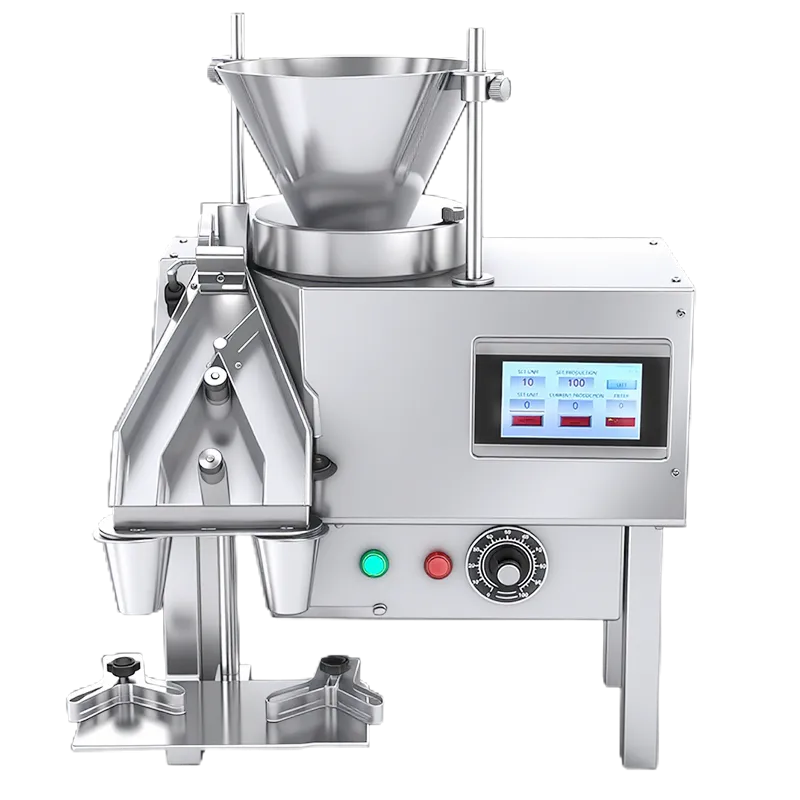
The Strategic Value of Capsule Counting Automation in Pharma
Capsule counting machines have become an indispensable component of modern pharmaceutical production lines, delivering measurable improvements in accuracy, throughput, compliance, and cost efficiency. For pharmaceutical manufacturers producing capsule-based medications — from generic antibiotics and vitamins to specialized nutraceutical formulations — an automatic capsule counting machine from a qualified manufacturer like Hangzhou Ruiyi Machinery Technology Co., Ltd. provides benefits that extend far beyond the simple replacement of manual counting labor.
The core benefit is precision: modern capsule counting machines achieve ±0.1% counting accuracy at sustained throughput rates of 100 to 150 bottles per minute. This means that in a production run of 10,000 bottles with a target fill of 60 capsules per bottle, the machine will produce no more than 10 bottles with an incorrect count — a level of reliability that manual counting cannot approach and that semi-automatic systems achieve only at significantly lower throughput. The global pharmaceutical packaging equipment market, valued at $10.5 billion in 2025 and projected to reach $14.3 billion by 2030 (MarketsandMarkets, July 2025), reflects the industry-wide recognition that automated counting is not optional but essential for competitive pharmaceutical manufacturing.
Benefit 1: Elimination of Counting Errors and Product Giveaway
Counting errors in pharmaceutical production have two costly consequences: underfills that risk regulatory penalties and customer complaints, and overfills that silently erode manufacturing margins. The financial impact of these errors is often underestimated because overfills — the more common error mode in both manual and semi-automated counting — are invisible in production reports. They only become apparent when raw material consumption consistently exceeds the theoretical requirement.
| Counting Method | Typical Accuracy | Daily Overfill (10,000 bottles, 60 capsules, $0.05/capsule) | Annual Overfill Cost (250 production days) |
|---|---|---|---|
| Manual counting | ±3% | 18,000 capsules ($900/day) | $225,000 |
| Semi-automatic counting | ±1% | 6,000 capsules ($300/day) | $75,000 |
| Automatic counting — previous gen | ±0.5% | 3,000 capsules ($150/day) | $37,500 |
| Automatic counting — Ruiyi 2025 gen | ±0.1% | 600 capsules ($30/day) | $7,500 |
The progression from manual to modern automatic counting reduces annual product giveaway from $225,000 to $7,500 — a $217,500 annual saving that exceeds the purchase price of a new counting machine within the first year of operation. For high-value capsule formulations (probiotics, specialized APIs, controlled-release formulations) where individual capsule costs can reach $0.50 or more, the savings are proportionally larger.
Benefit 2: Regulatory Compliance and GMP Documentation
Pharmaceutical manufacturing is subject to increasingly stringent regulatory oversight worldwide. The U.S. FDA, the European Medicines Agency (EMA), and the World Health Organization (WHO) all require pharmaceutical manufacturers to maintain verifiable documentation of production processes, including filling and counting operations. A modern capsule counting machine supports GMP compliance in several specific ways:
- Electronic batch records: Every production batch generates a complete electronic record including start and end timestamps, target fill count, actual counts for each bottle, reject events with reject reasons, operator identification, and all parameter changes made during the batch. This data is stored in non-volatile memory and can be exported in standard formats for integration with the facility's Manufacturing Execution System (MES).
- 21 CFR Part 11 compliance: For pharmaceutical manufacturers supplying the U.S. market, Ruiyi Machinery's counting machines can be configured for 21 CFR Part 11 compliance, implementing electronic signatures, role-based access control (operator, supervisor, administrator), and immutable audit trails that record every parameter change with user identification and timestamp.
- Automated reject documentation: Every bottle rejected by the counting machine — whether for undercount, overcount, or sensor anomaly — is logged with the specific reject reason, enabling quality teams to identify trends and root causes without manual record review.
- Calibration traceability: The machine's counting sensors and measurement devices are delivered with calibration certificates traceable to national or international standards, supporting the facility's instrument calibration program as required by GMP.
Benefit 3: Production Throughput and Labor Efficiency
The throughput difference between manual and automatic capsule counting is dramatic — and has direct implications for facility capacity planning and labor cost management. A single automatic counting machine from Ruiyi Machinery, operated by one technician, produces output equivalent to 8 to 15 manual counting operators. This labor reduction is particularly significant in markets where pharmaceutical manufacturing labor costs are rising or where skilled operators are difficult to recruit and retain.
| Throughput Metric | Manual Counting (8 operators) | Automatic Counting (1 operator) | Improvement |
|---|---|---|---|
| Bottles per minute | 8–12 | 100–150 | 10–18× increase |
| Bottles per 8-hour shift | 3,840–5,760 | 48,000–72,000 | 12× average increase |
| Annual output (250 days, 2 shifts) | 1.9–2.9 million | 24–36 million | 12× average increase |
| Annual labor cost (at $12/hr per operator) | $384,000 (8 operators × 2 shifts) | $48,000 (1 operator × 2 shifts) | $336,000 saved |
| Labor cost per 1,000 bottles | $3.31 | $0.22 | 93% reduction |
Benefit 4: Versatility Across Capsule Types and Formats
Pharmaceutical manufacturers typically produce multiple capsule products in different sizes, materials, and fill types. A counting machine's ability to handle this product diversity without frequent reconfiguration or accuracy degradation is a key determinant of its operational value. Ruiyi Machinery's capsule counting machines accommodate:
- Hard gelatin capsules: Sizes 000 through 5, the full range of standard pharmaceutical capsule sizes. The machine's feed channel width and sensor sensitivity are adjusted automatically via stored recipe parameters.
- HPMC (vegetable) capsules: Increasingly common for vegetarian, halal, and kosher-certified products. HPMC capsules are more prone to static electricity buildup than gelatin capsules; Ruiyi Machinery's machines include integrated anti-static ionizing bars to neutralize static charge in the feed hopper and counting channel.
- Softgel capsules: Available in round, oval, and tubular shapes. Softgels present unique challenges due to their flexible outer shell and potential for deformation under pressure. The machine's adaptive vibration control system adjusts feed amplitude to handle softgels gently, preventing deformation that could cause counting errors.
- Capsule size range: From 11 mm (size 5) to 26 mm (size 000), all handled by a single machine configuration with recipe-based parameter adjustments. Product changeover between extreme sizes requires 5 to 8 minutes using tool-free mechanical adjustments.
Benefit 5: Data-Driven Process Improvement
Beyond its immediate counting function, a modern capsule counting machine serves as a data collection point that feeds the facility's continuous improvement program. The production data generated by the machine — when systematically analyzed — reveals opportunities for process optimization that are invisible without automated data collection.
Key data-driven improvements that pharmaceutical manufacturers have achieved using Ruiyi Machinery counting machine data include:
- Identifying high-reject products: Analyzing reject rates by product SKU reveals that certain formulations consistently produce higher reject rates — often due to capsule weight variation, surface tackiness, or electrostatic properties. Addressing these root causes through formulation or storage condition changes reduces reject rates by 30% to 50% for affected products.
- Optimizing shift scheduling: Production data analysis often reveals that counting accuracy and throughput decline in the final two hours of extended shifts. Adjusting shift schedules to align with natural performance curves — or implementing mid-shift cleaning breaks that refresh both operators and equipment — recovers 5% to 8% of daily production capacity.
- Predictive maintenance scheduling: Tracking sensor signal quality trends and reject rate patterns over time enables maintenance teams to identify degrading components before they cause production failures. A Ruiyi Machinery installation in Vietnam implemented a data-driven preventive maintenance schedule that reduced unplanned downtime by 72% over 12 months.
Benefit 6: Competitive Advantage in Export Markets
For pharmaceutical manufacturers in emerging markets — Southeast Asia, the Middle East, Africa, and South America — exporting to regulated markets in Europe and North America requires production equipment that meets international standards. A capsule counting machine with CE marking, ISO 9001 certified manufacturing, and 21 CFR Part 11 capable data logging provides the equipment-level compliance foundation that supports regulatory submissions for export market access.
Ruiyi Machinery's 20+ years of pharmaceutical machinery manufacturing experience, combined with its installed base across 50+ countries, means that the company understands the regulatory requirements of diverse export markets and can provide the documentation and support that manufacturers need to navigate the approval process. This export-enabling capability is particularly valuable for pharmaceutical manufacturers in countries that are establishing or expanding their presence in generic drug export markets.
Conclusion: A Foundation for Pharmaceutical Manufacturing Excellence
The benefits of using a capsule counting machine in pharmaceutical production extend across every dimension of manufacturing performance — accuracy, throughput, compliance, cost efficiency, versatility, and data-driven improvement. For pharmaceutical manufacturers at any scale, from small-scale generic producers to large-scale contract manufacturers, the investment in automatic counting technology from a qualified supplier like Hangzhou Ruiyi Machinery Technology Co., Ltd. delivers returns that compound over the equipment's service life.
Request a Capsule Counting Machine Demo
Send us a 500-gram sample of your capsule product for a complimentary counting accuracy trial. We will run your capsules on our equipment under simulated production conditions and provide a detailed performance report including accuracy data, throughput metrics, and a recommended machine configuration.
tel: +86-13868159610
email: [email protected]
Data sources: MarketsandMarkets Pharmaceutical Packaging Equipment Market Report, July 2025; FDA 21 CFR Part 11 Electronic Records; Electronic Signatures Final Rule; WHO Technical Report Series No. 1019, Annex 3: Guidelines on Validation; Ruiyi Machinery production performance data from customer installations in Vietnam, Nigeria, and Indonesia, 2024–2025.
Table of Contents
- The Strategic Value of Capsule Counting Automation in Pharma
- Benefit 1: Elimination of Counting Errors and Product Giveaway
- Benefit 2: Regulatory Compliance and GMP Documentation
- Benefit 3: Production Throughput and Labor Efficiency
- Benefit 4: Versatility Across Capsule Types and Formats
- Benefit 5: Data-Driven Process Improvement
- Benefit 6: Competitive Advantage in Export Markets
- Conclusion: A Foundation for Pharmaceutical Manufacturing Excellence