 EN
EN

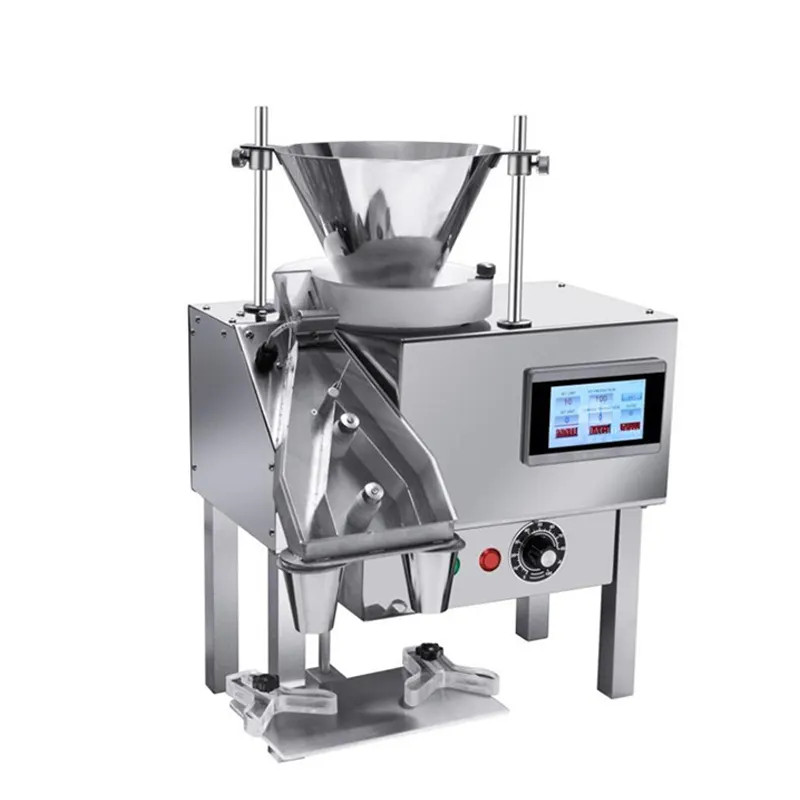
What to Look for When Selecting a Tablet Counting Machine
Choosing the right tablet counting machine begins with understanding your production requirements: how many bottles per minute you need to fill, what tablet sizes and shapes you produce, how many different products you run on the same line, and what regulatory standards your facility must meet. The best machine for your needs is not necessarily the fastest or most expensive — it is the one that consistently delivers your required counting accuracy at your required throughput, with the flexibility to accommodate future product additions and the support infrastructure to maintain performance over the equipment's 10-to-15-year service life.
Modern tablet counting machines from manufacturers like Hangzhou Ruiyi Machinery Technology Co., Ltd. achieve counting accuracies of ±0.1% at throughputs up to 150 bottles per minute, with CE and ISO 9001 certifications that support GMP compliance in regulated pharmaceutical manufacturing environments. The global pharmaceutical packaging equipment market, valued at $10.5 billion in 2025 (MarketsandMarkets, July 2025), offers a wide range of counting machine options — but narrowing the field requires a structured evaluation approach.
Step 1: Define Your Production Volume and Speed Requirements
Tablet counting machines are generally categorized by their maximum throughput capacity. Selecting a machine whose capacity closely matches your current and projected production volume avoids both under-investment (machine cannot keep up with demand) and over-investment (machine operates well below capacity, reducing ROI).
| Production Volume | Bottles per Day | Recommended Machine Class | Typical Speed Range | Ruiyi Model Example |
|---|---|---|---|---|
| Small / pilot production | Up to 8,000 | Desktop or semi-automatic | 20–40 bpm | RY-CM-50 (semi-automatic) |
| Medium production | 8,000–40,000 | Single-head automatic | 60–100 bpm | RY-CM-100 |
| High-volume production | 40,000–100,000 | Multi-channel high-speed automatic | 100–150 bpm | RY-CM-250 Pro |
| Ultra-high-volume / contract manufacturing | 100,000+ | Dual-head or tandem configuration | 150–300 bpm | RY-CM-250 Pro × 2 (tandem) |
When calculating your required throughput, add a 20% capacity buffer to account for planned and unplanned downtime — a machine rated at 100 bottles per minute will, in practice, deliver approximately 80 bottles per minute of sustained output over an 8-hour shift after accounting for product changeovers, cleaning intervals, and minor stoppages.
Step 2: Evaluate Counting Technology and Sensor Quality
The counting sensor is the single most important component in determining long-term accuracy. Three sensor technologies are commonly available, each with distinct strengths:
- Single infrared (IR) photoelectric sensors: The most basic and lowest-cost option. Adequate for opaque, uniformly shaped tablets at moderate speeds (up to 60 bpm). Prone to missing transparent capsules and double-counting thin tablets at high speeds.
- Visible-light photoelectric arrays: Improved detection capability for colored tablets and moderately translucent products. A step up from single IR sensors but still limited at very high speeds (above 100 bpm) where product spacing becomes very tight.
- Multi-spectrum photoelectric arrays (Ruiyi Machinery standard): Combines visible-light, infrared, and near-UV detection in each sensor module. Detects virtually any tablet or capsule regardless of opacity, color, or translucency. The 48-element staggered array achieves 0.1 mm effective detection pitch, resolving individual tablets even at feed rates exceeding 1,500 units per minute per channel.
For pharmaceutical manufacturers producing multiple product types — including transparent capsules, colored film-coated tablets, or sugar-coated tablets — the multi-spectrum sensor is strongly recommended. It eliminates the need for sensor adjustments or machine reconfiguration when switching between products with different optical properties.
Step 3: Assess Product Changeover Flexibility
If your facility runs multiple tablet products on the same counting line, changeover time between products has a direct impact on daily production capacity. A machine that requires 20 minutes for a complete product changeover, run on a line that changes products 4 times per day, loses 80 minutes of production time daily — equivalent to 8,000 unfilled bottles at 100 bottles per minute.
Key changeover-related features to evaluate:
- Recipe-based parameter storage: The machine should store all counting parameters (vibration amplitude, sensor sensitivity, fill count, bottle format) for each product in a recipe database. Selecting a stored recipe should automatically configure all parameters without manual adjustment.
- Tool-free mechanical adjustments: Feed channel width, bottle guide rails, and discharge funnels should be adjustable without tools using quick-release mechanisms. Ruiyi Machinery's current-generation machines complete full product changeovers in 5 to 8 minutes using tool-free adjustments.
- Recipe capacity: Ensure the machine's recipe database can accommodate your current product portfolio plus future expansion. Ruiyi Machinery's machines store up to 500 product recipes — sufficient for even the most diverse contract manufacturing operations.
Step 4: Verify GMP Compliance and Documentation Support
For pharmaceutical manufacturers operating under GMP regulations, the counting machine must support the facility's quality management system through comprehensive documentation and data integrity features. Evaluate the following:
- Material certificates: All product-contact components should be 304 or 316 stainless steel with traceable material certificates. Seals and gaskets should be FDA-compliant elastomers (EPDM, silicone, or PTFE) with documentation.
- 21 CFR Part 11 compliance (for U.S. market supply): The machine's HMI and data logging system should support electronic signatures, role-based access control, and immutable audit trails for all parameter changes. Ask the manufacturer for a 21 CFR Part 11 compliance statement.
- IQ/OQ/PQ documentation: The manufacturer should provide Installation Qualification, Operational Qualification, and Performance Qualification protocols — or at minimum, the technical documentation (FAT report, calibration certificates, electrical schematics) needed for your validation team to develop these protocols.
- CE marking and ISO 9001 certification: CE marking demonstrates compliance with European machinery safety directives. ISO 9001 certification of the manufacturer confirms that their quality management system meets international standards — providing confidence in manufacturing consistency and after-sales support reliability.
Ruiyi Machinery provides all of the above as standard with every machine, backed by 20+ years of pharmaceutical machinery manufacturing experience and an installed base spanning 50+ countries across Asia, the Middle East, Africa, South America, and Eastern Europe.
Step 5: Evaluate After-Sales Support and Spare Parts Availability
A tablet counting machine is a 10-to-15-year investment, and the manufacturer's after-sales support capability is as important as the machine's technical specifications. Evaluate the following support factors before making a purchase decision:
- Response time commitment: What is the manufacturer's committed response time for technical support inquiries? Ruiyi Machinery guarantees a response within 12 hours, with remote diagnostic support available via secure VPN connection to the machine's control system.
- Spare parts availability: How quickly can critical spare parts (sensors, feeder springs, PLC modules) be delivered to your facility? Ruiyi Machinery maintains a spare parts inventory for all current and recent models, with standard parts shipped within 48 hours and express delivery available to all served regions.
- Field service capability: Can the manufacturer dispatch a field service engineer to your facility if remote troubleshooting cannot resolve an issue? For customers in Southeast Asia, the Middle East, and Africa, Ruiyi Machinery maintains a network of regional service partners to minimize field service response time.
- Training program: Does the manufacturer provide operator training as part of the installation package, and is refresher training available? Ruiyi Machinery provides a 2-day commissioning training on-site, followed by an advanced operator training session 3 months post-installation, and a train-the-trainer program for the facility's senior operators.
Step 6: Compare Total Cost of Ownership, Not Just Purchase Price
The purchase price of a tablet counting machine represents only 40% to 50% of its total cost of ownership over a 10-year service life. The remaining costs — energy, maintenance, spare parts, operator labor, and product giveaway — often exceed the initial capital investment. When comparing machines from different suppliers, calculate the 10-year TCO using consistent assumptions for your operating environment:
| Cost Category | Budget Machine ($35,000) | Mid-Range Machine ($55,000) | Ruiyi RY-CM-250 Pro ($62,000) |
|---|---|---|---|
| Purchase price | $35,000 | $55,000 | $62,000 |
| 10-year energy cost (2.8–4.0 kW, 5,000 hrs/yr, $0.12/kWh) | $24,000 (4.0 kW) | $19,200 (3.2 kW) | $16,800 (2.8 kW) |
| 10-year maintenance & spare parts | $40,000 (higher wear rate) | $30,000 | $25,000 |
| 10-year operator labor (1 operator, 2 shifts, 250 days) | $240,000 (1 op, low automation) | $240,000 | $240,000 |
| 10-year product giveaway (at stated accuracy) | $180,000 (±1%) | $90,000 (±0.5%) | $18,000 (±0.1%) |
| 10-Year Total Cost of Ownership | $519,000 | $434,200 | $361,800 |
As the table demonstrates, the machine with the lowest purchase price has the highest 10-year total cost of ownership — primarily due to higher product giveaway from lower counting accuracy. The Ruiyi Machinery RY-CM-250 Pro, despite a higher initial purchase price, delivers the lowest 10-year TCO by combining superior accuracy with energy efficiency and lower maintenance requirements.
Conclusion: Making an Informed Decision
Selecting the best tablet counting machine for your manufacturing needs requires evaluating technical specifications, regulatory compliance, after-sales support, and total cost of ownership as an integrated whole — not as isolated factors. By following the six-step evaluation framework above, pharmaceutical and nutraceutical manufacturers can make an informed purchasing decision that supports both immediate production requirements and long-term business growth.
Hangzhou Ruiyi Machinery Technology Co., Ltd. offers complimentary application consultations to help manufacturers navigate this evaluation process. Our application engineers will review your product specifications, production volume targets, and regulatory requirements, and provide a detailed recommendation with a tailored ROI analysis.
Get Your Customized Tablet Counting Machine Recommendation
Contact us with your production requirements and receive a detailed machine specification, configuration proposal, and 10-year TCO comparison within 24 hours.
tel: +86-13868159610
email: [email protected]
Data sources: MarketsandMarkets Pharmaceutical Packaging Equipment Market Report, July 2025; FDA 21 CFR Part 11 Electronic Records; Electronic Signatures Final Rule; ISO 9001:2015 Quality Management Systems Requirements; Ruiyi Machinery internal TCO benchmark data from customer installations across 12 countries.
Table of Contents
- What to Look for When Selecting a Tablet Counting Machine
- Step 1: Define Your Production Volume and Speed Requirements
- Step 2: Evaluate Counting Technology and Sensor Quality
- Step 3: Assess Product Changeover Flexibility
- Step 4: Verify GMP Compliance and Documentation Support
- Step 5: Evaluate After-Sales Support and Spare Parts Availability
- Step 6: Compare Total Cost of Ownership, Not Just Purchase Price
- Conclusion: Making an Informed Decision