 EN
EN

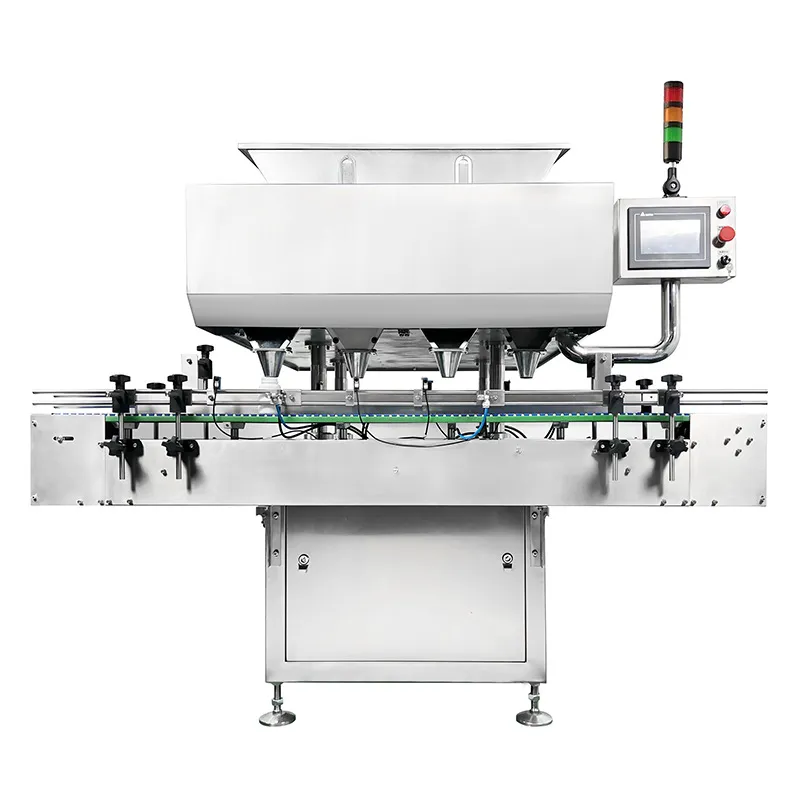
The Business Case for Counting Accuracy: Why ±0.1% Matters
In pharmaceutical and nutraceutical manufacturing, counting accuracy is not an abstract quality metric — it is a direct driver of profitability, regulatory compliance, and brand reputation. A capsule counting machine operating at ±1% accuracy on a production line filling 10,000 bottles per day, each containing 60 capsules, produces approximately 6,000 miscounts daily. Some of these are underfills that risk customer complaints and regulatory action; others are overfills that silently erode gross margins by giving away product for which the manufacturer receives no revenue.
For a facility producing 5 million bottles annually with an average fill count of 90 capsules per bottle and a product cost of $0.03 per capsule, a 1% overfill rate — common in manual and older automated counting systems — represents $135,000 in annual product giveaway. Reducing this to 0.1% through modern counting technology from manufacturers like Hangzhou Ruiyi Machinery Technology Co., Ltd. recovers $121,500 annually in margin, equivalent to the purchase price of a new counting machine every 8 to 14 months depending on configuration.
The World Health Organization estimates that 1 in 6 people globally will be over 60 years of age by 2030, driving sustained growth in pharmaceutical demand — and with it, the need for manufacturing capacity that delivers both volume and precision. The global pharmaceutical packaging equipment market, valued at $10.5 billion in 2025, is forecast to reach $14.3 billion by 2030 (MarketsandMarkets, July 2025), with capsule counting and filling systems comprising a significant component of this growth.
Root Causes of Counting Inaccuracy and How Modern Machines Address Them
Sensor Technology Limitations
The most fundamental source of counting inaccuracy is the counting sensor itself. Older infrared sensors with a single detection beam path are susceptible to two failure modes: missing transparent or translucent capsules that do not reliably interrupt the light beam, and double-counting when two thin capsules pass through the beam simultaneously in different orientations. Modern multi-spectrum photoelectric sensor arrays, as deployed in Ruiyi Machinery's current-generation counting machines, address both failure modes by combining visible-light, infrared, and near-UV detection with 48-element staggered sensor arrays that achieve an effective detection pitch of 0.1 mm, ensuring that every capsule — regardless of opacity or orientation — generates a distinct, countable signal.
Feed Consistency and Product Flow Dynamics
Even the most advanced sensor cannot count accurately if the product feed is inconsistent. Two specific feed-related issues account for the majority of counting errors in production environments:
- Product clumping: Capsules that clump together on the vibratory tray pass through the sensor array as a single mass, registering as one unit rather than the actual count. Clumping is exacerbated by static electricity (common with gelatin and HPMC capsules in dry environments), surface moisture (common in facilities without humidity control in tropical climates), and capsule deformation (common when capsules have been stored at temperatures above 30°C).
- Feed gaps: Conversely, inconsistent feed rates create gaps in the product stream where the counting sensor registers "no product" even though the expected fill count has not been reached. The machine compensates by extending the fill cycle, reducing throughput, or — in machines without gap compensation — discharging an underfilled bottle.
Ruiyi Machinery addresses feed consistency through a closed-loop adaptive vibration control system that monitors product flow density through the counting sensors and adjusts vibratory feeder amplitude 200 times per second. This real-time control maintains a consistent product presentation regardless of environmental conditions or batch-to-batch capsule variation, eliminating the root cause of both clumping and gap-related counting errors.
Environmental Factors: Temperature, Humidity, and Static
Capsule counting accuracy is sensitive to the production environment in ways that tablet counting is not. Gelatin capsules soften at sustained temperatures above 30°C, increasing the risk of deformation and splitting during high-speed feeding. HPMC (hydroxypropyl methylcellulose) capsules — increasingly popular for vegetarian and halal-certified products — are even more sensitive to static electricity buildup at relative humidity below 40%, causing capsules to stick to feed channel walls and each other.
For facilities in Southeast Asia, the Middle East, and Africa — key markets for Ruiyi Machinery — where ambient temperatures routinely exceed 35°C and relative humidity can reach 85% during monsoon seasons, counting machine enclosures equipped with integrated dehumidification and temperature control modules are strongly recommended. These modules maintain the counting chamber at 20–25°C and 40–50% relative humidity regardless of external conditions, creating a stable micro-environment that enables consistent counting performance year-round.
Accuracy Metrics: Understanding the Numbers That Define Performance
Publishing a single accuracy figure — such as "±0.1%" — without defining the measurement conditions is misleading. Counting accuracy must be evaluated across multiple dimensions to provide a complete picture of real-world performance. The following table defines the key accuracy metrics used in pharmaceutical counting machine validation and provides target values for modern counting equipment.
| Metric | Definition | Measurement Method | Target Value (2025 Standard) |
|---|---|---|---|
| Individual Count Accuracy | The percentage of filled bottles that contain exactly the target count (e.g., 90 capsules in a 90-count fill) | Manual count verification of a statistically valid sample (n ≥ 315 per ANSI/ASQ Z1.4, AQL 0.065%) | ≥ 99.9% (≤ 1 bottle in 1,000 outside target count) |
| Average Count Accuracy | The average deviation from target count across all sampled bottles, expressed as a percentage of target count | Calculate mean count across sample set; divide deviation from target by target count; express as percentage | ±0.1% (±0.09 capsules for a 90-count target) |
| Count Repeatability (Standard Deviation) | The standard deviation of counts across a sample set — a measure of consistency, not absolute accuracy | Calculate standard deviation of counts across sample set | σ ≤ 0.3 capsules for 90-count target |
| False Reject Rate | The percentage of correctly filled bottles incorrectly rejected by the machine's verification system | Manually verify all rejected bottles over a defined production period; classify as true reject or false reject | < 0.01% (< 1 false reject per 10,000 bottles) |
| Sustained Accuracy Over Time | Accuracy measured after 4, 8, and 12 hours of continuous operation without recalibration | Repeat sample verification at 4-hour intervals during continuous production run | ≤ 0.05% drift from initial accuracy over 12-hour shift |
Efficiency Beyond Speed: OEE and the Hidden Costs of Setup Time
Throughput speed — bottles per minute — is the most visible efficiency metric for a counting machine, but it tells an incomplete story. Overall Equipment Effectiveness (OEE), the composite metric that multiplies availability, performance, and quality, provides a more complete measure of how efficiently a counting machine contributes to production output.
In typical pharmaceutical counting applications, the largest OEE losses come not from machine breakdowns but from changeover time between products. A facility running 5 different capsule products per day on a single counting line, with each changeover taking 20 minutes, loses 100 minutes — over 1.5 hours — to setup alone. Reducing changeover time to 6 minutes through recipe-based parameter storage and tool-free component changes — features standard on Ruiyi Machinery's current-generation equipment — recovers 70 minutes of production capacity per day, equivalent to approximately 7,000 additional filled bottles at 100 bottles per minute.
The financial impact of this recovered capacity is significant. For a contract manufacturer billing $0.02 per bottle in filling fees, those 7,000 additional daily bottles translate to $140 in daily incremental revenue — approximately $35,000 per year on a single line running 250 production days. Across a facility with three counting lines, the annual revenue impact exceeds $100,000 from changeover time reduction alone, independent of any improvement in running speed.
OEE Calculation Example for a Capsule Counting Line
| OEE Component | Calculation | Before Optimization | After Optimization |
|---|---|---|---|
| Availability | Actual operating time ÷ Planned production time | 85% (8.5 hrs of 10 hrs planned) | 93% (9.3 hrs of 10 hrs planned) |
| Performance | Actual throughput ÷ Theoretical max throughput | 78% (78 bpm of 100 bpm max) | 92% (92 bpm of 100 bpm max) |
| Quality | Good bottles ÷ Total bottles produced | 97% (3% reject rate) | 99.9% (0.1% reject rate) |
| Overall OEE | Availability × Performance × Quality | 64.3% | 85.5% |
The OEE improvement from 64.3% to 85.5% represents a 33% increase in effective production output from the same machine and the same number of operating hours — equivalent to adding one extra shift of capacity without additional capital expenditure. For a mid-volume pharmaceutical manufacturer processing 10 million bottles per year, a 33% OEE improvement adds approximately 3.3 million bottles of annual capacity at zero incremental capital cost.
Operator Training: The Human Factor in Counting Accuracy
Even the most advanced counting machine requires skilled operators to deliver its full performance potential. Operator training is frequently the weakest link in pharmaceutical counting accuracy programs — a problem compounded in markets where experienced pharmaceutical equipment operators are scarce and employee turnover is high.
Ruiyi Machinery addresses this challenge through a structured training program delivered in three phases:
- Commissioning Training (on-site, 2 days): Conducted during machine installation by a Ruiyi Machinery field service engineer. Covers machine startup and shutdown procedures, daily cleaning and inspection routines, basic HMI operation including recipe selection and parameter adjustment, and troubleshooting of common alarms and error conditions. Operators achieving a passing score on a practical skills assessment receive a certificate of competency valid for 12 months.
- Advanced Operator Training (remote, 1 day, 3 months post-installation): Delivered via video conference after operators have accumulated 3 months of hands-on experience. Covers advanced HMI functions including production data export and analysis, product recipe creation and optimization, changeover procedure refinement for maximum speed, and preventive maintenance scheduling. This training leverages real production data from the operator's own facility to make the content immediately applicable.
- Train-the-Trainer Program (remote, 1 day, 6 months post-installation): Designed for the facility's senior operator or shift supervisor who will be responsible for training new operators as the facility expands. Covers adult learning principles specific to pharmaceutical equipment operation, common operator errors and how to prevent them, and how to conduct competency assessments against defined skill standards.
For facilities without access to experienced pharmaceutical equipment operators, Ruiyi Machinery can also arrange extended on-site support — a field service engineer remains at the customer's facility for an additional 5 to 10 days beyond commissioning, providing hands-on coaching as operators gain proficiency with the equipment during actual production runs.
Data-Driven Quality: Using Counting Machine Data for Continuous Improvement
Modern counting machines generate significant operational data that most manufacturers underutilize. Every filled bottle produces a data point: target count, actual count (from sensor array), fill time, reject status, and timestamp. Aggregated across a production shift, this data reveals patterns that enable continuous improvement in counting accuracy and efficiency.
Key analyses that pharmaceutical manufacturers should perform on their counting machine data include:
- Accuracy trend analysis: Plot average count accuracy at 30-minute intervals throughout a production shift. A downward trend in the second half of a shift may indicate operator fatigue, sensor fouling, or environmental changes (afternoon temperature rise) that require intervention. A Ruiyi Machinery installation in Nigeria identified a 0.15% accuracy degradation between the first and last hour of each shift — traced to sensor lens dust accumulation accelerated by the Harmattan season — and implemented a mid-shift sensor cleaning protocol that restored consistent accuracy.
- Product-specific performance benchmarking: Different products run at different efficiency levels on the same equipment. Analyzing throughput and reject rates by product SKU identifies which formulations would benefit from recipe optimization, dedicated tooling, or revised vibration parameters. This analysis often reveals that 20% of products account for 80% of quality issues — a pattern consistent with the Pareto principle observed across pharmaceutical manufacturing.
- Shift-to-shift variability analysis: Comparing OEE across different shifts operating the same machine often reveals performance gaps driven by operator skill differences rather than equipment limitations. Addressing these gaps through targeted training delivers immediate OEE improvements without capital expenditure.
Conclusion: Accuracy and Efficiency as a Unified Goal
Improving capsule counting accuracy and improving production efficiency are not competing objectives — they are complementary outcomes of a well-designed counting system operated by trained personnel following documented procedures. The technologies that deliver ±0.1% counting accuracy — multi-spectrum sensors, adaptive vibration control, recipe-based parameter management — are the same technologies that maximize throughput, minimize changeover time, and reduce operator intervention.
For pharmaceutical and nutraceutical manufacturers evaluating counting equipment investments, the right question is not "How fast is this machine?" or "How accurate is this machine?" in isolation, but "What sustained accuracy does this machine deliver at the throughput my production plan requires, and what support does the manufacturer provide to maintain that performance over the equipment's service life?" Answering this question requires evaluating not just the machine specification sheet, but the manufacturer's commitment to documentation, training, spare parts availability, and after-sales technical support.
Schedule a Counting Accuracy Demonstration
Hangzhou Ruiyi Machinery Technology Co., Ltd. invites you to send a 500-gram sample of your capsule product for a complimentary counting accuracy trial. We will run your product on our equipment under simulated production conditions and provide a detailed report including accuracy data, throughput metrics, and a recommended machine configuration tailored to your requirements.
tel: +86-13868159610
email: [email protected]
Data sources: MarketsandMarkets Pharmaceutical Packaging Equipment Market Report, July 2025; World Health Organization Ageing and Health Fact Sheet, October 2024; ANSI/ASQ Z1.4 Sampling Procedures and Tables for Inspection by Attributes; OEE calculation methodology per SEMI E79 standard.
Table of Contents
- The Business Case for Counting Accuracy: Why ±0.1% Matters
- Root Causes of Counting Inaccuracy and How Modern Machines Address Them
- Accuracy Metrics: Understanding the Numbers That Define Performance
- Efficiency Beyond Speed: OEE and the Hidden Costs of Setup Time
- Operator Training: The Human Factor in Counting Accuracy
- Data-Driven Quality: Using Counting Machine Data for Continuous Improvement
- Conclusion: Accuracy and Efficiency as a Unified Goal