 EN
EN

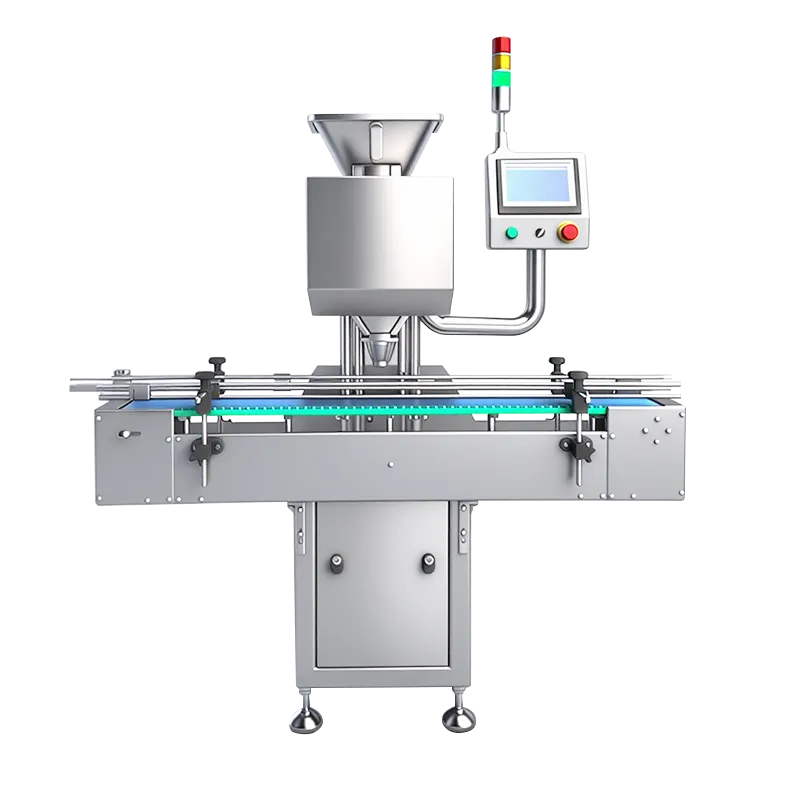
Selecting a Capsule Counting Machine: A Practical Decision Framework
Choosing the right capsule counting machine requires matching your specific production requirements — capsule types, fill counts, bottle sizes, daily volume, and regulatory environment — to the machine capabilities available in the market. The wrong choice leads to either under-investment (a machine that cannot meet your throughput or accuracy requirements) or over-investment (a machine with capabilities you will never use, purchased at a premium price). This guide provides a structured framework for making the right selection decision for your business.
Hangzhou Ruiyi Machinery Technology Co., Ltd. manufactures capsule counting machines across the full range of production scales — from semi-automatic machines for small-batch and pilot production to fully automatic multi-channel high-speed systems for large-volume pharmaceutical manufacturing. With 20+ years of industry experience, CE and ISO 9001 certifications, and equipment exported to 50+ countries, Ruiyi Machinery's product line covers the spectrum of capsule counting applications encountered in pharmaceutical, nutraceutical, and food supplement manufacturing.
The global pharmaceutical packaging equipment market, valued at $10.5 billion in 2025 (MarketsandMarkets, July 2025), offers dozens of capsule counting machine models from manufacturers worldwide. The framework below will help you narrow the field to the machines that genuinely fit your requirements.
Assessment 1: Match Machine Capacity to Your Production Volume
Start by calculating your current and projected daily production volume in bottles per day. Include both your existing product portfolio and any products you plan to launch within the next 24 months. Then apply the 20% capacity buffer rule: your selected machine should have a rated maximum throughput at least 20% higher than your peak daily requirement, to account for production inefficiencies and future growth.
| Your Daily Volume (bottles/day) | Required Machine Capacity (with 20% buffer) | Recommended Machine Type | Typical Investment Range |
|---|---|---|---|
| Up to 4,000 | ~5,000 (25 bpm) | Semi-automatic single-channel | $8,000–$18,000 |
| 4,000–16,000 | ~19,000 (40 bpm) | Automatic, 8-channel | $25,000–$40,000 |
| 16,000–40,000 | ~48,000 (100 bpm) | Automatic, 16-channel | $45,000–$65,000 |
| 40,000–80,000 | ~96,000 (200 bpm) | High-speed automatic, 24–32 channel | $65,000–$95,000 |
| 80,000+ | 96,000+ (200+ bpm) | Dual-head tandem configuration | $95,000–$160,000 |
Assessment 2: Match Sensor Technology to Your Capsule Types
The counting sensor determines which capsule types your machine can handle reliably. If you produce only standard opaque hard gelatin capsules, a basic infrared sensor may suffice. If your product portfolio includes transparent HPMC capsules, softgels, or capsules with unusual optical properties, you need a more advanced sensor system.
| Capsule Type | Optical Challenge | Minimum Sensor Required | Ruiyi Solution |
|---|---|---|---|
| Opaque hard gelatin (standard) | None — fully opaque | Single IR photoelectric | Standard sensor (all models) |
| Colored hard gelatin | Color absorption varies by wavelength | Visible-light photoelectric | Dual-spectrum sensor (RY-CM-100+) |
| Transparent HPMC / vegetarian | Light passes through with minimal interruption | Multi-spectrum photoelectric | Multi-spectrum sensor (RY-CM-250 Pro) |
| Softgel capsules (all colors) | Variable shape and transparency; surface gloss causes reflection | Multi-spectrum + anti-glare | Multi-spectrum sensor with adaptive gain (RY-CM-250 Pro) |
| Mixed product (capsules + tablets in same bottle) | Different sizes and shapes require multi-product counting | Multi-spectrum + dual-channel feed | RY-CM-250 Pro with dual-feed configuration |
Assessment 3: Evaluate Anti-Static and Environmental Control Features
Capsules — particularly HPMC and softgel formulations — are highly susceptible to static electricity, which causes them to stick to feed channel walls, clump together, and produce inconsistent product flow to the counting sensors. In production environments with relative humidity below 40% (common in arid climates and air-conditioned facilities), static-related counting errors can degrade accuracy from ±0.1% to ±0.5% or worse if the machine lacks adequate static mitigation.
Essential anti-static features to look for:
- Ionizing bars in the feed hopper: Neutralize static charge on capsules as they enter the feed system, before they reach the counting channel. Ruiyi Machinery's machines include ionizing bars as standard equipment on all capsule-counting configurations.
- Anti-static coating on feed channel surfaces: Reduces friction-induced static buildup as capsules slide along the vibratory tray. Look for PTFE (Teflon) or similar low-friction coatings on all product-contact surfaces in the feed path.
- Environmental monitoring integration: Advanced machines include temperature and humidity sensors in the counting chamber, with the control system alerting operators when conditions fall outside the optimal range (20–25°C, 40–50% RH). This feature is particularly valuable for facilities in tropical or arid climates.
- Enclosed counting chamber with optional humidity control: For facilities in extreme climates, an enclosed counting chamber with integrated dehumidification maintains optimal conditions regardless of ambient environment — ensuring consistent counting performance year-round.
Assessment 4: Regulatory and Documentation Requirements
Your regulatory environment determines the documentation and compliance features your counting machine must have. Manufacturers supplying the U.S. market need 21 CFR Part 11 compliance; manufacturers supplying the EU need CE-marked equipment that meets EU GMP requirements; manufacturers in emerging markets building toward export readiness should select equipment that meets both standards to avoid future equipment replacement.
| Regulatory Requirement | Machine Feature Needed | Markets Affected | Ruiyi Compliance |
|---|---|---|---|
| 21 CFR Part 11 (Electronic Records) | Audit trail, e-signatures, role-based access | USA, and exporters to USA | Configurable option, all models |
| EU GMP (EudraLex Vol. 4) | IQ/OQ/PQ documentation, material certificates | EU, and exporters to EU | Standard, all models |
| WHO GMP Guidelines | Equipment qualification, calibration records | Emerging markets, WHO-prequalified manufacturers | Standard, all models |
| CE Marking (Machinery Directive) | Safety interlocks, electrical compliance | EU and many importing countries | Standard, all models |
| ISO 9001 (Manufacturer QMS) | Manufacturer's quality management system certification | Global — buyer requirement | Certified manufacturer |
| DSCSA / FMD Serialization | OPC UA / EtherNet/IP connectivity for data exchange | USA (DSCSA), EU (FMD), and others | Standard, RY-CM-100+ models |
Assessment 5: Supplier Evaluation Criteria
The counting machine supplier is as important as the machine itself. A capsule counting machine is a 10-to-15-year investment, and the supplier's after-sales support capability directly affects the machine's long-term performance and availability. Evaluate potential suppliers against the following criteria:
- Industry experience: How long has the supplier been manufacturing pharmaceutical counting equipment? Ruiyi Machinery brings 20+ years of pharmaceutical machinery experience to every customer engagement, with a technical team that understands the regulatory and operational requirements of pharmaceutical manufacturing.
- Installed base: How many machines has the supplier installed, and in which countries? A broad installed base demonstrates product reliability and provides a network of reference customers. Ruiyi Machinery's equipment operates in 50+ countries across Asia, the Middle East, Africa, South America, and Eastern Europe.
- Response time commitment: What is the supplier's guaranteed response time for technical support? Ruiyi Machinery commits to a 12-hour response time with remote diagnostic support available via secure VPN connection.
- Spare parts availability: How quickly can critical spare parts be delivered? Does the supplier maintain a parts inventory for older models? Ruiyi Machinery ships standard spare parts within 48 hours and maintains inventory for all current and recent models.
- Training program: Does the supplier provide operator training as part of the installation package? Is refresher or advanced training available? Ruiyi Machinery provides a 3-phase training program: commissioning training (on-site, 2 days), advanced operator training (remote, 1 day at 3 months), and train-the-trainer (remote, 1 day at 6 months).
- Customization capability: Can the supplier modify the machine to accommodate unusual capsule sizes, bottle formats, or production line configurations? Ruiyi Machinery's 70+ employee engineering team includes application engineers who can design custom configurations for specialized applications.
Assessment 6: Total Cost of Ownership Over 10 Years
The purchase price of a capsule counting machine represents only 40% to 50% of its total cost of ownership over a 10-year service life. When comparing machines from different suppliers, calculate the 10-year TCO using the following cost categories:
- Capital cost: Machine purchase price, shipping, installation, and commissioning.
- Energy cost: Calculate based on the machine's rated power consumption and your local electricity rate. A 20% difference in power consumption between two machines can represent $4,000 to $8,000 in additional energy cost over 10 years.
- Maintenance and spare parts: Annual maintenance costs typically range from 3% to 8% of the machine's purchase price. Machines with lower-quality components require more frequent replacement of wear parts (feeder springs, sensor modules, seals).
- Operator labor: One operator per shift is standard for automatic machines. If a machine requires two operators due to complexity or reliability issues, the additional labor cost over 10 years can exceed $120,000.
- Product giveaway: This is often the largest cost variable. A machine with ±0.5% accuracy gives away five times more product than a machine with ±0.1% accuracy. For high-value capsule formulations, this difference can represent $50,000 to $150,000 over 10 years.
- Downtime cost: Unplanned downtime costs approximately $200 to $500 per hour in lost production. A machine with 99.5% availability (typical for quality equipment) loses approximately 100 hours per year to unplanned downtime, while a machine with 98% availability loses approximately 400 hours — a difference of $60,000 to $150,000 per year.
Conclusion: A Decision That Shapes Your Production Future
Choosing the right capsule counting machine is a decision that will shape your production capability, quality performance, and cost structure for the next decade. By systematically evaluating production volume, sensor technology, environmental control, regulatory compliance, supplier capability, and total cost of ownership, you can make a selection that supports both your immediate production requirements and your long-term business strategy.
Request a Personalized Machine Selection Consultation
Share your capsule product specifications, daily volume targets, and regulatory requirements with Hangzhou Ruiyi Machinery Technology Co., Ltd. Our application engineers will provide a customized recommendation with a 10-year TCO analysis — typically within 24 hours.
tel: +86-13868159610
email: [email protected]
Data sources: MarketsandMarkets Pharmaceutical Packaging Equipment Market Report, July 2025; FDA 21 CFR Part 11 Electronic Records; Electronic Signatures Final Rule; EU GMP Guidelines EudraLex Volume 4; WHO Technical Report Series No. 1019, Annex 3; ANSI/ASQ Z1.4 Sampling Procedures.
Table of Contents
- Selecting a Capsule Counting Machine: A Practical Decision Framework
- Assessment 1: Match Machine Capacity to Your Production Volume
- Assessment 2: Match Sensor Technology to Your Capsule Types
- Assessment 3: Evaluate Anti-Static and Environmental Control Features
- Assessment 4: Regulatory and Documentation Requirements
- Assessment 5: Supplier Evaluation Criteria
- Assessment 6: Total Cost of Ownership Over 10 Years
- Conclusion: A Decision That Shapes Your Production Future