 EN
EN

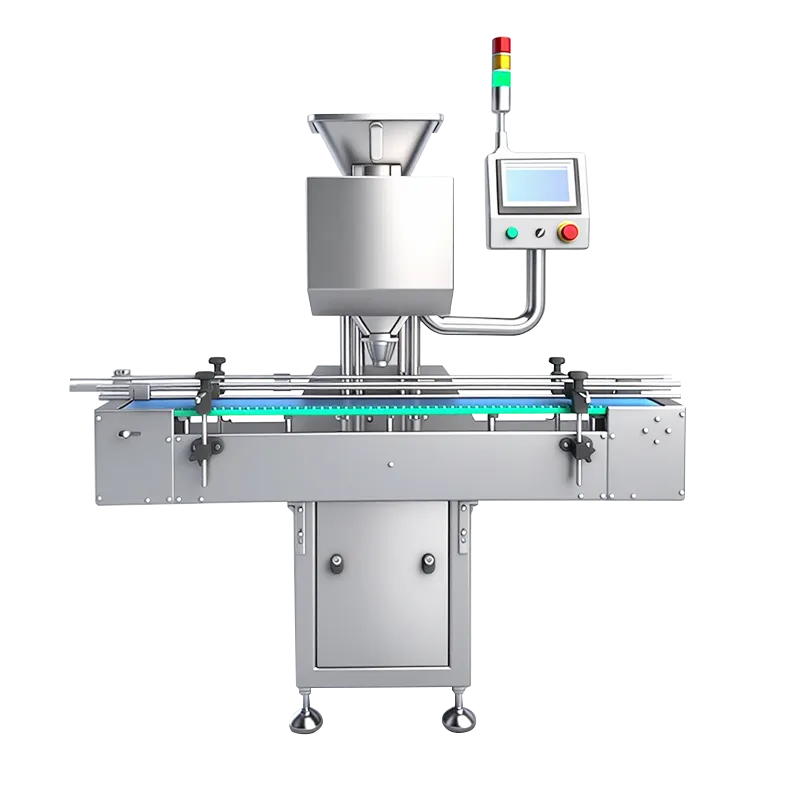
Accuracy and Precision in Automatic Counting Machine Performance
Understanding Accuracy and Error Rates in Automatic Counting Machines
Modern automatic counting machines achieve ±0.2% error rates in pharmaceutical applications through advanced optical sensors and vibration feeders. Error rates rise to 1.3% when handling irregularly shaped tablets or fragmented capsules, according to 2023 calibration studies.
Role of High-Speed Sensors and Calibration in Ensuring Precision
Infrared sensors scanning at 2,000 times per second, combined with auto-calibration algorithms, prevent miscounts caused by static electricity or item overlap. Machines using quarterly recalibration show 41% fewer deviations than those on annual schedules, highlighting the importance of regular maintenance for sustained precision.
Error Detection, Rejection Mechanisms, and Fragment Control
Dual-layer verification systems use weight thresholds and image recognition to detect and reject damaged capsules. Pneumatic fragment removal channels clear debris continuously, maintaining >99% accuracy during extended 8-hour production runs—a critical factor in high-volume environments.
Case Study: Impact of Sensor Calibration on Pill Counting Accuracy
A 90-day trial across 12 pharmacies found that dynamic calibration reduced counting errors from 3.2% to 0.8% when handling hygroscopic tablets prone to sticking. Real-time humidity compensation improved precision by 63% over fixed-calibration models, demonstrating how adaptive technology enhances reliability in variable conditions.
Automation and Control: Enhancing Efficiency with Smart Interfaces
PLC Touch Screen Interface and User-Friendly Control Panel Design
Programmable logic controller (PLC) touch screens simplify complex operations, reducing training time by 35% compared to manual systems (2024 HMI Trends Report). Haptic feedback and gesture controls minimize input errors in fast-paced settings. Cloud-connected panels enable real-time monitoring across multiple production lines—essential for pharmacies managing over 10,000 counts daily.
Auto-Fill Functions and Integration With Prescription and ERP Systems
Automated fill protocols sync with electronic prescription (eRx) and enterprise resource planning (ERP) platforms, cutting counting discrepancies by 40% in facilities processing 500+ prescriptions daily (2023 Pharmacy Automation Study). Batch processing capabilities allow automatic adjustment of parameters for controlled substances versus standard medications, ensuring compliance without manual intervention.
Connectivity Options for Printers and External Devices
Standard USB-C and Ethernet ports support seamless integration with label printers, security scanners, and inventory databases. Bluetooth 5.0 enables mobile device pairing for remote quality checks—especially valuable given that 72% of medication errors occur during manual verification stages (FDA 2022). Industrial-grade connectors ensure reliable performance in high-humidity storage areas (85%+ RH).
Trend Analysis: Rise of Smart Automation in Pharmaceutical Counting
According to Grand View Research from 2024, the market for AI counting systems worldwide is expected to expand at around 12.5% each year until 2029. Hospitals need these systems because they demand nearly perfect accuracy when handling controlled substances, something traditional methods just can't match. With edge computing becoming more common, facilities can process visual information right where it's needed instead of sending everything to the cloud. This approach keeps those important FDA audit records intact too. Most newer setups these days come with modular components, which means hospitals can upgrade their systems for better counterfeit detection or connect them to existing databases without having to replace all their equipment from scratch.
Capacity, Throughput, and Machine Type: Matching Needs to Scale
Evaluating Throughput Efficiency in High-Volume Pharmacy Settings
When pharmacies handle more than 10,000 units each day, they need equipment that can manage at least 300 counts every minute. The best systems have dual channel feeders combined with speed controls that adapt as needed, which keeps things accurate even when demand spikes. Take for example those smart sensors that tweak vibration levels on their own. According to data from the Packaging Efficiency Report in 2023, these dynamic adjustments cut down on jams by around 27% compared to older fixed systems. This means fewer interruptions and better performance overall, with orders getting fulfilled faster throughout the busy periods.
Desktop vs. Industrial Automatic Counting Machines: A Performance Comparison
| Metric | Desktop Models | Industrial Systems |
|---|---|---|
| Throughput Capacity | 50–200 units/minute | 300–800 units/minute |
| Ideal Use Case | Clinics/Small Pharmacies | Hospitals/Distributors |
| Error Rate | 0.5% | 0.1% |
Desktop units are ideal for space-constrained environments but lack the hopper capacity of industrial models, which can handle bulk counts of 5,000+ tablets per cycle.
Case Study: Throughput Improvement Using Rotary Capsule Counters
A Midwest pharmacy network achieved 92% faster order fulfillment after switching from vibratory to rotary capsule counters. The rotary system’s centrifugal sorting reduced miscounts of oblong tablets by 41%, operating at 650 units/minute—a 55% increase in throughput over previous equipment.
Technology and Working Principles Behind the Automatic Counting Machine
Vibration Feeders, Optical Sensors, and Control Systems: Core Components
Three core subsystems enable reliable operation:
- Vibration feeders use controlled oscillations to align and transport tablets or capsules into single-file flow
- Optical sensors employ high-resolution cameras or laser scanners to detect individual items in the counting zone
- Programmable logic controllers (PLCs) synchronize mechanical actions with sensor inputs, adjusting parameters like vibration intensity in real time
Vibratory vs. Rotary Counting Systems: How They Work and When to Use Them
| Feature | Vibratory Systems | Rotary Systems |
|---|---|---|
| Best For | Irregular shapes & fragile items | High-speed cylindrical capsules |
| Throughput | 200–1,200 units/minute | 1,500–3,000 units/minute |
| Accuracy Threshold | ±1% error tolerance | ±0.5% error tolerance |
| Typical Use Case | Compounding pharmacies | Large-scale manufacturing |
Vibratory systems handle diverse geometries via adjustable tracks, while rotary models use spinning disks for blister-pack-level speeds with uniform products.
Emerging Innovations: AI and Machine Learning in Next-Gen Counting Machines
Convolutional neural networks (CNNs) are now used to resolve challenges like pill overlap and counterfeit detection. These systems analyze real-time sensor data to:
- Identify genuine medications using ultraviolet spectral patterns
- Self-calibrate to compensate for sensor drift
- Predict maintenance needs by analyzing component vibration signatures
Early adopters report 40% fewer recount incidents, particularly when processing translucent capsules or textured tablets where traditional optical methods fall short.
Product Versatility and Quality Assurance in Counting Operations
Handling diverse forms: Tablets, capsules, gummies, and irregular shapes
Advanced counting machines accommodate various pharmaceutical forms, including standard tablets, capsules, gummies, and irregularly shaped items. Adjustable vibration feeders and multi-channel optical sensors maintain accuracy across different geometries. Elliptical capsules, for example, require optimized sensor angles to avoid miscounts, while translucent gummies need IR calibration to distinguish overlapping pieces.
Adapting settings for fragile or non-standard dosage forms
Fragile items such as effervescent or scored tablets benefit from customizable handling protocols. Systems with configurable vibration intensity and protective linings reduce product damage. A 2023 pharmaceutical packaging study showed auto-adjusting tray pressure lowered fragmentation rates by 62% compared to fixed-pressure models when processing brittle medications.
Counterfeit detection technologies: UV, IR, CIS, and MG integration
Integrated verification combines ultraviolet (UV) pattern recognition, infrared spectral analysis, contact image sensor (CIS) scanning, and metal detection (MG) to identify counterfeit products. This multi-layered approach supports compliance with FDA serialization requirements while operating at speeds up to 2,000 units per minute.
Balancing speed with reliability in quality assurance protocols
Next-generation machines use real-time feedback loops to dynamically adjust conveyance speed when potential errors are detected. This ensures consistent precision during high-volume runs, preventing costly recalls while supporting daily outputs exceeding 500,000 units in industrial-scale applications.
FAQs
What is the typical error rate achieved by modern automatic counting machines in pharmaceutical applications?
The typical error rate is ±0.2% in pharmaceutical applications, but this can rise to 1.3% when handling irregularly shaped tablets or capsules.
How important is regular calibration for maintaining accuracy in counting machines?
Regular calibration is crucial. Machines using quarterly recalibration schedules show 41% fewer deviations compared to those calibrated annually.
What are the main components of an automatic counting machine?
The main components include vibration feeders, optical sensors, and programmable logic controllers (PLCs) that work together to ensure accurate counting.
How have next-gen counting machines improved counterfeit detection?
Next-gen machines use AI and machine learning to enhance counterfeit detection through ultraviolet spectral patterns, self-calibration, and predictive maintenance analysis.
What capabilities do advanced counting machines have for handling diverse pharmaceutical forms?
They can handle tablets, capsules, gummies, and other irregular forms by using adjustable vibration feeders and multi-channel optical sensors.
Table of Contents
- Accuracy and Precision in Automatic Counting Machine Performance
- Automation and Control: Enhancing Efficiency with Smart Interfaces
- Capacity, Throughput, and Machine Type: Matching Needs to Scale
- Technology and Working Principles Behind the Automatic Counting Machine
- Product Versatility and Quality Assurance in Counting Operations
-
FAQs
- What is the typical error rate achieved by modern automatic counting machines in pharmaceutical applications?
- How important is regular calibration for maintaining accuracy in counting machines?
- What are the main components of an automatic counting machine?
- How have next-gen counting machines improved counterfeit detection?
- What capabilities do advanced counting machines have for handling diverse pharmaceutical forms?