 EN
EN


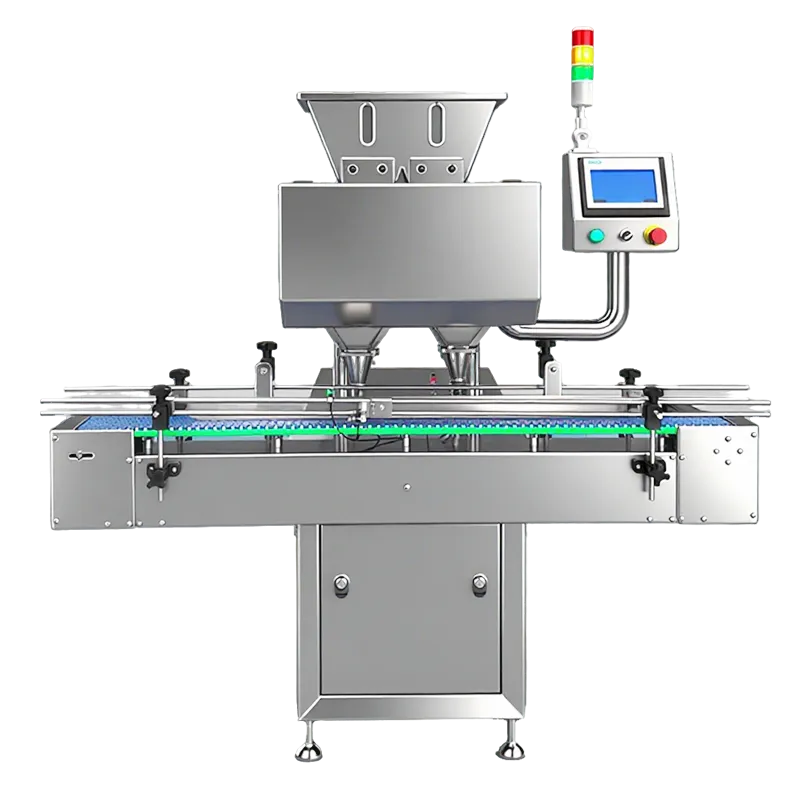
The Role of Tablet Counting Machines in Quality Assurance
By Nadia Al-Sayed — Pharmaceutical Quality Systems Specialist
Tablet counting machines serve as critical control points in pharmaceutical quality assurance systems. They verify content accuracy to ±0.1%, document every counted bottle with electronic audit trails, reject non-conforming units at production speed, and provide the statistical data required for continuous process monitoring. Under FDA 21 CFR Part 211 and EU GMP guidelines, these capabilities are not optional—they are fundamental requirements for maintaining product quality and regulatory compliance throughout the packaging lifecycle.
Counting Accuracy as a Quality Assurance Pillar
Quality assurance in pharmaceutical packaging encompasses multiple dimensions, and counting accuracy directly impacts several of them:
- Content uniformity: 21 CFR 211.137 requires that drug product containers accurately reflect stated contents. A bottle labeled "100 tablets" must contain exactly 100. Counting machines achieving 99.95% accuracy ensure compliance; manual processes with 1–3% error rates create systematic violations.
- Patient safety: Undercounted bottles deliver less medication than prescribed, potentially disrupting treatment regimens. Overcounted bottles provide excess medication, creating overdose and diversion risks. Both scenarios represent quality failures with direct patient impact.
- Product giveaway control: Consistent overcounting—common in manual operations where operators "round up"—represents uncontrolled material loss. A 1% overcount on a product costing $0.10 per tablet, across 100,000 bottles daily, wastes $1,000 per day. Counting machines eliminate this loss.
- Recall prevention: Inaccurate counts are a leading cause of pharmaceutical recalls. According to FDA recall data, packaging errors account for approximately 25% of Class I and Class II drug recalls. Counting accuracy directly reduces this risk.
How Counting Machines Support GMP Compliance
Modern tablet counting machines are designed with GMP compliance as a foundational requirement. Their quality assurance contributions include:
Electronic Documentation and Traceability
21 CFR 211.130 requires lot or control numbers that permit determination of the history of manufacture and control of each batch. Automatic counting machines provide:
- Per-bottle counting records: Each bottle's counted quantity, timestamp, and lane assignment are logged electronically, creating a complete audit trail.
- Reject event documentation: Every rejection event—fragment detected, count mismatch, foreign object identified—is recorded with timestamp, reason code, and lane reference.
- Batch summary reports: At batch completion, the system generates summary reports including total bottles filled, total tablets counted, reject count, accuracy statistics, and any alarm events. These reports serve as batch record attachments during quality review.
- Change control records: Recipe changes, parameter adjustments, and format changeovers are logged with operator ID, timestamp, and authorization level, supporting 21 CFR Part 11 electronic records requirements.
Real-Time Process Monitoring
| Monitoring Parameter | What It Reveals | QA Action |
|---|---|---|
| Counting accuracy trend | Gradual drift indicates sensor contamination or mechanical wear | Trigger preventive maintenance before out-of-specification occurs |
| Reject rate by lane | Elevated rejects in one lane suggest feeder misalignment or product issue | Investigate specific lane and correct root cause |
| Throughput rate variation | Speed drops indicate vibratory feeder blockage or tablet flow issues | Inspect feeder system and product characteristics |
| Fragment detection frequency | Increasing fragments suggest upstream tablet press issues | Communicate quality concern to compression department |
| Foreign object detection events | Non-pharmaceutical objects indicate environmental contamination | Investigate facility cleaning and environmental controls |
According to FDA packaging validation guidelines, regular monitoring of these parameters supports the Process Performance Qualification (PPQ) lifecycle, providing documented evidence that the counting process remains in a state of control.
Statistical Process Control Integration
Quality assurance teams should integrate counting machine data into their statistical process control (SPC) programs. Key practices include:
- Control chart monitoring: Plot daily counting accuracy on X-bar and R charts. Establish control limits based on machine capability studies. Data points outside control limits trigger formal investigation under the deviation management system.
- Trend analysis: Analyze counting accuracy trends over 30, 60, and 90-day windows. Gradual deterioration trends indicate maintenance needs before accuracy falls below acceptance criteria.
- Capability studies: Periodically calculate Cpk and Ppk values for the counting process. A Cpk below 1.33 indicates the process is not capable of consistently meeting specification limits and warrants process improvement action.
- Correlation analysis: Correlate counting accuracy with tablet physical properties (weight, hardness, friability) to identify whether upstream tablet production issues are affecting counting performance.
- Annual product review: Incorporate counting accuracy data into Annual Product Quality Reviews (APQR) as required by EU GMP Chapter 1 and FDA ICH Q7A guidelines.
Preventing Cross-Contamination
21 CFR 211.130(a) requires prevention of mixups and cross-contamination through physical or spatial separation. Counting machines contribute to this objective through:
- Single-product design: Counting tracks and product contact surfaces are designed for rapid disassembly, cleaning, and reassembly, enabling complete product changeover without residual contamination.
- Closed transfer paths: Tablets flow through enclosed counting channels from feeder to bottle, minimizing open exposure and preventing cross-contamination between adjacent production lines.
- Dedicated cleaning validation: Equipment cleaning procedures must be validated per 21 CFR 211.67(b), with documented acceptance criteria for carryover limits.
- Visual inspection accessibility: Stainless steel product contact surfaces are designed for visual inspection during cleaning verification, ensuring no product residue remains in dead corners or crevices.
Equipment Qualification and Requalification
Quality assurance oversight of counting equipment extends throughout its lifecycle through formal qualification activities:
- Installation Qualification (IQ): Verifies that equipment is installed per design specifications, with correct utilities, environmental conditions, and documentation. Includes verification of materials of construction, instrument calibration status, and as-built drawings.
- Operational Qualification (OQ): Tests the equipment's functional performance against specification limits, including counting accuracy at minimum and maximum speeds, reject mechanism response time, and alarm verification.
- Performance Qualification (PQ): Demonstrates that the equipment consistently produces product meeting predetermined quality attributes under routine operating conditions, typically over three consecutive batches.
- Requalification: Performed annually or after major maintenance, modifications, or relocations. Ensures the equipment continues to meet qualified performance criteria throughout its service life.
According to FDA guidelines on packaging validation, this IQ/OQ/PQ framework supports the overarching goal of patient safety and product efficacy throughout the product lifecycle.
Building a Quality-Driven Counting Culture
Equipment provides the capability, but organizational culture delivers the quality. Pharmaceutical facilities achieving the highest counting accuracy share these characteristics:
- QA teams treat counting machine data logs as critical quality records—reviewed daily, investigated for anomalies, and retained for the full regulatory retention period.
- Operators receive training not only on machine operation but on the quality implications of counting accuracy, enabling them to recognize and respond to quality-relevant events.
- Maintenance and quality functions collaborate on preventive maintenance schedules, ensuring equipment servicing is timed to prevent quality deterioration rather than responding to it.
- Counting accuracy is reported as a key quality metric in management review meetings, ensuring visibility at the organizational leadership level.
Source: FDA 21 CFR Part 211 Subpart G (Dec. 2024); FDA Packaging Validation Guidelines; Dataintelo Electronic Tablet and Capsule Counting Machine Market Report, 2025
Strengthen Your Quality Assurance with the Right Equipment
Tablet counting machines are not merely production equipment—they are quality assurance instruments that generate the documentation, monitoring data, and process control capabilities required by modern GMP systems. Selecting equipment that meets these requirements requires a manufacturer who understands the regulatory landscape. With CE and ISO 9001 certifications, 20+ years of pharmaceutical machinery manufacturing experience, and equipment in 50+ countries, our systems are designed to support your quality assurance objectives. Contact us at tel: +86-13868159610 or email: [email protected] to discuss your quality assurance requirements.
Table of Contents
-
The Role of Tablet Counting Machines in Quality Assurance
- Counting Accuracy as a Quality Assurance Pillar
- How Counting Machines Support GMP Compliance
- Electronic Documentation and Traceability
- Real-Time Process Monitoring
- Statistical Process Control Integration
- Preventing Cross-Contamination
- Equipment Qualification and Requalification
- Building a Quality-Driven Counting Culture
- Strengthen Your Quality Assurance with the Right Equipment