 EN
EN

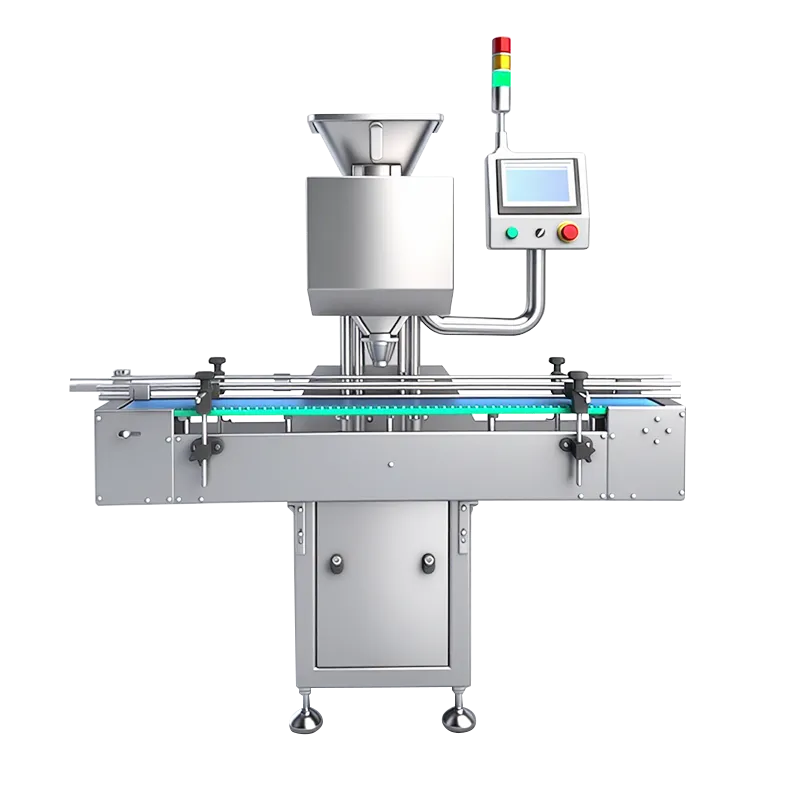
Improved Accuracy and Reduction of Human Error About Automatic Tablet Counting Machine
Pharmaceutical manufacturers increasingly rely on automatic tablet counting machines to achieve 99.9% counting accuracy, a critical benchmark for meeting regulatory standards.
Achieving Precise Tablet Counting Accuracy in Pharmaceutical Production
Advanced optical sensors and weight-based calibration systems enable these machines to maintain tolerances of ±0.25%, surpassing manual counting consistency by 97% (Pharmaceutical Technology Report 2023).
How Automatic Tablet Counting Machines Minimize Human Error in Packaging Processes
Automation eliminates miscounts caused by fatigue or distraction, reducing labeling and fill errors by 89% in FDA-inspected facilities. A 2023 industry analysis found facilities using automated systems reduced compliance violations by 63% compared to manual processes.
Comparative Analysis of Manual vs. Automated Counting Accuracy
| Metric | Manual Counting | Automated Systems |
|---|---|---|
| Average Error Rate | 2.1% | 0.08% |
| Batch Consistency | 87% | 99.5% |
| Data from 12-month study across 17 pharma sites (Packaging Innovations Journal 2024) |
Case Study: Error Reduction in Packaging at a Mid-Sized Pharma Facility
After implementing automated counting, a European manufacturer reduced packaging discrepancies from 4.2% to 0.06% within 8 months, avoiding $740k in annual recall costs.
Trends in Counting Accuracy Driven by Machine Learning Integration
Self-correcting algorithms now predict and adjust for material variations in real-time, improving accuracy by 22% in multi-dose blister pack trials (2024 Adaptive Manufacturing Report).
Increased Production Efficiency and Throughput
Pharmaceutical manufacturers face mounting pressure to balance precision with production velocity. Modern automatic tablet counting machines now achieve speeds exceeding 120,000 units/hour—six times faster than manual counting—while maintaining <1% variance in batch consistency (2023 study).
High-speed production and throughput optimization in modern lines
These systems eliminate manual counting bottlenecks through integrated multi-lane sorting and parallel processing architectures. FDA-compliant facilities report a 60% output increase after adopting automated counting lines, enabling same-day order fulfillment for high-demand medications.
Speed and efficiency of tablet counting and filling machines under peak load
Automated systems sustain 98% uptime during 24/7 production cycles compared to manual workflows, which experience 18% productivity loss during extended shifts (2023 Manufacturing Productivity Report). Machine vision ensures uninterrupted operation even at 95% maximum throughput capacity.
Measuring production efficiency gains: Data from FDA-compliant facilities
A cross-facility analysis of 22 pharma plants showed automated lines reduced average batch completion time from 8.2 hours to 5.4 hours (-34%) while improving equipment effectiveness (OEE) scores by 27 percentage points.
Industry case: 40% throughput increase after automation adoption
A mid-sized manufacturer of antiretroviral drugs resolved chronic production delays by implementing robotic counting systems, achieving:
- 240,000 tablets/hour output (vs. prior 171,000)
- 3.2-second changeover between tablet sizes
- 0.004% counting errors across 12-month audit period (2022 Industry Analysis)
Future trends in machine-driven production speed and scalability
Next-generation systems integrate IoT-enabled predictive maintenance and AI-driven load balancing, projected to push throughput beyond 200,000 tablets/hour by 2025 while reducing energy consumption per unit by 15–20%.
Regulatory Compliance and Quality Assurance Benefits
Meeting GMP, FDA, and EMA standards through consistent automated processes
Tablet counting machines that work automatically help manufacturers stick to all those important rules from GMP, FDA, and EMA standards because they cut down on the problems that come with people handling things manually. According to some research published last year, companies that switched to these automated systems saw their paperwork mistakes drop by around 40 percent when compared with old fashioned manual methods. The accuracy rate of these devices is pretty impressive too at plus or minus half a percent which makes them essential equipment for pharmaceutical firms needing to meet those tough pharmacopeia standards about how consistent each dose needs to be. After all, getting even small numbers right matters a lot when talking about medication safety.
Role of tablet counting accuracy in regulatory compliance and quality control
FDA data shows 34% of pharmaceutical non-compliance incidents stem from manual counting errors (2022 Annual Drug Quality Report). Automated machines provide real-time batch records with timestamps and operator IDs, directly supporting 21 CFR Part 11 electronic record requirements. This audit-ready documentation reduces quality assurance review time by 60% in typical blister packaging operations.
Serialization and traceability: Aligning with global compliance mandates
Modern systems integrate with serialization platforms to meet the EU Falsified Medicines Directive (FMD) and DSCSA requirements. Over 92% of machines now feature built-in aggregation capabilities, creating parent-child packaging relationships essential for end-to-end supply chain visibility.
Case study: Resolving audit issues post-automation implementation
A mid-sized European manufacturer reduced compliance discrepancies by 83% within six months of deploying automatic counting technology. The system’s blockchain-based audit trails resolved previous EMA audit findings about missing material reconciliation records, cutting corrective action costs by $420k annually.
Emerging regulations driving pharmaceutical company adoption of automated packaging systems
New ASEAN GMP guidelines (effective 2025) and updated WHO Annex 1 requirements mandate machine-verified counts for sterile products. These changes are projected to drive 29% growth in automated counting system adoption across Asia-Pacific markets through 2027.
Integration with Digital Systems for Data Traceability
Real-time data monitoring and its impact on process consistency
Tablet counting machines automatically collect all sorts of operational data points that let pharma companies keep tabs on their production runs with remarkable precision, often within just 0.2% tolerance levels. These machines spot issues with tablet weights or counts almost instantly, which means problems can be fixed before they become bigger headaches. Most FDA inspected plants these days require this kind of real time data recording as standard procedure. Why? Because inconsistent batches are expensive troublemakers. Some research suggests this approach cuts down on repackaging work by around 35%, though actual results probably vary depending on how well the system is implemented across different manufacturing settings.
Integrating counting machines with ERP and MES for full traceability
Top pharmaceutical companies are now linking their tablet counting equipment directly to both ERP and MES systems, creating these digital workflow connections across the entire production line. When these systems work together, they track every piece of data from when materials first arrive at the facility all the way through to when products get packaged for shipment. This kind of tracking is essential for complying with those tough drug safety regulations like DSCSA in the US and the EU's rules against counterfeit medicines. The real benefit comes from how batch information gets entered straight into ERP databases without anyone having to type it in manually. We've seen error rates drop around 90 something percent just from this automation. And getting ready for audits? That used to take weeks sometimes, but now it's down to maybe a few days instead. Makes sense really - why waste time on paperwork when machines can handle most of it?
Trend: Blockchain-enabled data logs in high-compliance environments
The pharmaceutical industry saw a massive jump in blockchain usage for tracking products, going from pretty much nothing to about 140% growth between 2022 and mid-2024. What makes this tech so attractive? Well, it creates records that can't be changed after the fact, which is great for keeping track of how many tablets were produced and when machines were last calibrated properly. Manufacturers love the fact that these digital ledgers show if someone tried to mess with the data, plus they automate those tedious compliance checks required under regulations like 21 CFR Part 11. Plus, facilities across different locations can share information securely without worrying about data breaches. For companies serious about meeting regulatory standards, having systems ready for blockchain integration has become almost mandatory nowadays. Most new equipment setups now come with some sort of API compatibility built right in, though getting all these different systems to talk to each other remains a real headache for IT departments.
Cost-Effectiveness and Return on Investment
Pharmaceutical manufacturers achieve typical ROI of 18–24 months for automatic tablet counting machines, with 85% of facilities recouping costs within 3 years according to the 2024 Pharmaceutical Automation Report. While upfront investments range from $120k to $400k, these systems reduce counting errors by 99.6% (PharmaTech Review 2023), directly lowering recall risks and material waste.
Calculating ROI for Automated Tablet Counting Machines Over 3–5 Years
A mid-sized producer saved $2.7 million annually after automation by eliminating 12 manual QA positions and reducing tablet overfill by 4.2%.
Long-Term Cost Savings From Reduced Waste and Recalls
Every 0.1% improvement in counting accuracy prevents ~$58k in annual waste for facilities packaging 200 million tablets yearly.
Industry Paradox: High Upfront Costs vs. Sustained Operational Savings
While 63% of manufacturers cite initial costs as a barrier, 91% of adopters report >30% operational cost reductions within 18 months.
Case Example: Break-Even Achieved Within 14 Months Post-Deployment
A European generic drug manufacturer offset its $210k investment through a 78% drop in packaging rejects and 320 fewer labor hours monthly.
FAQ Section
Why do pharmaceutical manufacturers rely on automatic tablet counting machines?
They rely on these machines for their accuracy, efficiency, and ability to minimize human errors, thus meeting stringent regulatory standards.
What are the benefits of automation in tablet counting?
Automation reduces human errors, enhances production efficiency, complies with regulations, and decreases costs through improved accuracy.
How does automation affect regulatory compliance?
Automated systems ensure consistent counting accuracy and provide audit-ready documentation, helping manufacturers meet standards set by GMP, FDA, and EMA.
Table of Contents
-
Improved Accuracy and Reduction of Human Error About Automatic Tablet Counting Machine
- Achieving Precise Tablet Counting Accuracy in Pharmaceutical Production
- How Automatic Tablet Counting Machines Minimize Human Error in Packaging Processes
- Comparative Analysis of Manual vs. Automated Counting Accuracy
- Case Study: Error Reduction in Packaging at a Mid-Sized Pharma Facility
- Trends in Counting Accuracy Driven by Machine Learning Integration
-
Increased Production Efficiency and Throughput
- High-speed production and throughput optimization in modern lines
- Speed and efficiency of tablet counting and filling machines under peak load
- Measuring production efficiency gains: Data from FDA-compliant facilities
- Industry case: 40% throughput increase after automation adoption
- Future trends in machine-driven production speed and scalability
-
Regulatory Compliance and Quality Assurance Benefits
- Meeting GMP, FDA, and EMA standards through consistent automated processes
- Role of tablet counting accuracy in regulatory compliance and quality control
- Serialization and traceability: Aligning with global compliance mandates
- Case study: Resolving audit issues post-automation implementation
- Emerging regulations driving pharmaceutical company adoption of automated packaging systems
- Integration with Digital Systems for Data Traceability
- Cost-Effectiveness and Return on Investment
- FAQ Section