 EN
EN

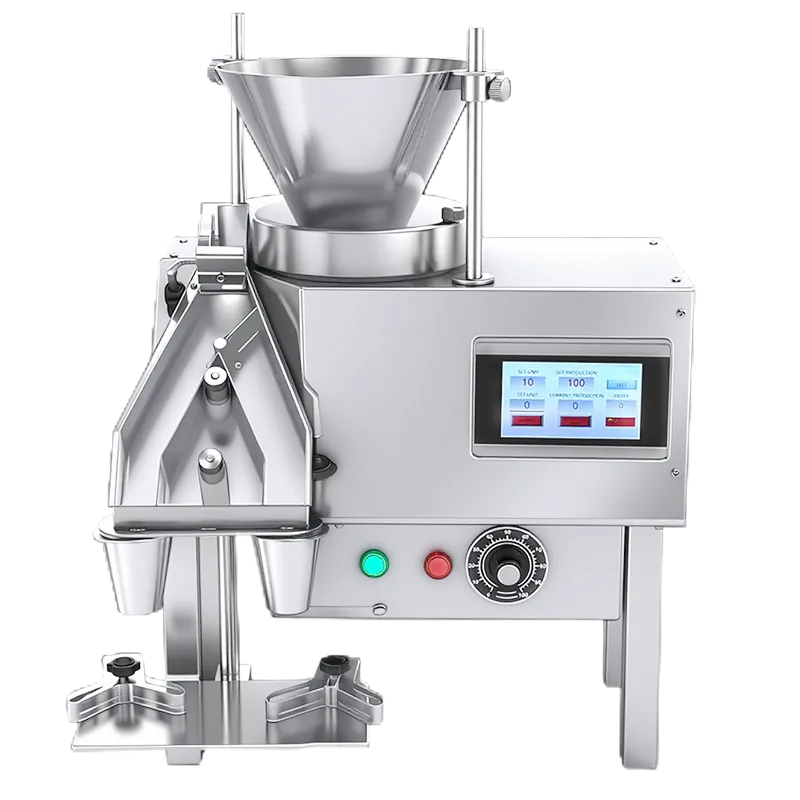
Working Principle of Automatic Tablet Counting Machines
What is an automatic tablet counting machine and how does it function?
Tablet counting machines bring together mechanical accuracy and modern tech to make pharmaceutical packaging much faster and more reliable. Most systems work through several steps that double check the count again and again, which cuts down on mistakes people might make when doing it manually. The best ones actually shake the tablets gently while scanning them with special lights, allowing these machines to tally up thousands of pills every single hour with almost no errors at all. This kind of precision isn't just good for speed either it's essential for following those strict GMP rules that drug manufacturers have to遵守. Pharmacies across the country are finding these machines invaluable, especially during busy periods when accuracy matters most.
Vibratory feeding systems for consistent tablet flow
When starting the process, tablets get placed inside a stainless steel hopper that helps keep different medications separate. The next step involves what's called a vibratory feeder, which gives those tablets just enough of a shake so they move along smoothly towards special channels where they line up properly. What makes this whole setup work is that each tablet gets through the detection area individually, so there aren't any bunching problems that might mess up accurate counting. These days, most advanced feeders can actually adjust how hard they vibrate depending on whether we're dealing with tiny little 2mm pills or bigger ones like caplets. Some facilities even report being able to handle oddly shaped tablets too when needed for specific pharmaceutical products.
Sensor technology for precise individual tablet detection
The heart of the counting system lies in infrared optical sensors that can spot each tablet passing through with about half a millimeter accuracy. As tablets interrupt the light beam from these sensors, they activate an electronic counter and automatically reject any broken pieces or oddly shaped tablets. Some higher end versions come equipped with what's called a dual sensor verification setup. These advanced systems check counts twice over by looking at both how much light gets blocked and differences in weight measurements. In labs where conditions are tightly controlled, this extra layer of checking brings down errors to under one hundredth of a percent.
Vision systems and AI integration for enhanced accuracy
The latest generation of production machines comes equipped with high speed vision cameras capable of grabbing around 200 frames every second to inspect tablets for size and surface issues. Smart software then checks each pill against stored standards, flagging anything with chips, hairline fractures, or odd color spots that would slip past even experienced workers during manual inspection. The whole inspection happens while the machine counts the tablets too, barely slowing things down by less than a fifth of a second per cycle. Factory managers have noticed something interesting too - companies using these visual inspection systems tend to see roughly 40 percent drop in product recall incidents compared to those still relying on traditional methods.
Core Components of an Automatic Tablet Counting Machine
Hopper Design and Its Role in Bulk Tablet Handling
The hopper acts as the main way bulk tablets get into the system, usually designed like a funnel with those special anti-jam baffles that help control how they flow down. The steep sides plus some built-in vibrations make sure the tablets keep moving steadily toward whatever comes next in the process, which helps avoid those frustrating blockages we all hate. These days most hoppers come with clear panels so operators can actually see what's going on inside, and they're built in modules so they can handle pretty much any tablet size out there, from the tiny ones around 3mm right up to larger ones measuring about 25mm across. This range covers almost everything manufacturers might need to work with.
Vibrating Disk and Shaking Platform for Uniform Alignment
After exiting the hopper, tablets transition to a vibrating disk that uses controlled oscillations (5–15 Hz) to separate clumps. The shaking platform then aligns tablets into single-file rows via micro-vibrations, adjusting intensity based on tablet size and fragility. This dual-stage alignment reduces counting errors by 72% compared to static feeding systems.
Types of Sensors Used in Automatic Tablet Counting Machine Operation
Three sensor types ensure precision:
- Photoelectric sensors: Detect translucent tablets using infrared beams
- Capacitive sensors: Identify metallic-coated tablets through charge differentials
- High-speed cameras: Capture 120 fps images for AI-powered defect detection
These systems achieve error rates below 0.05% in recent pharmaceutical automation trials.
Counting System Mechanics and Real-Time Data Processing
The central processing unit correlates sensor inputs with mechanical counters, using programmable logic controllers (PLCs) to:
- Track individual tablet trajectories
- Compare counts against preset values
- Initiate reject mechanisms for duplicates/misfeeds
Advanced models process data at 34,000 scans/second, enabling speeds up to 600 tablets/minute without accuracy loss.
Collection System and User-Friendly Control Panel Interface
Counted tablets funnel into containers via anti-static chutes with dust extraction ports. Operators manage workflows through 10" touchscreen panels offering:
- Preloaded counting programs
- Real-time productivity dashboards
- Multilingual interface options
This combination of mechanical precision and intuitive controls reduces operator training time by 65% while maintaining GMP compliance.
Step-by-Step Operation Process of Automatic Tablet Counting Machines
Step 1: Loading Tablets Into the Hopper for Automated Processing
The process begins with operators pouring bulk tablets into the machine's hopper. Modern hoppers feature angled walls and anti-clumping designs to ensure smooth material flow, preventing jams during high-speed operations.
Step 2: Vibratory Feeding and Alignment on the Shaking Platform
Vibratory plates with controlled oscillation frequencies (typically 50–100 Hz) separate and align tablets into single-file rows. This step compensates for irregular shapes, achieving ±0.5 mm positional accuracy to prepare tablets for counting.
Step 3: Optical Sensor-Based Detection of Individual Tablets
Infrared sensors and CCD cameras scan tablets at rates exceeding 1,000 units per second. Advanced models use AI-powered vision systems to identify surface defects like cracks or discoloration, reducing miscounts to <0.1%, making them suitable for regulated production environments.
Step 4: Real-Time Counting and Rejection of Misaligned or Defective Units
Reject mechanisms activate within 5 milliseconds of detecting errors, diverting flawed tablets to a separate chamber. Systems counting up to 600 tablets/minute maintain 99.9% accuracy even with hygroscopic or brittle formulations.
Step 5: Discharge Into Bottles or Containers Via the Collection System
Servo-driven nozzles dispense tablets into containers with ±1% fill weight consistency. Integrated load cells and RFID tagging enable seamless batch tracking for compliance with FDA 21 CFR Part 11 regulations.
Types and Automation Levels of Tablet Counting Machines
Manual Tablet Counters: Basic Functionality and Operational Limits
Traditional manual tablet counting relies on perforated trays or basic mechanical sorters when dealing with small batches. Pharmacists typically dump pills onto grids where each cavity fits specific pill sizes, then have to shake or rotate these trays until everything lines up properly. These systems work well enough for smaller operations like local pharmacies that handle fewer than 500 tablets per day. But there's a catch industry reports show error rates often go above 1%, which is simply too high for any environment that needs strict quality control standards. That's why most manufacturing facilities won't touch manual counters for anything beyond occasional use.
Semi-Automatic Machines: Balancing Automation and Operator Input
The combination of vibratory feeders and manual bottle placement in these systems can handle anywhere from 150 to maybe 300 tablets each minute depending on conditions. There's a photoelectric sensor that starts counting as the tablets go through the chute area. Still, workers need to keep an eye on how everything lines up and fix any blockages that happen when pills aren't shaped properly. While this mixed method cuts down on labor needs by around 40 percent over completely manual work, it doesn't eliminate the need for someone watching things closely to make sure production stays steady throughout the day.
Fully Automatic Tablet Counting Machines: High Speed and Seamless Integration
Modern fully automated tablet processing systems use PLC controlled shaking platforms along with multiple sensor arrays and robotic arms for sorting. These setups can handle anywhere from 4,000 to 6,000 tablets every single minute, which is pretty impressive when you think about it. The better quality machines come equipped with self adjusting channels that work for pills ranging between half a millimeter all the way up to 25mm in size, so there's no need to stop production for manual adjustments. What makes these systems truly remarkable is their accuracy rate of less than 0.05% errors even when running at full speed. They achieve this incredible precision by checking tablet counts twice using both weight sensors and advanced 3D vision technology working together simultaneously.
Comparative Overview: Manual vs. Semi-Automatic vs. Fully Automatic
| Feature | Manual | Semi-Automatic | Fully Automatic |
|---|---|---|---|
| Throughput Capacity | 50–500 tablets/hour | 5,000–10,000 tablets/hr | 240,000+ tablets/hr |
| Automation Level | 0% | 60–75% | 95–100% |
| Error Rate | 1–3% | 0.5–1% | <0.1% |
| Operator Dependency | Continuous | Periodic checks | Minimal supervision |
| Ideal Use Case | Small pharmacies | Medium-scale production | Large pharmaceutical plants |
Accuracy, Efficiency, and Industry Trends in Pharmaceutical Tablet Counting
Achieving high accuracy with error rates below 0.1%
Modern automatic tablet counting machines achieve pharmaceutical-grade precision through infrared sensors and weight verification systems, with industry leaders reporting error rates below 0.1% in controlled production environments. This accuracy directly supports the sector's projected 6.3% CAGR growth through 2030, driven by regulatory demands for dosage consistency in medication packaging.
Counting speeds up to 600 tablets per minute: Balancing speed and precision
Advanced models utilize servo-controlled vibration plates to handle 550–600 tablets/minute while maintaining ±0.25% counting tolerance. This 40% speed increase over legacy systems is achieved through real-time feedback loops that adjust conveyor belt rhythms based on tablet dimensions detected by laser micrometers.
Impact of tablet size, shape, and surface texture on performance
Irregular geometries like concave vitamins or coated caplets require customized handling profiles. Machines now automatically adjust orientation parameters using 3D vision systems, successfully counting 98.7% of oblong tablets (L/W ratio up to 3:1) and textured surfaces that previously caused optical sensor errors.
Future trends: AI-driven vision systems and predictive maintenance
Next-generation machines integrate convolutional neural networks that improve defect detection accuracy by 34% compared to traditional imaging. A 2024 pilot program showed predictive maintenance algorithms reducing machine downtime by 62% through wear-pattern analysis of critical components like vacuum suction cups.
Integration with packaging lines and smart manufacturing systems
Leading manufacturers now synchronize counting machines with blister packaging units using OPC-UA communication protocols, creating seamless production cells that automatically adjust batch sizes. This integration reduces manual material handling by 78% in high-volume pharmaceutical facilities, while MES integration provides real-time yield analytics.
FAQ
What is the role of a vibratory feeder in a tablet counting machine?
The vibratory feeder gently shakes tablets to ensure they move smoothly towards detection channels, preventing bunching and ensuring accurate counts.
How do infrared sensors contribute to tablet counting accuracy?
Infrared sensors detect tablets with high precision, activating electronic counters and rejecting broken or misshaped tablets for enhanced count accuracy.
Why are vision systems important in modern tablet counting machines?
Vision systems, paired with AI, inspect tablet size and surface quality, reducing product recall rates and ensuring quality during automated tablet counting processes.
What levels of automation do tablet counting machines offer?
Machines range from manual systems for small-scale needs to fully automated systems capable of processing thousands of tablets per minute with minimal errors.
How do automatic tablet counting machines support GMP compliance?
These machines ensure precise counting and quality inspection, critical for adhering to Good Manufacturing Practices (GMP) in the pharmaceutical industry.
Table of Contents
- Working Principle of Automatic Tablet Counting Machines
- Core Components of an Automatic Tablet Counting Machine
-
Step-by-Step Operation Process of Automatic Tablet Counting Machines
- Step 1: Loading Tablets Into the Hopper for Automated Processing
- Step 2: Vibratory Feeding and Alignment on the Shaking Platform
- Step 3: Optical Sensor-Based Detection of Individual Tablets
- Step 4: Real-Time Counting and Rejection of Misaligned or Defective Units
- Step 5: Discharge Into Bottles or Containers Via the Collection System
- Types and Automation Levels of Tablet Counting Machines
-
Accuracy, Efficiency, and Industry Trends in Pharmaceutical Tablet Counting
- Achieving high accuracy with error rates below 0.1%
- Counting speeds up to 600 tablets per minute: Balancing speed and precision
- Impact of tablet size, shape, and surface texture on performance
- Future trends: AI-driven vision systems and predictive maintenance
- Integration with packaging lines and smart manufacturing systems
-
FAQ
- What is the role of a vibratory feeder in a tablet counting machine?
- How do infrared sensors contribute to tablet counting accuracy?
- Why are vision systems important in modern tablet counting machines?
- What levels of automation do tablet counting machines offer?
- How do automatic tablet counting machines support GMP compliance?