 EN
EN

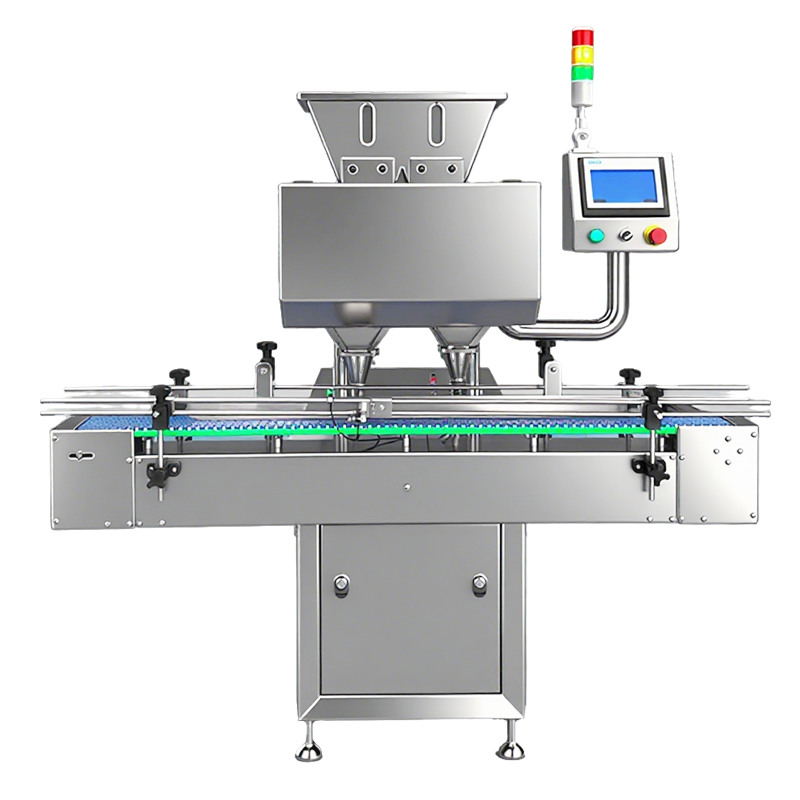
Enhancing Operational Efficiency with Automatic Counting Machines
Pharmaceutical manufacturers face mounting pressure to optimize production while maintaining strict quality standards. Automatic counting machines address these dual challenges by combining precision engineering with advanced automation capabilities, creating leaner operations that reduce waste and accelerate throughput.
The Growing Demand for Precision in Pharmaceutical Packaging Automation
Regulators require 99.9% counting accuracy for Schedule II controlled substances (21 CFR 1304.04), driving adoption of automated solutions. Unlike manual processes prone to fatigue-induced errors, automatic counting machines maintain precision through multi-stage verification systems. This shift aligns with industry benchmarks showing automated lines achieve 40% faster changeovers than semi-automated setups.
How Automatic Counting Machines Improve Speed and Consistency
Modern systems use weight-based sensors and machine vision cameras to count up to 400 pills per second while verifying geometric dimensions—far beyond human capability. Leading manufacturers integrate these devices with real-time control systems that automatically adjust parameters based on detected tablet variations, ensuring consistent performance across batches.
Case Study: Implementing Automated Solutions in a Mid-Scale Pharma Facility
A 150-employee generics producer reduced counting-related deviations by 92% after installing an automated line with integrated rejects management. The system’s automatic reconciliation feature cut daily inventory audits from 3 hours to 15 minutes, demonstrating how operational efficiency improvements compound across workflows. Over 18 months, batch records showed sustained 99.97% counting accuracy.
Integration of Automated Pill Counting and Bottle Filling in Modern Production Lines
Seamless integration with downstream bottling enables closed-loop automation, eliminating manual handling points responsible for 68% of cross-contamination risks in FDA inspection reports. Advanced models feature auto-calibration between product runs, maintaining ±0.5% counting tolerances even when switching between 2mg and 500mg tablets.
Selecting the Right Automatic Counting Machine for Your Packaging Needs
Production volume and material characteristics determine optimal machine selection. High-throughput facilities processing over 10 million units monthly should prioritize systems with dual-lane counting channels and automatic bowl changers. For potent compounds, choose machines with contained discharge mechanisms meeting ISO Class 5 cleanroom standards—essential for OEL compliance.
Reducing Human Error Through Automated Tablet Counting Accuracy
The Prevalence of Medication Errors Caused by Manual Counting Processes
Manual counting methods result in error rates exceeding 5%, according to 2023 quality assessments. Even a single miscount can compromise dosage efficacy or trigger regulatory violations. Automated counting solutions reduce errors to less than 1% using integrated weight verification and optical scanning, representing a fivefold improvement over manual processes.
How Automatic Pill Counting Machines Prevent Mistakes: Sensor Technology and Validation Algorithms
These machines employ multi-spectral sensors and machine learning algorithms to verify tablet presence and orientation. Real-time feedback loops cross-reference weight measurements with optical counts, flagging discrepancies instantly. This dual-layer validation eliminates fatigue-related mistakes while sustaining speeds above 200 pills per second.
Case Study: Cutting Dispensing Errors at a Contract Packaging Organization
A mid-sized pharma contractor reduced dispensing errors by 72% within six months of implementing automated counting. During validation, the system’s variance detection protocols prevented 1,200 potential errors, showcasing automation’s impact on quality assurance in high-volume settings.
Industry Trend: The Move Toward Fully Automated Counting and Filling Systems
Over 80% of pharmaceutical manufacturers now prioritize end-to-end automated lines integrating counting, filling, and capping. This trend supports FDA goals for zero-defect production, with robotic counting components featured in 83% of new packaging installations (2024 industry analysis).
Ensuring Regulatory Compliance with GMP, FDA, and DSCSA Standards
Increasing Regulatory Scrutiny in Pharmaceutical Manufacturing
Since 2020 we've seen regulatory oversight jump about 37%, according to Deloitte's latest report from 2024. Regulatory bodies are really pushing for openness in data and making sure production standards stay intact. The FDA has ramped up its game too, doing surprise inspections at roughly 2.3 times the rate they did before the pandemic hit. These days they're particularly concerned about getting labels right and being able to track where products come from. Looking ahead to 2025, there's this big change coming with the Drug Supply Chain Security Act. All prescription medications will need complete electronic tracking, which means every pill bottle should have those scannable codes and everything needs to work together across different systems. Manufacturers better start preparing for this one.
Aligning Automatic Counting Machines with GMP and FDA Requirements
Modern systems support GMP-compliant workflows via closed-loop validation, achieving 99.98% counting accuracy per 21 CFR Part 211.64(b). Features like optical character verification (OCV) and material density sensors prevent cross-contamination while adhering to FDA-recommended ±0.5% variance thresholds.
Case Study: Achieving Serialization and Traceability Compliance via Data Integrity Features
A mid-sized generics manufacturer reduced compliance violations by 89% after deploying an automatic counting system with embedded serialization. It generated encrypted GTIN codes during counting, enabling end-to-end traceability across 12 supply chain nodes.
Balancing Automation Investment Against Compliance Costs
While advanced counting machines involve 15–25% higher initial costs, they save $3.2 million annually in avoided regulatory penalties for facilities producing over 50 million units per month (PwC 2023).
The Role of Audit Trails and Electronic Records in Meeting DSCSA Mandates
FDA-compliant systems embed immutable audit trails tracking operator actions, calibrations, and environmental conditions. These meet DSCSA requirements for “data genealogy” from counting to final packaging, secured with 256-bit encryption to ensure record integrity.
Advancing Quality Control and Smart Manufacturing Integration
Real-Time Monitoring and Batch Traceability in Automated Packaging
Automatic counting machines equipped with IoT sensors capture production data at over 200 points per second, enabling real-time adjustments to sustain ±0.5% counting accuracy. This granular monitoring supports FDA’s 2024 guidance on continuous quality verification, particularly in systems using OCR to validate batch codes before sealing.
Ensuring Label Accuracy and Batch Consistency Through Automation
Automated lines combine barcode scanners with weight verification scales, reducing labeling errors by 98% compared to manual checks (PharmaTech Journal 2023). Advanced systems cross-reference databases to detect mismatches between pill counts and bottle sizes, ensuring GMP-compliant consistency at speeds exceeding 150 bottles per minute.
Case Study: Strengthening QA in a High-Volume Pharmaceutical Line
A mid-sized manufacturer reduced quality incidents by 73% after deploying an AI-powered counting system. The solution automatically quarantined bottles with weight deviations under 0.3g and generated audit trails compliant with 21 CFR Part 11. Throughput rose 22% without adding QA staff.
Integrating Automatic Counting Machines with AI and IoT for Predictive Quality Assurance
Cutting-edge systems use machine learning to analyze historical defect patterns, predicting maintenance needs 48–72 hours before component failures. As shown in a 2023 smart manufacturing study, this predictive capability reduces unplanned downtime by 41% in high-speed applications.
Emerging Trends: Intelligent Sensors and Self-Learning Systems in Pill Counting
New prototypes integrate hyperspectral imaging with edge computing to detect subtle tablet defects invisible to human inspectors. Self-adjusting counters using reinforcement learning have achieved 99.98% accuracy across 57 drug variants in trials, indicating commercial viability by 2026 for adaptive pharmaceutical automation.
FAQs about Automatic Counting Machines in Pharmaceutical Manufacturing
What are the advantages of using automatic counting machines in pharmaceutical manufacturing?
Automatic counting machines enhance operational efficiency by reducing human error, increasing counting accuracy, and providing faster production rates. They also aid in regulatory compliance and improve overall quality control.
How does an automatic counting machine work?
These machines use advanced technologies such as weight-based sensors, machine vision cameras, and machine learning algorithms to count, validate, and ensure the accuracy of packaging lines, often at speeds surpassing human capabilities.
Are automatic counting machines required to meet regulatory standards?
Yes, modern automatic counting machines are designed to meet regulatory standards like GMP and FDA requirements by achieving high-level accuracy and maintaining closed-loop validation.
Can automatic counting machines handle various tablet sizes and shapes?
Yes, advanced models are capable of auto-calibration between different product runs, maintaining counting tolerances across various tablet sizes and shapes.
What are the initial investment costs for automatic counting machines?
While initial costs can be 15-25% higher than traditional systems, long-term savings are significant due to reductions in regulatory penalties and increased operational efficiencies.
Table of Contents
-
Enhancing Operational Efficiency with Automatic Counting Machines
- The Growing Demand for Precision in Pharmaceutical Packaging Automation
- How Automatic Counting Machines Improve Speed and Consistency
- Case Study: Implementing Automated Solutions in a Mid-Scale Pharma Facility
- Integration of Automated Pill Counting and Bottle Filling in Modern Production Lines
- Selecting the Right Automatic Counting Machine for Your Packaging Needs
-
Reducing Human Error Through Automated Tablet Counting Accuracy
- The Prevalence of Medication Errors Caused by Manual Counting Processes
- How Automatic Pill Counting Machines Prevent Mistakes: Sensor Technology and Validation Algorithms
- Case Study: Cutting Dispensing Errors at a Contract Packaging Organization
- Industry Trend: The Move Toward Fully Automated Counting and Filling Systems
-
Ensuring Regulatory Compliance with GMP, FDA, and DSCSA Standards
- Increasing Regulatory Scrutiny in Pharmaceutical Manufacturing
- Aligning Automatic Counting Machines with GMP and FDA Requirements
- Case Study: Achieving Serialization and Traceability Compliance via Data Integrity Features
- Balancing Automation Investment Against Compliance Costs
- The Role of Audit Trails and Electronic Records in Meeting DSCSA Mandates
-
Advancing Quality Control and Smart Manufacturing Integration
- Real-Time Monitoring and Batch Traceability in Automated Packaging
- Ensuring Label Accuracy and Batch Consistency Through Automation
- Case Study: Strengthening QA in a High-Volume Pharmaceutical Line
- Integrating Automatic Counting Machines with AI and IoT for Predictive Quality Assurance
- Emerging Trends: Intelligent Sensors and Self-Learning Systems in Pill Counting
-
FAQs about Automatic Counting Machines in Pharmaceutical Manufacturing
- What are the advantages of using automatic counting machines in pharmaceutical manufacturing?
- How does an automatic counting machine work?
- Are automatic counting machines required to meet regulatory standards?
- Can automatic counting machines handle various tablet sizes and shapes?
- What are the initial investment costs for automatic counting machines?