 EN
EN

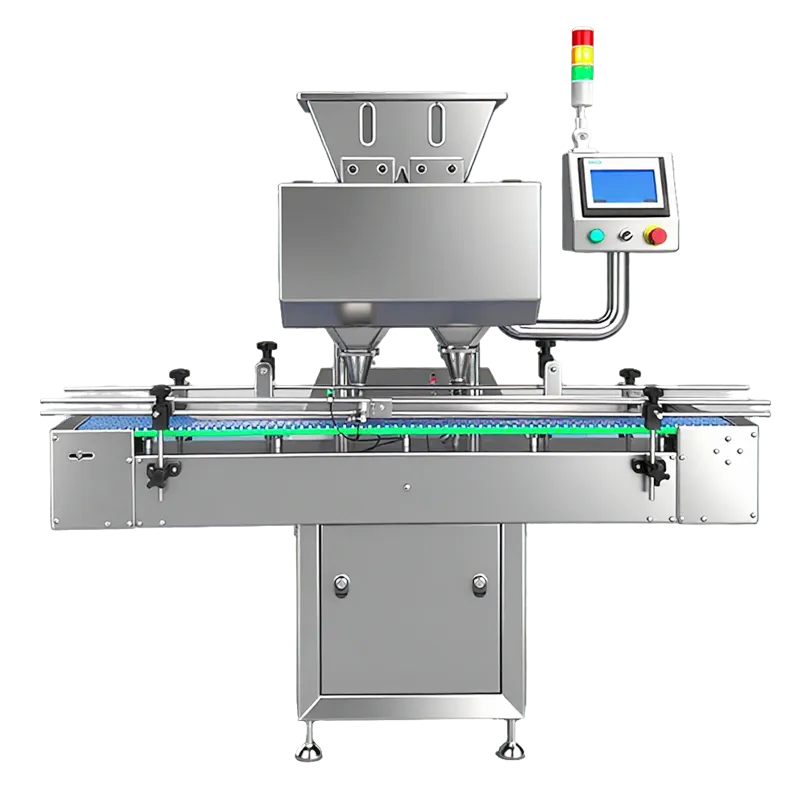
Understanding Automatic Counting Machines and Their Core Role in Quality Control
In today's factories, automatic counting machines have become pretty much essential for cutting down on mistakes made by people and keeping quality checks uniform across the board. Without these systems, manufacturers often face serious problems like production slowdowns and getting hit with fines from regulators because of wrong count numbers. The financial impact is huge too – we're talking around $740,000 lost every year just from having to fix these errors again and again according to Ponemon Institute research from last year. When these counting systems work together with other automation tools in the factory, they maintain steady product quality throughout the whole process. Plus, this setup lets human workers focus on what really matters – looking at defects that require actual judgment instead of just basic counting tasks all day long.
What Is an Automatic Counting Machine? Definition and Key Components
These systems use sensors, mechanical counters, and software to tally products or components with 99.9% accuracy. Core elements include:
- Weight-based sensors for bulk counting of small items like pills or fasteners
- Optical scanners to verify component quantities in electronics assembly
- Software interfaces that log counts and flag deviations in real time
The Critical Importance of Accurate Product Counting in Manufacturing
Miscounts in pharmaceutical packaging can lead to life-threatening dosage errors, while undercounts in automotive manufacturing cause costly production delays. A recent study showed automated counting reduced packaging errors by 72% compared to manual methods, directly improving compliance with FDA and ISO standards.
Integration with Automated Production Lines for Enhanced Quality Assurance
| Manual Counting | Automated Counting |
|---|---|
| 85% accuracy | 99.9% accuracy |
| 50 units/minute | 1,200 units/minute |
| No data tracking | Full audit trails |
Seamless integration with robotic arms and conveyor systems allows these machines to act as quality checkpoints, rejecting batches with count discrepancies before they advance down the line. This closed-loop automation reduces waste by 40% in high-speed bottling and packaging operations.
How Automatic Counting Machines Improve Defect Detection and Process Monitoring
Streamlining Defect Detection Through Precision Counting and Anomaly Recognition
Today's automatic counting machines combine multiple sensors with smart learning software to spot problems during production runs, achieving nearly perfect counting accuracy around 99.9%. These systems work by comparing what should be there with actual counts happening right now, catching things like missing parts, wrong packaging, or inconsistent materials at amazing speeds over 1,200 items per minute. Take the pharmaceutical industry for instance. The machines can catch when tablets are missing from blister packs just before they get sealed shut. This is super important because mistakes in medication dosages actually make up about 23% of all FDA compliance issues according to recent audits from 2023 in the pharma sector.
Real-Time Data Collection and Continuous Production Monitoring
Integrated IoT sensors transform counting machines into process optimization tools, transmitting weight distributions, cycle times, and rejection rates to central dashboards every 500ms. This granular visibility enables manufacturers to:
- Correlate defect spikes with specific machinery or operator shifts
- Monitor trends in component shrinkage or material thickness variations
- Achieve 30% faster response to production anomalies compared to manual sampling
A 2023 industry analysis found plants using continuous production monitoring systems reduced overfill penalties by $17.50 per production hour in chemical batch processes.
Case Study: 40% Defect Reduction in a Pharmaceutical Packaging Line
When a pharmaceutical company based in Germany installed these vision guided counting systems for their vial packaging line, they saw an amazing drop in counting mistakes - down by around 92%. The new setup included checking weights and making sure caps were properly aligned. Within just over two months, overall defect rates went from 1.4% to only 0.8%, which means roughly 41 thousand fewer bad products getting tossed each month. What really made a difference was the detailed tracking records these machines kept. During their next inspection by regulators, those logs pointed straight to a problem with the capping equipment being the main cause of defects, something that would have taken much longer to figure out manually.
Balancing Automation and Human Oversight in Quality Control Systems
While automatic counting handles 98% of routine inspections (ISO 2023 automation benchmarks), human technicians remain essential for:
- Validating machine calibration through random manual audits
- Investigating root causes of recurring defect patterns
- Adjusting tolerance thresholds during raw material changes
This hybrid approach aligns with FDA guidance requiring "critical control points to have both automated and human verification layers" in medical device manufacturing.
Machine Vision and AI: Advancing Automatic Counting for Smarter Quality Control
How Machine Vision Transforms Accuracy in Product Counting
Today's machine vision setups pair top quality cameras with sophisticated image analysis software to count products with incredible accuracy down to the micron level. The technology checks for consistent dimensions, spots surface flaws, and verifies positioning while cranking through over 2000 items each minute. This cuts down on mistakes made by humans by roughly 40%, which is pretty impressive when we think about all those tiny parts flying past on assembly lines. What makes these systems so valuable is their ability to turn what the camera sees into actual information manufacturers can use right away. Traditional counting methods often miss subtle issues in production, but modern vision systems catch them before they become bigger problems.
High-Speed Counting Performance in Demanding Manufacturing Environments
Industrial-grade machine vision handles production speeds exceeding 1,500 items per minute while maintaining 99.95% counting accuracy, even in high-vibration or variable-lighting conditions. Dual-camera configurations enable simultaneous top/bottom inspections, critical for verifying multi-component assemblies. Ruggedized housing allows continuous operation in environments with temperatures up to 120°F (49°C) and 95% humidity.
Enhanced Defect Detection Using Visual Algorithms and Image Analysis
The latest visual algorithms can spot those tiny cracks under a millimeter in size on medicine pills and catch those almost invisible scratches on silicon wafers too, achieving around 98 percent accuracy when classifying defects. Research published last year showed something interesting - when manufacturers combine edge detection techniques with texture analysis methods, they end up cutting down on false alarms by roughly 72% over traditional systems that rely solely on basic thresholds. And there's another trick up the sleeve: multi spectral imaging actually checks what materials are present, which helps avoid serious mistakes where different colored medical device packages might get confused with each other during production runs.
The Rise of AI-Powered Machine Vision in Next-Generation Counting Machines
Modern deep learning setups are making it possible for counting systems to adapt automatically when dealing with different product shapes, all without needing someone to rewrite the code from scratch. One recent innovation in factory automation showed how these neural network systems cut down on setup time between production runs by around three quarters, and still kept those tight quality standards everyone talks about with Six Sigma. What's really interesting is how these smart systems connect the counting information back to what's happening earlier in the production line. They can actually spot when tools are starting to wear out before problems happen in the count, which means fewer surprises and less waste down the road.
Pharmaceutical Applications: Ensuring Dosage Accuracy and Compliance
Why the Pharmaceutical Industry Relies on Automatic Counting Machines
In fast paced pharmaceutical manufacturing, automatic counting machines achieve nearly perfect accuracy rates around 99.9%. This matters a lot because even small mistakes can put patients at risk or land companies in hot water with regulators. The machines also reduce direct human interaction in clean rooms where sterility is essential, working with all sorts of medications including those packaged in blister packs and filled into glass vials for liquids. According to last year's Global Pharma Automation study, roughly eight out of ten compliance issues stemmed from simple counting mistakes made by staff. No wonder so many facilities are switching to these automated systems now.
Maintaining Dosage Accuracy and Meeting Regulatory Standards
Modern counting machines integrate with precision scales and vision systems to maintain strict adherence to Good Manufacturing Practices (GMP) and FDA/EMA guidelines. Key features include:
- Real-time rejection of under/over-filled units
- Electronic batch records aligned with 21 CFR Part 11 requirements
- Material-specific calibration for hygroscopic drugs
This precision directly impacts patient outcomes – a 1.5mg dosage error in anticoagulant medications increases adverse event risks by 40% (Pharma Safety Journal 2024).
Data Integrity and Traceability in Sterile Manufacturing Settings
Counting machines that work automatically create encrypted records of production with timestamps, operator identification numbers, and all sorts of machine settings. These records are really important when companies need to comply with regulations or handle product recalls. When we talk about sterile fill finish operations, these counting systems help keep things at ISO 14644-1 Class 5 standards because they have sealed parts and use materials that work well in cleanrooms. The big manufacturers out there are seeing some impressive results too. They mention around 67 percent improvement in getting batches released faster thanks to how these systems integrate with their quality management software. That kind of speed makes a huge difference in day to day operations.
Measuring Quality Control Performance and ROI of Automatic Counting Machines
Integrating Statistical Process Control for Proactive Defect Monitoring
Automatic counting machines these days let manufacturers put Statistical Process Control (SPC) into practice by looking at what's happening on the production line as it happens. Research published last year indicated that when companies combine SPC with their counting systems, they see anywhere between 40 to 60 percent fewer defects in places where lots of products are made quickly. The system catches problems before they become big issues, spotting things like containers that aren't filled properly or parts that don't measure right. Instead of waiting for someone to find faults during regular checks, this method actually predicts where problems might occur. An interesting example comes from the aerospace sector, where one company reported cutting down rejected turbine blades by about 80 percent within just over a year after implementing these techniques.
Key Performance Metrics Influenced by Automated Counting Systems
Automated systems directly impact four critical KPIs:
- Cycle time variance: Reduced by 15–25% through consistent counting speeds
- Defect rate: Improved accuracy lowers scrap costs by $740k annually (Ponemon 2023)
- Labor efficiency: Counting automation frees 20–30% of QA staff for value-added tasks
- OEE (Overall Equipment Effectiveness): 8–12% gains from minimized unplannedåœæœº
These metrics provide a framework for quantifying improvements, as detailed in industry automation guidelines covering baseline establishment and progress tracking.
Evaluating the Cost-Benefit Trade-Off: High Initial Investment vs. Long-Term Gains
While premium counting systems require $200k–$500k upfront, manufacturers report ROI within 2.5–3 years through:
- 30–50% reduction in counting-related labor costs
- 90% faster reconciliation of production vs. inventory data
- 60% fewer compliance penalties in regulated industries
The break-even point accelerates when pairing counting machines with AI-powered vision systems, which amplify defect detection accuracy while reducing calibration costs.
FAQs: Automatic Counting Machines
What are the advantages of using automatic counting machines in manufacturing?
Automatic counting machines improve accuracy, reduce errors, and ensure compliance with quality standards, significantly lowering costs associated with manual counting errors.
How do automatic counting machines integrate with existing production lines?
These machines can seamlessly integrate with robotic arms and conveyor systems, acting as quality checkpoints and creating closed-loop automation that reduces waste.
What makes machine vision technology effective in counting applications?
Machine vision technology enhances accuracy by using sophisticated cameras and image analysis software, capable of handling high-speed counting with detailed visual inspections.
How do automatic counting systems ensure dosage accuracy in pharmaceuticals?
These systems maintain dosage accuracy through real-time rejection of under/over-filled units, electronic batch records, and precise material-specific calibration.
Are automatic counting systems cost-effective in the long run?
Yes, despite high initial investments, these systems offer ROI within a few years due to labor cost reductions and improved defect detection accuracy.
Table of Contents
- Understanding Automatic Counting Machines and Their Core Role in Quality Control
- How Automatic Counting Machines Improve Defect Detection and Process Monitoring
- Machine Vision and AI: Advancing Automatic Counting for Smarter Quality Control
- Pharmaceutical Applications: Ensuring Dosage Accuracy and Compliance
- Why the Pharmaceutical Industry Relies on Automatic Counting Machines
- Maintaining Dosage Accuracy and Meeting Regulatory Standards
- Data Integrity and Traceability in Sterile Manufacturing Settings
- Measuring Quality Control Performance and ROI of Automatic Counting Machines
-
FAQs: Automatic Counting Machines
- What are the advantages of using automatic counting machines in manufacturing?
- How do automatic counting machines integrate with existing production lines?
- What makes machine vision technology effective in counting applications?
- How do automatic counting systems ensure dosage accuracy in pharmaceuticals?
- Are automatic counting systems cost-effective in the long run?