 EN
EN

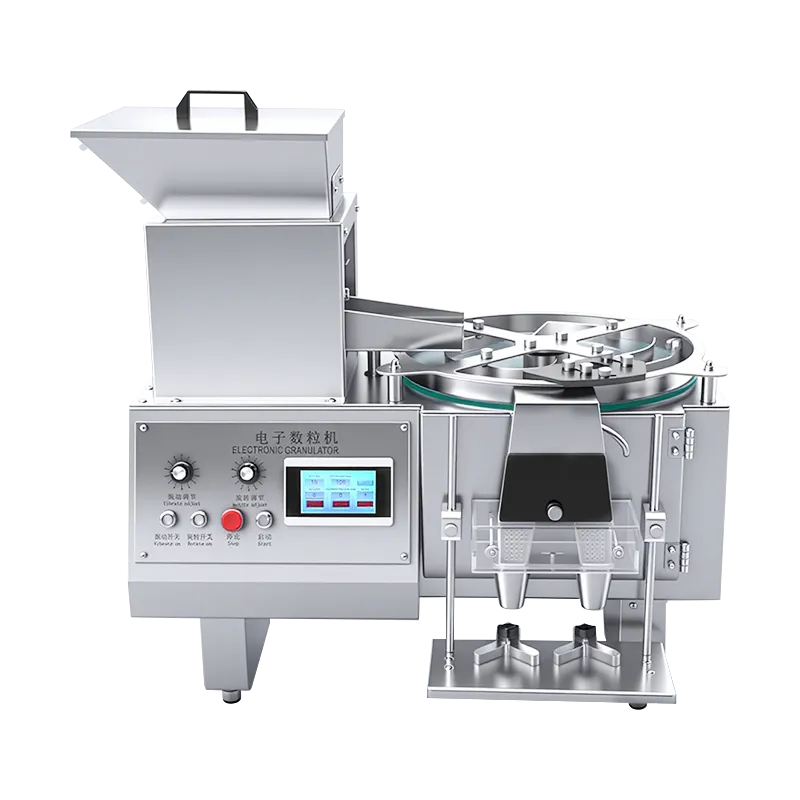
How Automatic Counting Machines Improve Efficiency and Accuracy in Pharma Production
Working Principle of Automatic Tablet Counting Machine Systems
Today's automatic counting systems rely on vibrating plates to line up pills and capsules so they form neat rows one after another. These machines typically have either infrared sensors or cameras that spot each item as it moves past the counting area. Once counted correctly, special channels guide the right number of items straight into their packaging containers. The whole setup cuts down on errors that happen when people get tired or distracted during manual counting tasks. Most manufacturers report around 99.9% accuracy rates under ideal conditions according to recent studies published in the PharmaTech Journal last year. However, some experts argue these numbers might be optimistic since real world factors can sometimes affect performance.
Key Components: Vibratory Plates, Sensor Heads, and Discharge Chutes
Three core elements define pharmaceutical-grade counting systems:
- Vibratory plates: Calibrated oscillations separate and position tablets for consistent flow
- Multi-spectrum sensor heads: Combine infrared and optical scanning to detect transparent capsules and irregular shapes
- Antistatic discharge chutes: Prevent particle adhesion during high-speed packaging, reducing cross-contamination risks
Operational Efficiency Gains in High-Volume Pharmaceutical Environments
Counting machines can handle anywhere between 600 to 1,000 units every single minute, which is way faster than what humans can manage at around 100 to 200 units per minute. The difference is huge really, about five times faster processing speed. What does this mean for businesses? Well, companies save roughly 40% on their labor expenses without compromising the quality of medication dosages when moving from one batch to another. And let's talk about errors too. Manual counting tends to have error rates hovering around 1.2%, but automated systems bring those down to just 0.05%. A recent look at 25 different production sites in 2023 confirmed these numbers, showing how automation drastically cuts mistakes in pharmaceutical manufacturing.
Manual vs. Automatic Counting Machine Performance Comparison
| Metric | Manual Counting | Automatic Counting |
|---|---|---|
| Average Speed | 100–200 units/minute | 600–1,000 units/minute |
| Typical Accuracy | 95–98% | 99.5–99.9% |
| Labor Cost/10k Units | $8.20 | $1.50 |
| Critical Errors/Month | 4.7 | 0.3 |
Data from the International Journal of Pharmaceutical Manufacturing (2024) shows automation reduces reconciliation errors by 93% and doubles production line capacity.
Vision-Based vs. Infrared-Based Counting Technologies: Performance and Compliance
Accuracy and Reliability of Vision-Based Automatic Counting Machine Systems
Vision systems rely on high res cameras paired with smart image processing software to get counting accuracy above 99.9%. These setups look at things like pill dimensions, shapes, and how they appear on surfaces, which helps cut down on mistakes when tablets overlap or aren't properly aligned during counting. Recent research from the industry in 2024 showed errors happening less than once every 10 thousand counts, even when dealing with tricky stuff like moisture absorbing pills or those with special coatings. That kind of reliability makes visual counting tech especially good for medications where dosage precision is absolutely critical.
Limitations of Infrared-Based Pill Counters With Transparent or Irregularly Shaped Pills
Infrared counters work by detecting when something blocks a light beam, but they run into problems with things like clear gelatin capsules or oddly shaped pills. The problem comes when materials are see-through enough that they don't completely block the light path, so some items just slip through without being counted properly. We actually saw this happen during testing at a pharmaceutical plant recently. When dealing with those long oval vitamin tablets, infrared systems had about 12 percent more errors compared to visual inspection methods. That might not sound like much until you consider what happens when thousands of these pass through production lines every day.
Direct Comparison: Vision vs. IR in Pharmaceutical Tablet Counting Applications
| Metric | Vision-Based Systems | IR-Based Systems |
|---|---|---|
| Accuracy Rate | 99.95% | 98.2% |
| Irregular Shape Handling | Excellent (AI-adjusted) | Moderate (Fixed logic) |
| Transparent Materials | Full support | Limited reliability |
| Audit Traceability | Image logs stored | Count logs only |
Facilities upgrading to vision-based systems report up to a 40% reduction in counting errors, enhancing both quality control and compliance readiness.
Can IR-Based Systems Meet cGMP Compliance for Critical Dosing Products?
Even when IR systems are correctly calibrated, they still struggle to fully satisfy cGMP standards because there's no actual visual confirmation available for high potency APIs, which creates real compliance problems. The solution comes from vision based counting technology that provides two forms of verification at once: sensor readings combined with actual photo documentation. This meets the FDA's 21 CFR Part 11 rules about electronic records and audit trails pretty well, though some companies find it takes extra effort to implement these systems properly across all operations.
Ensuring Precision and Regulatory Compliance in Automated Pill Counting
Importance of Accurate Pill Counting for Patient Safety and Dosage Integrity
Incorrect pill counts contribute to an estimated 7,000–9,000 preventable deaths annually (Ponemon Institute 2023). Modern automatic counting machines mitigate this risk through multi-layered verification:
- Weight-based checks detecting discrepancies as small as 5 mg
- AI-powered vision systems identifying broken or partial tablets with 99.8% accuracy
- Redundant sensors cross-validating counts before container sealing
These safeguards ensure dose consistency and protect patient safety across large-scale production runs.
Detecting Surface Defects and Contamination Using Advanced Sensor Integration
High-resolution cameras (up to 120 MP) combined with hyperspectral imaging enable real-time detection of critical defects:
| Defect Type | Detection Rate | Compliance Impact |
|---|---|---|
| Hairline cracks | 98.4% | Prevents dissolution failures |
| Microbial growth | 95.1% | Avoids FDA recalls |
| Discoloration | 99.6% | Maintains potency standards |
This level of inspection supports cGMP mandates for continuous quality monitoring during high-speed manufacturing.
Handling Irregular, Damaged, or Transparent Tablets in Automatic Counting Machines
Advanced designs overcome traditional limitations through:
- Adaptive vibration patterns that orient oblong capsules without damage
- Dual-wavelength lasers capable of counting transparent enteric-coated pills
- Anti-static chutes preventing powder buildup on sticky formulations
These features enhance flexibility across diverse product portfolios.
Pharmaceutical Compliance: How Automatic Counting Machine Designs Support cGMP and Audit Readiness
Leading systems incorporate electronic audit trails that track:
- Operator ID stamps for every batch
- Raw sensor data retention (minimum 7 years)
- Equipment calibration logs with timestamps
Such comprehensive documentation reduces audit preparation time by 62% compared to manual systems (PharmaTech Journal 2023), ensuring rapid response to regulatory inquiries.
High-Speed Throughput and Scalability for Modern Pharmaceutical Manufacturing
Counting Speed Benchmarks in Modern Automatic Capsule Counting Machine Systems
The best automatic counting machines can handle over 600 capsules each minute, while the really fancy ones are built specifically for large scale manufacturing operations. What's impressive is how accurate these systems stay too – around plus or minus 0.1 percent accuracy even when running flat out. This matters a lot because getting the count wrong means either wasting expensive medication or shortchanging customers, both of which cost money. Looking at what's happening across the industry right now, most manufacturers seem to be setting their sights on machines that hit at least 500 units per minute as a baseline requirement for meeting those contracts they sign with pharmaceutical companies according to Contract Pharma's latest report from 2025.
Case Study: High-Speed Model Achieving 600 Capsules Per Minute
The latest counting machine installed on our blister packaging line has boosted efficiency by around 30%. With two vibratory feeders working together and smart sensors that learn from experience, this new system cuts down on jamming issues by nearly half compared to those old infrared models we used before. What really stands out though is the clever self-clearing chute design. This feature keeps things running smoothly even when the machine works nonstop day after day. For companies producing high demand medications where every second counts, maintaining constant output without interruptions becomes absolutely critical. The difference between meeting production targets or falling behind can literally be measured in minutes saved throughout each shift.
Scalability of Automatic Counting Machine Systems for Contract Manufacturing Organizations (CMOs)
Modular setups give CMOs the ability to expand production capacity step by step, going from around 10 thousand all the way up to ten million units without needing major equipment overhauls. The systems work well with smart packaging lines connected to the internet of things, giving operators instant data on how much product they're actually getting out versus what they expect. Many industry reports point out that this kind of flexibility becomes really important when contract manufacturing plants have several different projects running at once for various customers across the board.
How to Choose the Right Automatic Counting Machine for Your Pharmaceutical Operation
Key selection criteria: Accuracy, speed, flexibility, and service support
Pharmaceutical operations should select an automatic counting machine that balances four key factors:
- Accuracy: Vision-based systems achieve ‰0.1% error rates, meeting 2024 industry benchmarks for dose-sensitive drugs
- Speed: High-throughput models sustain 600+ units/minute without sacrificing precision
- Flexibility: Adjustable vibratory plates accommodate tablets (1–30 mm), capsules, and irregular geometries
- Service support: Prioritize vendors offering sub-72-hour response times and remote diagnostics
Evaluating vendors: Innovation and reliability benchmarks
Top manufacturers stand out through:
- Patented anti-static discharge chutes minimizing cross-contamination
- AI-driven calibration adapting in real time to material variations
- Regulatory expertise, including built-in compliance with 21 CFR Part 11 and cGMP documentation standards
Future-proofing your investment: Integration with packaging lines and IoT monitoring
Modern systems support:
- Direct integration with blister packers and vial fillers, reducing manual transfers by 80%
- IoT sensors monitoring vibration, temperature, and wear (±5% tolerance alerts)
- Predictive maintenance algorithms that reduce unplanned downtime by 40% annually
While initial costs range from $23,000 to $65,000, total lifecycle expenses decrease by 55% over five years compared to manual counting teams.
FAQ
-
What is the accuracy rate of automatic counting systems?
Automatic counting systems, especially vision-based ones, typically achieve accuracy rates above 99.5% under ideal conditions. -
How do vision-based systems ensure accuracy?
Vision-based systems use high-resolution cameras and image processing software to assess pill dimensions, shapes, and alignment, which enhances count accuracy. -
Can infrared counting systems handle transparent pills?
Infrared systems often struggle with transparent capsules. Vision systems are better equipped for counting transparent and irregularly shaped pills. -
What are the advantages of automated counting over manual counting?
Automated counting is faster, more accurate, and reduces labor costs, leading to improved efficiency in pharmaceutical production environments. -
How do automatic counting machines ensure compliance with regulations?
Advanced machines offer audit trails, image logs, and compliance with cGMP and 21 CFR Part 11 standards to ensure regulatory adherence.
Table of Contents
- How Automatic Counting Machines Improve Efficiency and Accuracy in Pharma Production
-
Vision-Based vs. Infrared-Based Counting Technologies: Performance and Compliance
- Accuracy and Reliability of Vision-Based Automatic Counting Machine Systems
- Limitations of Infrared-Based Pill Counters With Transparent or Irregularly Shaped Pills
- Direct Comparison: Vision vs. IR in Pharmaceutical Tablet Counting Applications
- Can IR-Based Systems Meet cGMP Compliance for Critical Dosing Products?
-
Ensuring Precision and Regulatory Compliance in Automated Pill Counting
- Importance of Accurate Pill Counting for Patient Safety and Dosage Integrity
- Detecting Surface Defects and Contamination Using Advanced Sensor Integration
- Handling Irregular, Damaged, or Transparent Tablets in Automatic Counting Machines
- Pharmaceutical Compliance: How Automatic Counting Machine Designs Support cGMP and Audit Readiness
- High-Speed Throughput and Scalability for Modern Pharmaceutical Manufacturing
- How to Choose the Right Automatic Counting Machine for Your Pharmaceutical Operation