 EN
EN

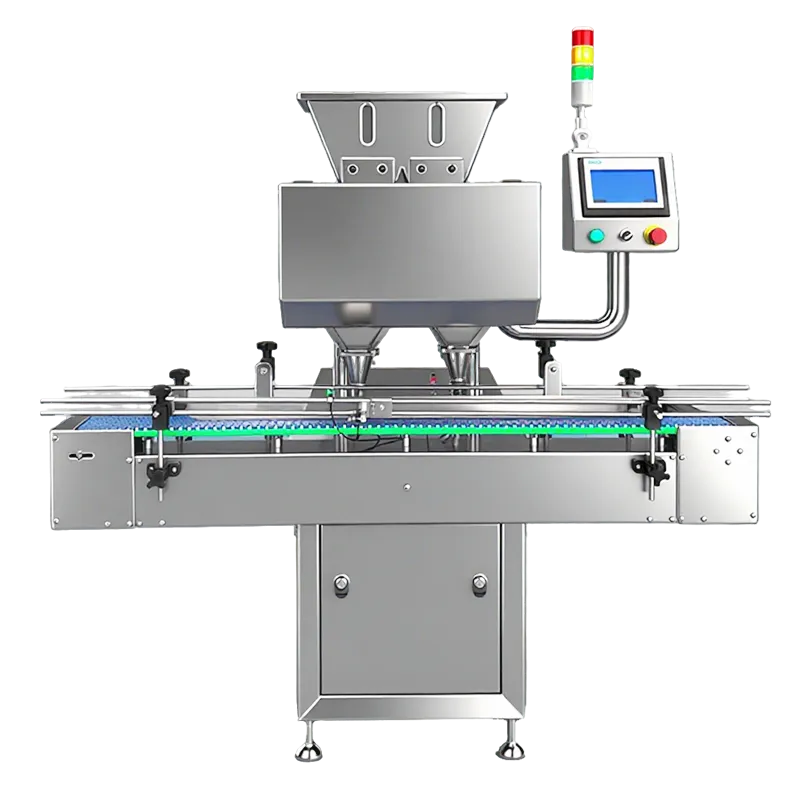
Factory-Level Considerations for Tablet Counting Machine Selection
Selecting a tablet counting machine for a factory environment involves considerations that go beyond the machine's counting accuracy and throughput specifications. Factory-level factors — floor space constraints, utility availability, existing production line layout, operator skill levels, maintenance infrastructure, and future expansion plans — all influence which machine will perform best in your specific facility. A machine that is technically excellent on paper may underperform in practice if it is mismatched to the factory's physical, operational, or organizational environment.
Hangzhou Ruiyi Machinery Technology Co., Ltd. has installed counting machines in factory environments across 50+ countries — from newly built greenfield pharmaceutical facilities in Vietnam and Nigeria to established manufacturing plants in Turkey and Brazil being upgraded with automation. This experience has produced a practical understanding of the factory-level factors that determine successful counting machine integration, which is summarized in this guide.
The global pharmaceutical packaging equipment market, valued at $10.5 billion in 2025 and projected to grow to $14.3 billion by 2030 (MarketsandMarkets, July 2025), offers a wide range of tablet counting machine options. The guidance below will help you evaluate these options against your factory's specific requirements.
Factor 1: Floor Space and Line Layout Compatibility
Before evaluating machine specifications, measure the available floor space in your production area and map the existing line layout. The counting machine must fit within the allocated space without blocking operator walkways, emergency exits, or access to adjacent equipment. Consider not only the machine's footprint but also the space required for:
- Operator access on all four sides of the machine for setup, operation, and cleaning
- Bottle conveyor infeed and outfeed paths, including any transition conveyors needed to connect to upstream and downstream equipment
- Product feed hopper access for loading bulk tablets — typically requiring 1 to 1.5 meters of clearance on the hopper side
- Control panel access — the HMI should be positioned where the operator can monitor both the counting machine and the adjacent line equipment
| Machine Model | Footprint (L × W, meters) | Minimum Recommended Floor Space | Typical Application |
|---|---|---|---|
| RY-CM-50 (semi-automatic) | 0.8 × 0.6 | 4 sq. meters | Small factories, pilot lines, R&D |
| RY-CM-100 (8-channel automatic) | 1.5 × 1.0 | 9 sq. meters | Mid-size factories, single-product lines |
| RY-CM-250 Pro (16-channel, high-speed) | 1.8 × 1.2 | 12 sq. meters | Large factories, multi-product lines |
| RY-CM-250 Pro tandem (dual-head) | 3.6 × 1.2 | 20 sq. meters | Ultra-high-volume, contract manufacturing |
For factories with limited floor space, Ruiyi Machinery offers compact configurations that integrate the counting machine, bottle unscrambler, and capping machine in a single frame — reducing total line footprint by 30% to 40% compared to standalone equipment. These compact lines are particularly suitable for facilities in urban industrial zones where floor space is at a premium.
Factor 2: Utility Requirements and Facility Infrastructure
Tablet counting machines require specific utilities to operate — and ensuring that your factory can provide these utilities before the machine arrives prevents costly installation delays and modifications. Verify the following utility availability:
- Electrical power: Most counting machines operate on 220V single-phase or 380V three-phase power, at 50 Hz or 60 Hz depending on your region. Confirm the machine's power requirement matches your facility's electrical supply, and that a dedicated circuit with appropriate breaker capacity is available. Ruiyi Machinery's machines are available in both 50 Hz and 60 Hz configurations, with voltage options from 110V to 415V to match any regional standard.
- Compressed air: Some counting machines use pneumatic components for bottle handling and reject mechanisms. Typical air consumption is 100 to 300 liters per minute at 0.5 to 0.7 MPa. Verify that your facility's compressed air system can supply clean, dry air at the required pressure and flow rate.
- Dust extraction: Tablet counting generates fine powder from product friction on the vibratory tray. The machine should include an integrated dust extraction port that connects to the facility's central dust collection system. If no central system is available, Ruiyi Machinery can supply a standalone dust collection unit sized for the machine's extraction requirements.
- Clean compressed air for product contact: For pharmaceutical GMP environments, any compressed air that contacts the product or product-contact surfaces must meet ISO 8573-1 Class 2.2.1 cleanliness standards (particle, water, and oil content). Verify that your facility's air treatment system can deliver air to this specification.
Factor 3: Operator Skill Level and Training Infrastructure
The sophistication of the counting machine's control system should match the skill level of the operators who will use it. A machine with advanced features that operators cannot effectively use is a poor investment. Assess your factory's operator capabilities against the following criteria:
- HMI language and interface: Can your operators read English-language HMI screens, or do they require a localized interface? Ruiyi Machinery's HMI supports multiple languages including English, with optional localization for specific markets.
- Technical literacy: Are your operators comfortable with touchscreen interfaces, recipe management, and parameter adjustment? If not, a simpler machine with fewer configurable parameters may be more appropriate for initial automation adoption, with upgrade to advanced equipment as operator skills develop.
- Maintenance capability: Does your factory have maintenance technicians who can perform routine maintenance (cleaning, sensor adjustment, parts replacement) on electronic and pneumatic equipment? If maintenance capability is limited, select a machine with comprehensive remote diagnostic support and a supplier with strong local service presence.
- Training resources: Does your factory have a structured operator training program, or will training be ad hoc? Ruiyi Machinery provides structured training as part of the installation package — but the factory must commit to releasing operators for the training sessions and maintaining training records for GMP compliance.
Factor 4: Tablet Product Characteristics and Diversity
Your factory's product portfolio — the range of tablet sizes, shapes, coatings, and fragility levels that the counting machine must handle — directly determines the required machine configuration. Document your product portfolio using the following framework before beginning machine selection:
| Product Characteristic | Impact on Machine Selection | Ruiyi Solution |
|---|---|---|
| Tablet diameter range (mm) | Determines feed channel width range and sensor resolution requirements | Adjustable feed channels, 2–35 mm product range |
| Tablet shapes (round, oblong, caplet) | Oblong and caplet tablets require orientation control to ensure consistent sensor detection | Adjustable channel guides with orientation control |
| Coating type (film, sugar, enteric) | Sugar coatings generate dust; enteric coatings are fragile; film coatings are standard | Integrated dust extraction; adaptive vibration control for fragile products |
| Tablet hardness (kp) | Soft tablets (<5 kp) require gentle feed settings; hard tablets (>10 kp) can tolerate higher feed rates | Recipe-based vibration amplitude adjustment, 0.1–2.0 mm range |
| Number of products run on same line | Determines required recipe storage capacity and changeover frequency | 500-recipe database; 5–8 minute tool-free changeover |
| Fill count range (tablets per bottle) | Determines counting cycle time; very low counts (1–5) and very high counts (500+) require specific configurations | 1–999 count range; dual-count mode for mixed fills |
| Bottle size range | Determines bottle guide and conveyor configuration | 20–120 mm bottle diameter; adjustable guides |
Factor 5: Integration with Existing Production Line Equipment
If the counting machine will be integrated into an existing production line rather than installed as a standalone unit, compatibility with existing upstream and downstream equipment is critical. Evaluate the following integration points:
- Conveyor height and width: The counting machine's bottle conveyor must align with the existing line's conveyor height (typically 800–900 mm from floor) and bottle width. Ruiyi Machinery's machines feature adjustable conveyor height (750–950 mm) and interchangeable bottle guide rails to match existing line configurations.
- Bottle handoff mechanism: How will bottles transfer from the upstream equipment (bottle unscrambler or conveyor) to the counting machine's infeed? If the existing equipment uses a different bottle handling format (e.g., pucks versus direct conveyor), transition conveyors or bottle format adapters may be needed.
- Communication protocol: If the existing line equipment communicates via a specific industrial protocol (PROFINET, EtherNet/IP, Modbus TCP), the counting machine must support the same protocol for synchronized speed control and line-level production monitoring. Ruiyi Machinery's machines support all major industrial Ethernet protocols as standard.
- Line control system: If the existing line has a central line control system (PLC or SCADA), the counting machine must be capable of reporting production data to and receiving control commands from the central system. Confirm that the counting machine's data interface is compatible with your line control system's data model.
- Physical interconnect: Safety interlocks, emergency stop circuits, and line synchronization signals must be compatible between the counting machine and the existing line equipment. Ruiyi Machinery's machines use standard 24V DC dry-contact signals for basic interlocks and industrial Ethernet for advanced communication, ensuring compatibility with the majority of existing production line installations.
Factor 6: Future Expansion and Scalability Planning
A tablet counting machine purchased today should support your factory's production requirements for the next 10 to 15 years. When evaluating machines, consider not only your current production volume but also your anticipated growth trajectory:
- Can the machine be upgraded to higher throughput? Some machines allow the addition of counting channels or sensor modules to increase throughput without replacing the entire machine. Ruiyi Machinery's RY-CM-250 Pro supports expansion from 16 to 32 channels through a field-installable upgrade kit, doubling throughput capacity at approximately 30% of the cost of a new machine.
- Can the machine accommodate new product formats? If you plan to add new tablet sizes, shapes, or capsule products to your portfolio, the machine's product size range and recipe capacity should accommodate these additions without requiring hardware modifications.
- Can the machine integrate with future serialization systems? If serialization is not yet required in your market but is anticipated, the machine's communication capabilities should support future integration with serialization equipment (camera systems, label printers, aggregation stations) without requiring control system replacement.
- Can a second machine be added in tandem? If your growth projections indicate that a single machine may reach capacity within 5 years, select a machine model that supports tandem installation — two machines sharing the same infeed and outfeed conveyors — to double throughput without doubling the line footprint.
Conclusion: A Factory-Specific Decision
The best tablet counting machine for your factory is the one that fits your physical space, utility infrastructure, operator capabilities, product portfolio, existing equipment, and growth plans — while delivering the counting accuracy and throughput your production requires. By evaluating each of these six factors systematically, you can make a selection decision that supports reliable, efficient production for the full service life of the equipment.
Hangzhou Ruiyi Machinery Technology Co., Ltd. offers factory assessment consultations to help manufacturers navigate this evaluation process. Our application engineers will review your factory layout, product specifications, and production requirements, and provide a detailed machine recommendation with integration drawings and a phased implementation plan.
Schedule a Factory Assessment Consultation
Share your factory layout drawings and production requirements with our engineering team. We will provide a detailed machine selection recommendation, integration plan, and installation timeline — customized to your factory's specific environment and growth plans.
tel: +86-13868159610
email: [email protected]
Data sources: MarketsandMarkets Pharmaceutical Packaging Equipment Market Report, July 2025; ISO 8573-1 Compressed Air Quality Standards; ISO 9001:2015 Quality Management Systems; Ruiyi Machinery factory assessment data from customer installations across 50+ countries, 2020–2025.
Table of Contents
- Factory-Level Considerations for Tablet Counting Machine Selection
- Factor 1: Floor Space and Line Layout Compatibility
- Factor 2: Utility Requirements and Facility Infrastructure
- Factor 3: Operator Skill Level and Training Infrastructure
- Factor 4: Tablet Product Characteristics and Diversity
- Factor 5: Integration with Existing Production Line Equipment
- Factor 6: Future Expansion and Scalability Planning
- Conclusion: A Factory-Specific Decision