 EN
EN

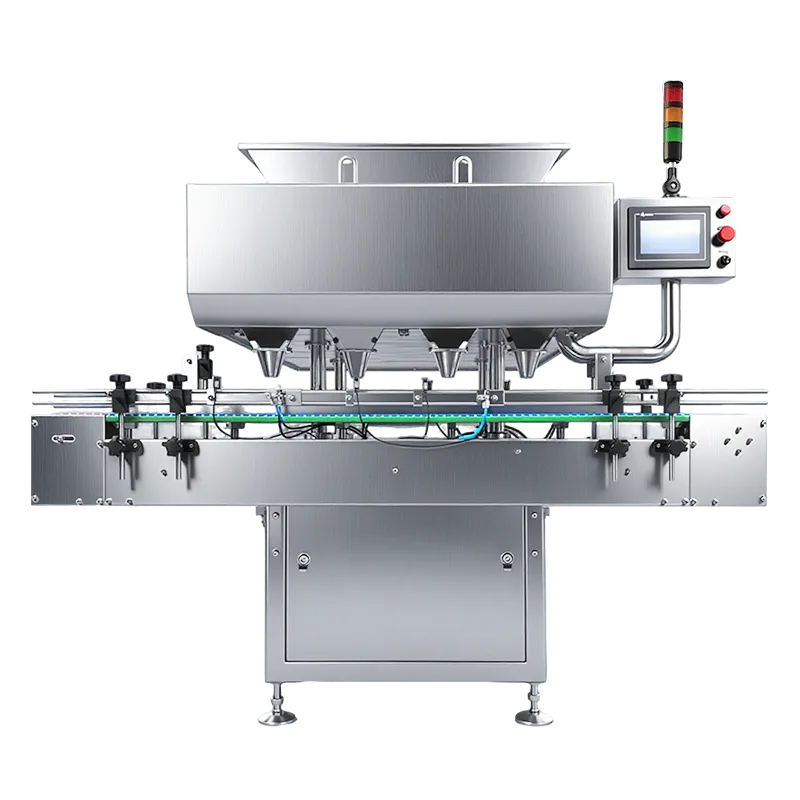
Accuracy at Scale: Why Speed Must Not Compromise Precision in Tablet Counting Machines
How 99.99%+ counting accuracy safeguards patient safety and meets FDA/EMA GMP requirements
Getting the right dosage counts isn't just about running efficient operations, it's absolutely critical for keeping patients safe. Modern tablet counters hit over 99.99% accuracy thanks to those fancy optical sensors combined with AI checks that catch mistakes before they happen. These machines help manufacturers stay within FDA and EMA GMP rules that demand close attention to each and every pill made. Even cutting error rates down by something as small as 0.01% makes a big difference. Take a batch of five million units for example, this would stop around 500 wrong doses from happening each month. That kind of mistake prevention saves companies from costly recalls that can run into hundreds of thousands according to Ponemon Institute research from 2023. Plus automated systems create solid audit trails that replace those handwritten notes people used to keep, making sure all the data stays intact and trustworthy throughout production.
Error rate benchmarks: manual (0.5–2%), semi-automatic (0.1–0.5%), and high-speed tablet counting machines (<0.01%)
High-speed tablet counting machines utilize multi-spectral imaging to detect micro-fractures and irregularities during counting, maintaining near-perfect accuracy even at speeds exceeding 3,000 units per minute. This performance aligns with ISO 13485 certification standards, where human error accounts for 72% of deviations cited in FDA Warning Letters (2022).
Throughput, ROI, and Real-World Production Efficiency
Quantifying financial impact: 0.03% overage reduction = $220K/year savings on 50M-unit/month output
Getting accurate counts actually pays off financially because it cuts down on extra medication being produced. Take companies making around 50 million items each month for example. If they manage to cut back just 0.03 percent of wasted materials, that adds up to roughly $220k saved every year on those expensive active ingredients needed for drugs. Traditional counting approaches are just not as reliable. Manual counting typically has errors between half a percent to two percent, while semi-automatic systems still leave room for mistakes ranging from 0.1 to 0.5 percent. When businesses switch to these better counting methods, they see their money back faster and spend less on getting rid of leftover products plus storing all that unused stock takes up valuable space and costs money too.
Scalable throughput: multi-channel vs. single-lane tablet counting machine configurations for batch sizes from 10K to 500K units
Production flexibility determines optimal machine configuration. Single-lane systems are ideal for smaller batches (10,000–100,000 units), offering rapid changeover for frequent SKU transitions. Multi-channel systems support high-volume campaigns of up to 500,000 units, delivering over 120,000 units/hour through parallelized counting. Key considerations include:
- Throughput optimization: Multi-channel designs maximize output for large batches
- Batch adaptability: Single-lane units support agile production across diverse SKUs
- Footprint efficiency: Modular configurations scale with evolving production demands
Selecting the right system prevents bottlenecks during peak demand and avoids underutilization during low-volume runs.
Technical Reliability and GMP-Compliant Design
High-speed tablet counting machines must combine unwavering technical reliability with adherence to Good Manufacturing Practice (GMP) standards. This requires precision engineering and validated processes to ensure consistent performance under continuous production conditions.
Sensor performance comparison: optical, infrared, and electrostatic field sensing in ISO Class 7–8 cleanrooms
Modern tablet counting machines employ advanced sensing technologies suited to ISO Class 7–8 cleanroom environments:
In controlled environments, optical sensors can reach nearly 99.995% accuracy, though they need regular recalibration when static levels get too high. Moving on to infrared technology, these systems cut down on false readings by about 40% when dealing with products that are sensitive to temperature changes, making them a better choice than optical options in many cases. For facilities where humidity is tightly managed, electrostatic field sensors tend to work best. According to various validation tests, some models have shown miscount rates dropping below 0.003% even after running nonstop for weeks at a time. This kind of reliability makes all the difference in operations where counting accuracy matters most.
PLC integration, real-time diagnostics, and audit-trail readiness for regulatory validation
Programmable Logic Controller (PLC) integration enhances both performance and compliance. Centralized PLC systems monitor sensor outputs, mechanical wear, and environmental conditions in real time, enabling:
- Automatic adjustment of counting parameters when vibration exceeds 5µm
- Immediate alerts if accuracy drift approaches the 0.008% error threshold
- Encrypted, timestamped audit trails for every counting event
Real-time diagnostics reduce mean-time-to-repair by 65% compared to non-integrated systems. Facilities using PLC-equipped machines report 100% success in regulatory audits, as these systems generate electronic records compliant with FDA 21 CFR Part 11 and EU Annex 11. Cryptographic sealing ensures data integrity, eliminating the need for error-prone manual logbooks.
Strategic Procurement: TCO, Flexibility, and Line Integration
Looking at tablet counting machines isn't just about what's on the price tag when buying them. Smart companies know they need to consider total cost of ownership from day one all the way through years of operation. That means factoring in things like getting the machine installed properly, running validation tests, regular maintenance work, plus how efficiently it runs over time. Many pharma plants find that investing in faster models actually saves money in the long run, sometimes cutting overall costs by around 20 to 30 percent even though these machines cost more initially. Flexibility matters too. Machines built with modular components make switching between different tablet sizes and production batches much quicker without shutting down operations completely. Top manufacturing sites look for equipment that speaks the same digital language as their current systems using standards like OPC UA. This kind of compatibility makes everything work together smoothly instead of creating isolated data pockets. Real time monitoring becomes possible across the whole production line. When companies make purchasing choices that balance upfront costs against future expansion needs and system compatibility, they end up saving money later on retrofitting old equipment and stay ahead of regulatory requirements throughout their operations.
FAQ
What level of accuracy do modern tablet counters achieve?
Modern tablet counters achieve over 99.99% accuracy, thanks to optical sensors and AI checks.
Why is accuracy important in manufacturing pharmaceutical tablets?
Accuracy is vital to ensure patient safety, avoid costly recalls, and comply with FDA and EMA GMP regulations.
How do high-speed tablet counting machines compare to manual and semi-automatic systems?
High-speed machines have an error rate of less than 0.01%, significantly lower than manual (0.5–2%) and semi-automatic (0.1–0.5%) methods.
What are the benefits of adopting a PLC-integrated tablet counting machine?
PLC integration improves performance, provides real-time diagnostics, and ensures regulatory compliance through encrypted, timestamped audit trails.
How do sensing technologies differ in cleanroom environments?
Optical sensors offer excellent performance, while infrared reduces false readings by 40%. Electrostatic field sensors perform best in controlled humidity environments.
Why should companies consider total cost of ownership when procuring tablet counting machines?
Considering TCO includes installation, maintenance, and operational efficiency. Faster machines may reduce long-term costs despite higher initial prices.
Table of Contents
- Throughput, ROI, and Real-World Production Efficiency
- Technical Reliability and GMP-Compliant Design
- Strategic Procurement: TCO, Flexibility, and Line Integration
-
FAQ
- What level of accuracy do modern tablet counters achieve?
- Why is accuracy important in manufacturing pharmaceutical tablets?
- How do high-speed tablet counting machines compare to manual and semi-automatic systems?
- What are the benefits of adopting a PLC-integrated tablet counting machine?
- How do sensing technologies differ in cleanroom environments?
- Why should companies consider total cost of ownership when procuring tablet counting machines?