 EN
EN

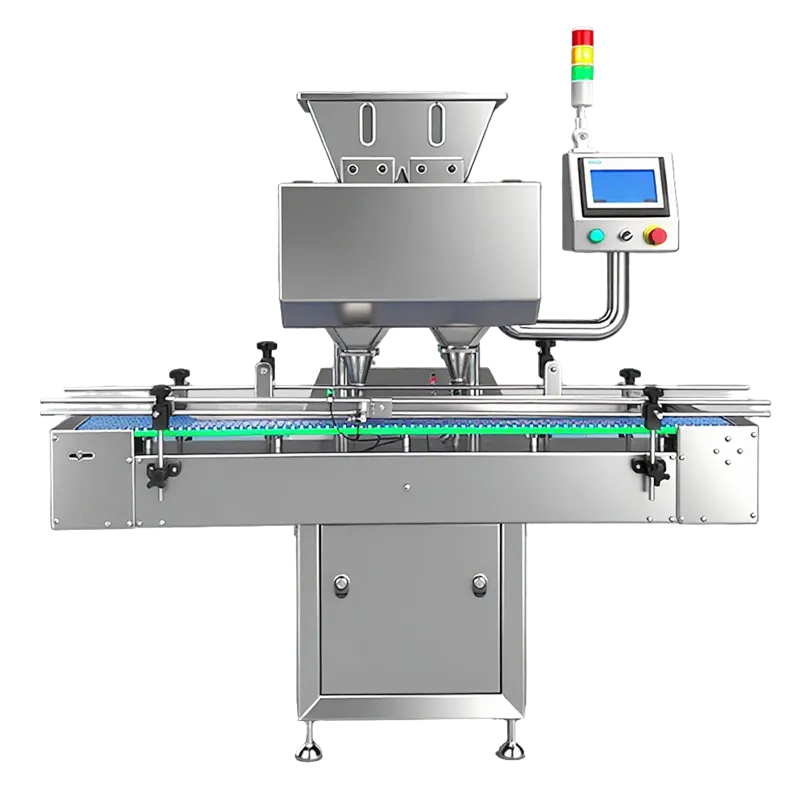
The Role of Automatic Counting Machines in Pharmaceutical Packaging Efficiency
Understanding Automatic Counting Machines in Pharmaceutical Manufacturing Efficiency
Pharmaceutical companies are turning to automatic counting machines (ACMs) to boost their packaging operations, swapping out those tedious manual counts that always seem to go wrong. These modern devices come equipped with fancy optical sensors and smart processing tech that can check medication doses at blistering speeds over 80 thousand units per hour. A recent look at industry data from last year showed something pretty impressive: plants that switched to ACMs saw their packaging accuracy jump by nearly 95% compared to old school methods. This kind of precision matters a lot when it comes to meeting those strict FDA regulations under 21 CFR Part 211, which basically means fewer mistakes and happier regulators.
How Automatic Tablet Counting Machines Enhance Production Throughput
Modern ACMs increase packaging output by 300–400% while maintaining ISO 15378 quality requirements. Unlike manual methods susceptible to fatigue-related errors, automated systems operate continuously with ±0.3% counting tolerances. This enables manufacturers to package 120–150 blister strips per minute, significantly outperforming the traditional manual rate of 30–40 strips.
Integration of Automatic Counting Machines in Pharmaceutical Packaging Automation
Top pharmaceutical companies are now combining ACMs with track and trace technology along with AI driven visual inspection systems for comprehensive quality control throughout production. These systems cut down on contamination issues by around 82%, mainly because they work inside sealed counting chambers. Plus, they help document each batch as it moves through processing in real time. With countries around the world getting stricter about product serialization requirements, we're seeing significant demand for these machines. Market research suggests the automatic counting machine sector will see roughly 9.7% annual growth right up until 2030 as manufacturers adapt to these new standards.
Case Study: Implementation at a Leading Pharmaceutical Machinery Manufacturer
A prototype ACM deployment at an Asian equipment innovator demonstrated 40% faster changeovers due to modular design. Key performance metrics included:
| Metric | Pre-ACMs | Post-ACMs | Improvement |
|---|---|---|---|
| Daily Output | 480k | 1.2M | 150% |
| Counting Errors/1M | 850 | 3 | 99.6% |
| OEE (Overall Equipment Effectiveness) | 68% | 92% | 35% |
Equipped with cascading vibratory feeders and dual-camera verification, the system achieved zero recalls during its 18-month validation period—highlighting ACMs’ critical role in modern compliance strategies.
Improving Accuracy and Reducing Errors with Automatic Counting Technology
Medication Error Reduction Using Automatic Counting Machines in Pharmaceutical Packaging
Automated counting machines cut down on medication mistakes thanks to their sealed counting chambers and optical sensors which hit around 99.9 percent accuracy. That's actually about 14.9 points better than what people can manage manually at roughly 85%. Factory folks tell us they've seen recall rates drop by nearly two thirds once these systems get put into place. The tech behind them includes vibration feeders paired with infrared scanners capable of handling close to 1,200 pills every single minute while spotting any cracked or broken tablets along the way. Some pretty smart algorithms work overtime too, catching those pesky overlaps and static issues that throw off counts. A recent look at pharmaceutical calibration from last year showed these systems slash counting errors by almost 93% when compared against old fashioned hand counting methods.
Comparative Analysis: Manual vs. Automatic Tablet Counting Accuracy
| Metric | Manual Counting | Automatic Counting Machine |
|---|---|---|
| Average Accuracy | 85% | 99.9% |
| Throughput | 50 units/minute | 1,200 units/minute |
| Audit Trail Capacity | None | Real-time data logging |
These systems eliminate recount needs by 80% in high-volume production, with error margins as low as ±0.2% for standard tablets. Facilities using automated counting also experience 41% fewer FDA compliance violations annually.
Balancing Automation and Human Oversight in Quality Control
While ACMs perform 95% of quality checks, human oversight remains essential for sensor calibration and validating irregular capsule shapes. Units maintained with quarterly recalibration show 41% fewer deviations than those serviced annually. Hybrid workflows—where machines conduct initial counts and technicians audit 5% of batches—achieve 99.99% accuracy without compromising throughput.
Efficiency Gains and Industry-Wide Adoption of Automatic Counting Machines
Measuring Pharmaceutical Manufacturing Efficiency with Automated Systems
When companies integrate ACMs into their operations, they see real improvements in efficiency. Some research shows packaging lines can run anywhere from 27 to 33 percent faster than when people do the work manually according to Verified Market Reports in 2024. The machines themselves are pretty impressive too, capable of handling between 800 and 1,200 items every single minute while getting the count right almost all the time at around 99.95%. This basically takes care of those annoying bottlenecks that slow everything down. And there's more good news for manufacturers looking at costs. With real time data analysis helping keep things running smoothly, companies report cutting down on wasted materials by about 18% and saving nearly a quarter on energy bills throughout their tablet packaging operations.
Trend: Rising Adoption of Automatic Counting Machines in Global Pharma Facilities
More than two thirds of new drug manufacturing plants are now equipped with automatic counting systems, especially noticeable in the Asia Pacific region and across North America. This trend makes sense when looking at recent changes to WHO's Good Manufacturing Practice standards which encourage automation for better quality control. Countries developing their pharmaceutical sectors often find ways to share costs between government bodies and private companies, making these systems affordable enough to pay for themselves in around 14 to 18 months thanks to lower labor expenses and fewer product recalls. The fact that these counting systems work well with international tracking requirements means they're getting adopted faster in areas where regulations are strict and compliance matters most.
Technological Evolution: From Semi-Automatic to Fully Automatic Systems
Semi-Automatic vs Automatic Tablet Counting Machines: A Performance Breakdown
Pharmaceutical manufacturers face a strategic decision between semi-automatic and fully automatic systems. While semi-automatic models reduce manual effort, they still require operator intervention for corrections and adjustments. Fully automatic machines eliminate these inefficiencies through closed-loop control and real-time adjustments.
| Criteria | Semi-Automatic Machines | Fully Automatic Machines |
|---|---|---|
| Throughput Capacity | 150 bottles/minute | 300–500 bottles/minute |
| Counting Accuracy | 98.5% | 99.95% |
| Labor Dependency | 2–3 operators per shift | Unattended operation |
| Error Detection Systems | Basic sensor alerts | AI-powered anomaly detection |
Upgrading to fully automatic systems reduces medication counting errors by 87% and triples production speed, according to a 2023 industry analysis. As a result, 73% of new pharma facilities bypass semi-automatic models altogether.
Innovation Trends Shaping the Future of Automatic Counting Machines
Three key innovations are transforming automatic counting technology:
- Vision-AI Hybrid Systems: Combine weight-based counting with optical character recognition to verify tablet imprints
- Self-Calibrating Sensors: Automatically adjust for capsule size variations without manual input
- Predictive Maintenance: Analyze motor vibration data to schedule repairs before failures occur
Manufacturers leveraging these advancements achieve defect rates below 6 ppm—representing a 92% improvement over 2018 benchmarks (Ponemon Institute 2023).
Role of Automatic Machines in Improving Accuracy and Efficiency
By addressing one of the leading causes of pharmaceutical recalls—manual counting errors, which account for 23% of incidents (FDA 2022)—ACMs have become foundational to regulatory compliance. Their closed-loop operation ensures full traceability from counting to packaging, while IoT-enabled models deliver real-time OEE metrics for continuous workflow optimization.
Key technological features driving this performance include:
- Pressure-Compensated Feeders: Maintain consistent tablet flow regardless of shape irregularities
- Multi-Stage Verification: Cross-validate counts using weight sensors and volumetric analysis
- Automated Rejects Handling: Divert under- or over-counted units without halting production
This evolution positions automatic counting machines as central to the industry’s move toward lights-out manufacturing.
FAQ Section
What is the main benefit of using automatic counting machines in pharmaceutical packaging?
Automatic counting machines provide enhanced accuracy and efficiency, reducing errors and increasing throughput in packaging operations compared to manual counting methods.
How do automatic counting machines improve pharmaceutical packaging accuracy?
They use optical sensors and smart processing technology to verify doses of medication accurately, significantly reducing counting errors and ensuring compliance with FDA regulations.
Are automatic counting machines cost-effective for pharmaceutical companies?
Yes, they can lead to cost savings by reducing wastage and labor expenses, and they generally pay for themselves within 14 to 18 months due to increased efficiency and fewer product recalls.
What is the difference between semi-automatic and fully automatic counting machines?
Semi-automatic machines require some operator intervention, whereas fully automatic systems operate independently with real-time adjustments, offering higher accuracy and throughput.
Table of Contents
-
The Role of Automatic Counting Machines in Pharmaceutical Packaging Efficiency
- Understanding Automatic Counting Machines in Pharmaceutical Manufacturing Efficiency
- How Automatic Tablet Counting Machines Enhance Production Throughput
- Integration of Automatic Counting Machines in Pharmaceutical Packaging Automation
- Case Study: Implementation at a Leading Pharmaceutical Machinery Manufacturer
- Improving Accuracy and Reducing Errors with Automatic Counting Technology
- Efficiency Gains and Industry-Wide Adoption of Automatic Counting Machines
- Technological Evolution: From Semi-Automatic to Fully Automatic Systems
-
FAQ Section
- What is the main benefit of using automatic counting machines in pharmaceutical packaging?
- How do automatic counting machines improve pharmaceutical packaging accuracy?
- Are automatic counting machines cost-effective for pharmaceutical companies?
- What is the difference between semi-automatic and fully automatic counting machines?