 EN
EN

Why Cosmetics Manufacturers Are Adopting Automatic Counting Technology
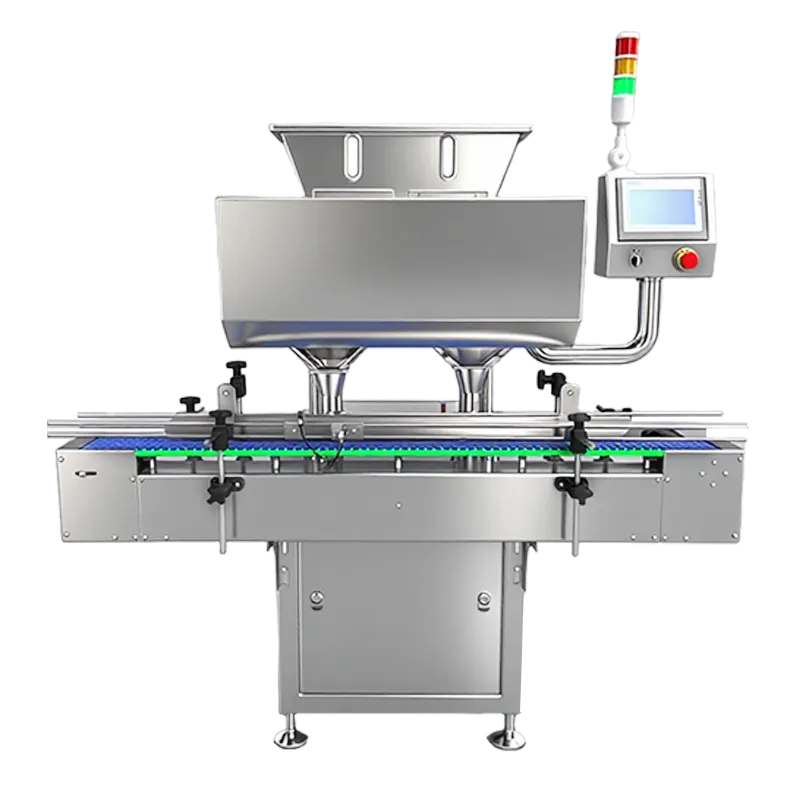
The cosmetics industry has undergone a significant shift toward automation in packaging operations over the past five years. Products such as capsules, pills, tablets, and bead-like items — increasingly common in skincare supplements, beauty capsules, and cosmetic active-ingredient delivery systems — require precise counting and filling at production volumes that manual processes cannot sustain. Automatic counting machines, originally developed for pharmaceutical applications, are now being adopted across cosmetics packaging facilities worldwide to deliver the same counting accuracy (±0.1%) and throughput (up to 150 bottles per minute) that pharmaceutical manufacturers have relied on for years.
For cosmetics manufacturers producing encapsulated serums, vitamin-infused beauty capsules, or effervescent skincare tablets, the benefits of automatic counting extend beyond speed. These machines reduce product giveaway, ensure consistent fill counts across every bottle, and provide the documentation trail that retailers and regulatory bodies increasingly demand. Hangzhou Ruiyi Machinery Technology Co., Ltd., with 20+ years of pharmaceutical-grade machinery manufacturing experience and CE/ISO 9001 certifications, supplies counting machines that meet the stringent hygiene and accuracy standards required by both pharmaceutical and cosmetics production environments.
The global cosmetics packaging market was valued at approximately $34.2 billion in 2024 and is projected to reach $44.5 billion by 2030 (Grand View Research, 2024), with automated filling and counting equipment representing one of the fastest-growing equipment segments. This growth is driven by the expansion of capsule-based beauty products, particularly in Southeast Asian and Middle Eastern markets where nutricosmetics — ingestible beauty supplements — are experiencing double-digit annual growth.
Key Benefits for Cosmetics Packaging Operations
1. Counting Accuracy That Eliminates Product Giveaway
In cosmetics manufacturing, where active-ingredient capsules can cost $0.50 to $2.00 per unit, even a small overfill percentage represents a significant financial loss. A production line filling 10,000 bottles daily with 30 capsules per bottle, operating at ±1% accuracy (typical for manual or semi-automatic counting), gives away approximately 3,000 capsules per day — an annual product loss of $547,500 at $0.50 per capsule. Modern automatic counting machines from Ruiyi Machinery achieve ±0.1% accuracy, reducing this giveaway to approximately 300 capsules per day and recovering over $492,750 in annual margin.
2. Hygiene and Contamination Control
Cosmetics products, particularly those containing active ingredients like retinol, vitamin C, or hyaluronic acid in capsule form, are sensitive to contamination from human contact. Automatic counting machines eliminate the need for operators to handle products during the counting and filling process. Ruiyi Machinery's counting machines are constructed with 304 stainless steel product-contact surfaces, FDA-compliant seals, and tool-free disassembly for cleaning — meeting the same hygiene standards required in pharmaceutical GMP environments. The enclosed counting chamber, equipped with HEPA-filtered air overpressure, prevents airborne contaminants from reaching the product during the counting cycle.
3. Format Flexibility for Diverse Product Portfolios
Cosmetics manufacturers often produce multiple product formats — softgel capsules, hard capsules, tablets, beadlets, and powders — on the same production line. Ruiyi Machinery's counting machines accommodate product sizes from 2 mm to 35 mm in diameter, with recipe-based parameter storage for up to 500 product formats. Product changeover between different capsule sizes or tablet shapes is completed in 5 to 8 minutes using tool-free adjustments, enabling manufacturers to run multiple SKUs in a single shift without extended downtime.
4. Data Logging for Quality Assurance and Traceability
Modern counting machines generate a complete electronic record for every production batch — including counting parameters, throughput rates, reject events, and operator identification. For cosmetics manufacturers supplying retailers in the European Union or the United States, this data trail supports compliance with cosmetic product safety regulations (EU Cosmetics Regulation 1223/2009, FDA Cosmetic Facility Registration under MoCRA) by providing verifiable evidence of fill accuracy and production consistency.
Manual vs. Automatic Counting: A Side-by-Side Comparison
| Parameter | Manual Counting | Semi-Automatic Counting | Fully Automatic Counting (Ruiyi RY-CM Series) |
|---|---|---|---|
| Counting accuracy | ±2% to ±5% | ±0.5% to ±1% | ±0.1% |
| Throughput (bottles/min) | 5–10 | 25–40 | 80–150 |
| Operators required | 4–6 per shift | 2 per shift | 1 per shift |
| Product giveaway (per 10,000 bottles, 30 capsules each) | ~6,000 capsules | ~3,000 capsules | ~300 capsules |
| Contamination risk | High (direct product handling) | Moderate (operator loading) | Low (fully enclosed system) |
| Product changeover time | 5–10 minutes | 10–15 minutes | 5–8 minutes (recipe-based) |
| Batch documentation | Manual paper records | Limited electronic logging | Full electronic batch record, 21 CFR Part 11 capable |
| Annual labor cost (2 shifts, 250 days) | $96,000–$144,000 | $48,000 | $24,000 |
Cosmetics Packaging Applications: Where Automatic Counting Delivers Value
Automatic counting machines are particularly valuable in the following cosmetics product categories:
- Nutricosmetic capsules: Collagen, biotin, and antioxidant capsules sold in bottle counts of 30, 60, or 90 units require precise filling to match labeled claims. Underfill risks consumer complaints and regulatory action; overfill erodes margins on premium-priced ingredients.
- Skincare supplement tablets: Effervescent cleansing tablets and facial mask tablets are sold by count, with typical bottle quantities of 10 to 30 tablets. The counting machine's ability to handle fragile effervescent formulations without breakage is critical — Ruiyi Machinery's adaptive vibration control adjusts feed amplitude to match product fragility, minimizing breakage during the counting cycle.
- Bead and sphere products: Exfoliating microsphere beads and bath bomb spheres in various sizes (5–25 mm) can be counted and filled using the same machine configured for pharmaceutical tablet counting, with sensor parameters adjusted for spherical product geometry.
- Sample and travel-size packaging: Cosmetics brands producing sample-size bottles with reduced fill counts (3, 5, or 7 capsules) benefit from automatic counting machines' ability to handle small fill quantities with the same accuracy as full-size production runs.
Integration with Complete Cosmetics Packaging Lines
An automatic counting machine achieves maximum efficiency when integrated into a complete packaging line that handles bottle feeding, product filling, capping, and labeling without manual intervention. Ruiyi Machinery supplies the full line as an integrated system:
- Bottle Unscrambler: Orients and feeds empty bottles to the counting station at speeds synchronized with the counting machine's throughput.
- Automatic Counting Machine: Counts and fills product to the preset quantity, with integrated dust extraction and reject station for out-of-tolerance bottles.
- Capping Machine: Applies and torques caps to the specified tightness, with servo-driven torque control achieving ±0.1 N·m accuracy for consistent seal integrity.
- Induction Sealing (optional): Bonds foil liners for tamper-evident packaging — particularly important for cosmetics products sold through retail channels.
- Labeling Machine: Applies pressure-sensitive labels with ±0.5 mm placement accuracy at line speed.
For cosmetics manufacturers with limited floor space, Ruiyi Machinery offers compact line configurations that fit within a 12-square-meter footprint while maintaining a throughput of 80 to 100 bottles per minute — suitable for facilities producing multiple SKUs in small-to-medium batches.
Regulatory and Quality Considerations for Cosmetics Counting
While cosmetics manufacturing is generally subject to less stringent regulatory requirements than pharmaceutical manufacturing, the gap is narrowing. In the United States, the Modernization of Cosmetics Regulation Act of 2022 (MoCRA) introduced mandatory facility registration, product listing, and adverse event reporting requirements that took effect in 2024. In the European Union, Cosmetics Regulation 1223/2009 requires manufacturers to maintain a Product Information File (PIF) that includes production method documentation.
For cosmetics manufacturers supplying both regulated markets, an automatic counting machine that generates verifiable production data — fill counts, reject logs, batch timestamps — provides the documentation foundation needed to demonstrate production consistency during regulatory inspections or retailer audits. Ruiyi Machinery's counting machines support this requirement through integrated production data logging with exportable batch reports in standard formats (CSV, PDF) that integrate with common quality management systems.
Conclusion: A Strategic Investment for Growth-Stage Cosmetics Brands
For cosmetics manufacturers producing encapsulated products, tablets, or bead-type items at volumes exceeding 5,000 bottles per day, the transition from manual or semi-automatic counting to fully automatic counting technology is a strategic investment with a typical payback period of 12 to 18 months. The combination of reduced labor costs, eliminated product giveaway, improved hygiene, and enhanced documentation capability delivers measurable financial and operational returns that compound as production volumes grow.
Hangzhou Ruiyi Machinery Technology Co., Ltd. brings pharmaceutical-grade engineering standards to every machine — ensuring that cosmetics manufacturers benefit from the same precision, reliability, and regulatory support that pharmaceutical manufacturers have relied on for decades. With equipment exported to 50+ countries and a dedicated after-sales support team, Ruiyi Machinery is equipped to support cosmetics manufacturers across Southeast Asia, the Middle East, Africa, and South America.
Request a Cosmetics Packaging Line Consultation
Send us your product specifications and target production volume. Our application engineering team will provide a customized counting and packaging line proposal, including floor layout drawings and an ROI analysis tailored to your cosmetics manufacturing operation.
tel: +86-13868159610
email: [email protected]
Data sources: Grand View Research Cosmetics Packaging Market Report, 2024; U.S. FDA Modernization of Cosmetics Regulation Act (MoCRA), 2022; EU Cosmetics Regulation 1223/2009; MarketsandMarkets Pharmaceutical Packaging Equipment Market Report, July 2025.
Table of Contents
- Why Cosmetics Manufacturers Are Adopting Automatic Counting Technology
- Key Benefits for Cosmetics Packaging Operations
- Manual vs. Automatic Counting: A Side-by-Side Comparison
- Cosmetics Packaging Applications: Where Automatic Counting Delivers Value
- Integration with Complete Cosmetics Packaging Lines
- Regulatory and Quality Considerations for Cosmetics Counting
- Conclusion: A Strategic Investment for Growth-Stage Cosmetics Brands