 EN
EN

Manual Capsule Counting Equipment for Low-Volume Precision
How Manual Counters Work: Tray-Based Design and Human Verification
The manual capsule counting process relies on trays with precise moldings for different capsule sizes like 0, 00, and 4. Workers simply dump the capsules onto these trays where each slot fits exactly one capsule. Before moving them to packaging, someone needs to double check that every spot actually has a capsule inside. While this hands-on method gives total peace of mind about getting the right number of pills in each container, which matters a lot for medications where even small errors can be dangerous, it's not exactly fast work. Most setups can only handle between 30 and 60 capsules every minute at best.
Ideal Use Cases: Compounding Pharmacies, Clinical Trials, and R&D Labs
Designed specifically for situations where precision matters more than volume, these systems generally handle less than 500 capsules each day. Pharmacies that compound medications depend heavily on them because counting errors can literally change how patients respond to treatment. When it comes to clinical trials, researchers still manually check every batch of placebos against their active counterparts, following protocols so strict that even minor deviations get flagged immediately. Research labs working on new capsule formulas also stick with this approach in the beginning stages of development. For them, keeping different compounds separate and maintaining the exact chemical makeup of each formulation is far more important than getting things done quickly, which makes sense given what's at stake in drug discovery.
Semi-Automatic Capsule Counting Equipment for Mid-Volume GMP Environments
Key Features: Foot-Activated Feeding, Adjustable Chutes, and Real-Time Digital Counting
Semi automatic capsule counters let operators stay in control while still getting help from smart automation features. When someone steps on the foot pedal, it starts the feeding process so their hands are free to position bottles properly. The machine has those little vibrating feeders that work wonders at keeping capsules separated and stopping them from clumping together. Most models come with adjustable chutes that fit all the common capsule sizes from 00 down to size 4. And there are optical sensors watching every single capsule as they go through, clocking in at around 99.2% accuracy rate. The digital displays show everything happening right then and there, which cuts out all that second guessing. Pharmacies report needing to recount stuff way less often now, about 78% fewer times than when doing it manually. A recent look at 120 different pharmacies found these machines handling between 150 to 220 capsules per minute. That's roughly three times quicker than what people can do by hand, plus they automatically create those necessary GMP audit trails that compliance officers love.
Where It Excels: Hospital Pharmacies, Outsourced Manufacturing, and Batch Release Validation
Mid volume operations find this system hits just the right balance between functionality and efficiency when they need tracking capabilities, consistent results, and adherence to regulations. Pharmacies in hospitals commonly rely on this setup for filling regular prescriptions because the machine only makes mistakes about 0.8% of the time, which is pretty good considering how many medications go through these facilities daily. Contract manufacturers working on clinical trials appreciate the automatic record keeping features that help them meet those tricky FDA requirements from section 11 part 21 CFR. When checking if a batch should be released, quality control staff can run three separate tests within five minutes or so and still get readings that vary no more than 0.1%. Best of all, there's no need for expensive cleanroom installations to make this work. The fact that these semi automatic machines are portable means smaller satellite labs without conveyor belts can still benefit from accurate measurements and proper documentation processes.
Fully Automatic Capsule Counting Equipment for High-Throughput Production
System Architecture: Multi-Lane Feeders, Conveyor Integration, and Vision-Guided Sorting
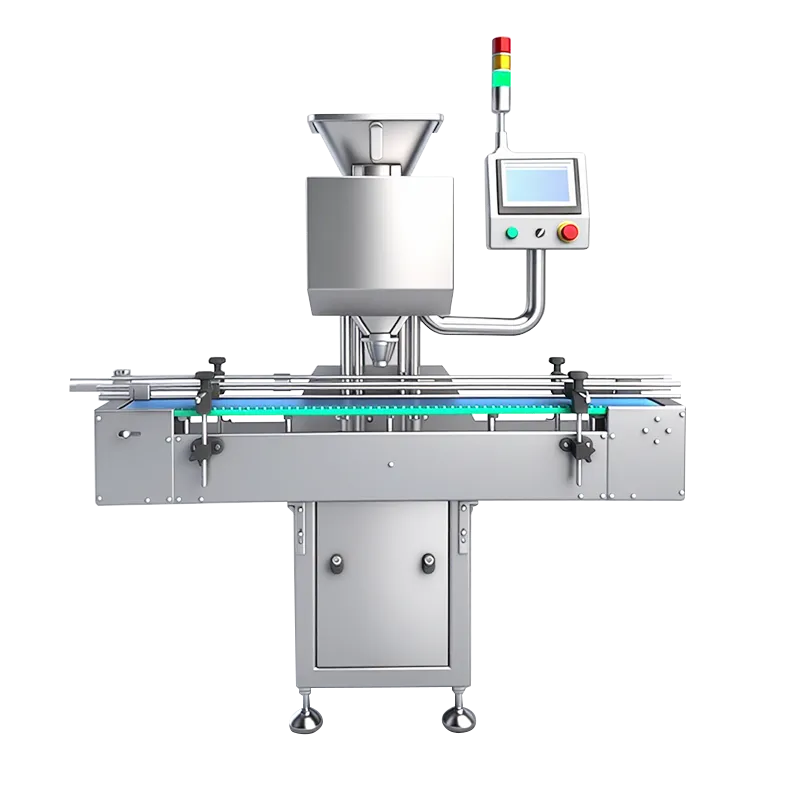
Automatic capsule counters work great for running big scale production lines all day long. These machines use multiple lanes with vibrating feeders that spread out capsules along several channels so nothing gets backed up. Then they go onto conveyor belts that keep moving without anyone needing to touch them. What really makes these systems tick is their visual inspection process. High quality cameras combined with smart software check each capsule as it goes by looking for things like cracks, weird colors, stuff that doesn't belong inside, or if they're just not the right size. When something looks off, those bad capsules get pushed aside automatically while the good ones head straight to packaging. The whole system works together so well that it reduces counting mistakes by about four fifths compared to older semi automatic methods. Plus, these machines maintain clean room conditions rated at ISO Class 7 to 8 standards during the entire manufacturing process.
Performance Benchmarks: Speed (up to 300,000 capsules/hour), Accuracy (±0.1%), and Regulatory Readiness
The best automatic systems can handle over 300 thousand capsules each hour, which works out to about 5 thousand filled bottles every hour, all while maintaining an accuracy rate of plus or minus 0.1 percent as proven in multiple repeat tests. Getting this kind of precision really matters for businesses because when prescriptions are underfilled, companies face serious fines that can top half a million dollars per occurrence. The regulatory stuff isn't something added after the fact but built right into the system from day one. We're talking about things like automatic tracking records, digital sign-offs, different access levels for staff members, and complete compliance with those tricky FDA regulations (21 CFR Part 11) and European standards too (Annex 11). All these built-in features save time during the validation process, cutting down required testing periods by around 40 percent according to industry reports. Plus there are smart diagnostic tools that constantly check for small problems with calibration or mechanical issues long before anyone notices anything wrong with the final product quality.
FAQ
What is the main advantage of manual capsule counting?
The primary advantage of manual capsule counting is its precision for low-volume needs, particularly in situations where human verification is needed to ensure accuracy, such as compounding pharmacies.
How does semi-automatic capsule counting improve efficiency?
Semi-automatic counters use features such as foot-activated feeding and optical sensors to significantly speed up the counting process while maintaining accuracy, making them ideal for mid-volume operations like hospital pharmacies.
What makes fully automatic capsule counting systems suitable for high-output production?
Fully automatic systems maximize efficiency with multi-lane feeders and conveyor integration, achieving high speed and accuracy necessary for large-scale production facilities.