 EN
EN

Essential Hardware Components of a Capsule Counting Machine
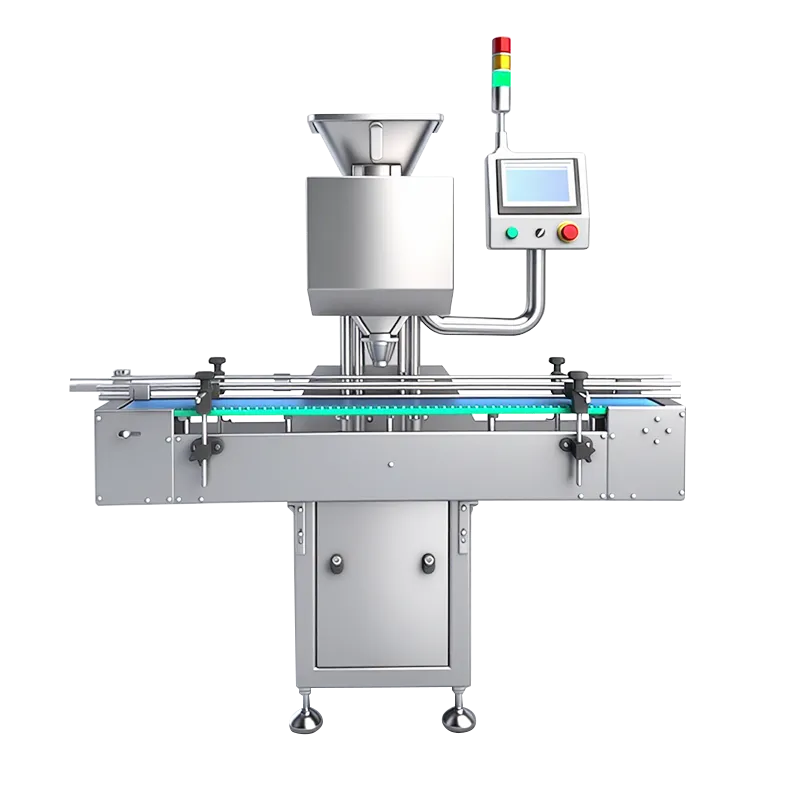
Hopper Feeder and Vibratory Tray for Controlled, Orientation-Aware Feeding
Bulk capsules are stored in the hopper until they get moved along by the built-in feeder toward the vibratory tray. The tray itself creates just the right kind of shaking motion that lines up all those little capsules in a neat row one after another something really important when it comes to getting an accurate count. There are these adjustable parts around too guides and gates that stop things from getting stuck and keep everything lined up properly. Systems that meet Good Manufacturing Practice standards can actually process about 100 thousand capsules every hour. When capsules are oriented correctly, mistakes drop down dramatically about 98 percent fewer errors than what happens during manual handling according to research published in journals focused on pharmaceutical automation.
Photoelectric Sensors and High-Resolution Vision Systems for Real-Time Capsule Detection
Dual verification occurs through:
- Photoelectric sensors, which detect capsule passage via infrared beam breaks
- Machine vision cameras, capturing high-resolution images at 120fps for shape, size, and defect analysis
These systems identify chipped, cracked, or empty-shell capsules in under 0.05 seconds. Advanced units integrate PLC-based logic to cross-reference sensor and vision data—achieving 99.99% detection accuracy even with translucent or low-contrast capsules.
Automatic Rejection Mechanism and Multi-Channel Electronic Counting Module
When defective capsules show up on the line, pneumatic rejection arms kick in to grab those problem pieces right out of the production stream without stopping everything else. At the same time, these fancy multi-channel counting systems keep track of good capsules through capacitive sensing which works great for metal or conductive materials, plus they have backup electronic counters running alongside for double checking during batch validation. The whole setup keeps mistakes down to less than one tenth of a percent even when things are moving fast through high volume operations. Once a batch hits its target number, automatic signals go off triggering the dispensing process while also creating digital records of what happened throughout production.
How a Capsule Counting Machine Works: Step-by-Step Operational Flow
Stage 1: Capsule Alignment and Orientation via Vibration, Gravity, and Mechanical Guides
The journey begins when capsules make their way from the hopper down into the vibratory tray. As they move along, mechanical shaking helps break apart any stuck together units, and gravity does its thing pulling everything downwards naturally. Special guide channels then line up each capsule so they're all positioned the same way. For those longer shaped capsules, there are specific tracks that gently rotate them until they sit straight and aligned properly for accurate detection. What we've got here is basically a combination of vibrations and gravity working hand in hand. This setup gets about 98 percent of capsules lined up correctly most of the time, and jams happen almost never these days. That kind of performance really cuts down on the headaches manufacturers used to face with inconsistent counts.
Stage 2: Precision Counting Using Optical, Capacitive, and Redundant Electronic Verification
The infrared beams pick up when capsules pass through the counting channel. Capacitance sensors check if the capsules are whole by looking at changes in electrical properties that only happen with intact capsules. If either sensor notices something off by about 2% from what it should be reading, then the system automatically does a double check and makes corrections. This helps keep things running smoothly even when there might be some outside interference or tiny mechanical issues. According to tests done last year and reported in the PharmaTech Journal, this method gets counts right 99.96 out of every 100 times, all while handling as many as 2,500 capsules per minute.
Stage 3: Verified Dispensing and Batch Completion Signaling
After passing quality checks, the capsules move through gates controlled by servos and then drop into containers using chutes designed to minimize vibrations. When a batch is finished, the machine lets everyone know with sounds and lights flashing on the control panel. Digital reports get created automatically with timestamps showing exactly when things happened. These reports include all the important details like how many capsules were counted, which ones got rejected, and who was operating the machine at the time. All of this makes tracking everything much easier and keeps records straight for inspections. Plus, it saves workers from having to double check everything manually, something that cuts down on errors and meets those strict FDA regulations about keeping proper documentation.
Choosing the Right Capsule Counting Machine by Automation Level
Finding the right level of automation really comes down to what a pharmacy needs in terms of how many capsules they need to fill, how accurate those fills must be, and what makes financial sense for their operation. The semi automatic machines handle around 150 to 220 capsules per minute with about a 0.8% mistake rate, which works pretty well for smaller or mid sized pharmacies where someone still needs to keep an eye on things occasionally. Then there are the fully automatic systems that crank out between 300 and even 1000 capsules each minute while maintaining just a 0.3% error margin. These advanced machines have all sorts of built in features for feeding, aligning, counting, and rejecting faulty capsules. They basically take care of everything without needing constant supervision, which means no more tired staff members watching over machines all day long in busy facilities.
FAQ Section
What are the main components of a capsule counting machine?
The main components include a hopper feeder, vibratory tray, photoelectric sensors, high-resolution vision systems, automatic rejection mechanisms, and a multi-channel electronic counting module.
How does a capsule counting machine ensure accuracy?
Capsule counting machines use precision tools such as infrared beams, capacitance sensors, and machine vision cameras to ensure high accuracy, identifying defects in real-time and achieving up to 99.99% detection accuracy.
What is the difference between semi-automatic and fully automatic capsule counting machines?
Semi-automatic machines are suitable for smaller pharmacies and involve moderate staff involvement, processing 150 to 220 capsules per minute with a 0.8% error rate. Fully automatic machines suit larger operations, processing 300 to 1,000 capsules per minute with a 0.3% error rate and require negligible staff involvement.
Why is choosing the right level of automation important?
Choosing the appropriate level of automation helps a facility meet its capsule counting demands efficiently while managing costs, maintaining accuracy, and complying with regulatory guidelines.