 EN
EN

How a Capsule Counting Machine Works: Core Functionality and Workflow
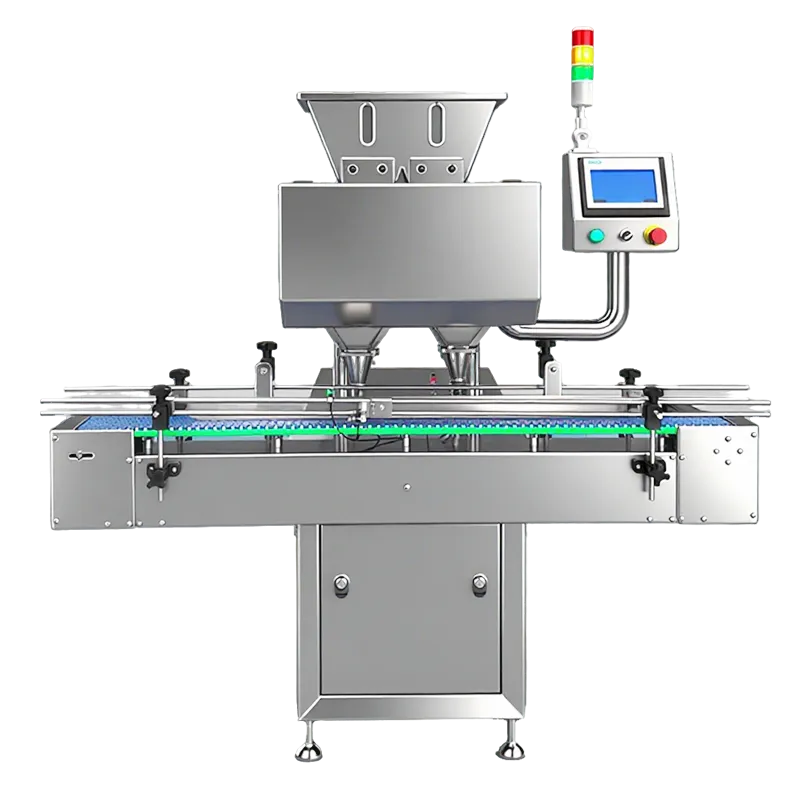
Why Manual Counting Fails at Scale — Speed, Error Rate, and Compliance Risks
Trying to count capsules manually just doesn't work once production hits around 500 units per day. People can manage about 2 to 3 capsules every second when they're fresh, but mistakes happen pretty often too. According to PharmaQC from last year, error rates can reach as high as 3.5%, which means there's a real risk of batches being under dosed and running afoul of FDA regulations. When things go wrong in regulated settings, the consequences are serious money wise. The Ponemon Institute reported recalls typically cost companies around $740,000 on average. And it gets worse as time goes on. After someone has been counting for half an hour straight, their speed plummets by about 40% while errors start happening more frequently, maybe even doubling up. That's where automation comes in handy. Machines don't get tired or distracted, so they follow consistent procedures without fail. Plus, automated systems leave behind detailed records that make tracking everything much easier for quality control purposes.
The Four-Stage Automated Process: Feeding, Alignment, Sensing, and Dispensing
Modern capsule counting machines execute precision workflows across four synchronized stages:
- Feeding: A vibratory hopper regulates bulk capsule flow, preventing jams while sustaining optimal throughput
- Alignment: Orienting channels — using centrifugal force or guided tracks — position capsules uniformly for reliable detection
- Sensing: High-speed photoelectric sensors verify count and detect defects at 200+ capsules/minute, triggering <7ms response rejection arms
- Dispensing: Programmable chutes deposit counted batches directly into blister packs or vials with 99.98% measured accuracy
This closed-loop architecture reduces human intervention and achieves a 0.1% error rate — 35 more accurate than manual methods per PharmaTech benchmarks.
Capsule Counting Machine Types: Matching Capacity to Your Operational Needs
Manual, Semi-Automatic, and Fully Automatic — Key Differences in Throughput and Labor Requirements
Capsule counting machines are categorized by automation level and operational impact:
- Manual units require full operator involvement — physically counting and inputting quantities — at speeds under 150 capsules/minute. Though low-cost, they incur high labor demands (4–6 hours per 10,000 units) and error rates of 3–5%.
- Semi-automatic models use vibration-assisted feeding and basic optical sensing to process 200–400 capsules/minute with 1–2 operators. Errors fall to 1–2%, offering a balanced trade-off for mid-volume operations.
- Fully automatic systems, often featuring multi-channel counters and integrated rejection mechanisms, achieve 1,000+ capsules/minute with near-zero supervision. They deliver 99.9% accuracy and automated OEE tracking — reducing labor time to under 30 minutes per 10,000 units.
Choosing the Right Type: Evaluating Capsules/Minute, Channel Count, and Container Flexibility
Selecting the right machine hinges on aligning technical capabilities with production volume and product diversity:
- Throughput: Manual and semi-automatic units suit low-volume runs (<5,000 units/day); fully automatic systems are essential for high-volume or continuous manufacturing.
- Channel count: Single-channel designs efficiently handle uniform batches; multi-channel configurations support concurrent counting of different capsule types or dosages — critical for contract manufacturers and multi-product facilities.
- Container flexibility: Entry-level models often limit container depth to 150mm; advanced systems accommodate vessels up to 300mm via adjustable chutes, grippers, and programmable fill heights. For hygroscopic or sensitive formulations, prioritize models with static-control feeders and anti-contamination seals to preserve stability and integrity.
Critical Components of a Capsule Counting Machine: What Drives Reliability and Accuracy
Pharmaceutical and nutraceutical operations depend on capsule counting machines for precise inventory control, batch release compliance, and GMP adherence. Unplanned downtime costs manufacturers an average of $740k annually (Ponemon 2023), making component reliability non-negotiable.
Vibratory Feeders, Photoelectric Sensors, and Rejection Mechanisms — How They Interact
These components operate as a closed loop: consistent feeding enables reliable sensing, which in turn triggers timely, targeted rejection — minimizing human touchpoints and supporting audit-ready documentation.
Common Failure Points in Entry-Level Models and How to Mitigate Downtime
Entry-level machines often sacrifice durability for cost savings — leading to predictable failure modes:
- Sensor misalignment: Vibration-induced drift causes undercounts. Mitigate with weekly calibration using certified test weights.
- Hopper jams: Irregular capsule geometries clog narrow feed channels. Pre-screening deformed units or selecting feeders with adaptive amplitude control prevents this.
- Worn rejector seals: Air-driven ejection systems lose pressure integrity after ~80,000 cycles. Replace seals quarterly and monitor pressure decay during routine checks.
Proactive maintenance delivers measurable ROI: following manufacturer-recommended 200-hour service intervals cuts unplanned downtime by 35% versus reactive repairs. Daily cleaning of sensor lenses and track rails also prevents particulate buildup — a leading cause of false rejections and contamination risk.
Must-Know Terminology for First-Time Buyers: Accuracy, Calibration, OEE, and Contamination Control
Accuracy vs. Precision — Clarifying a Frequent Misunderstanding in Capsule Counting Machine Specifications
When we talk about accuracy, we're basically looking at how close our count comes to what's actually there. Like if we count 100 items and there really are 100 present. Precision on the other hand refers to getting similar results every time we do multiple counts. But here's the catch even machines that give very consistent readings can still be wrong if they're always missing by just one unit. The Food and Drug Administration requires drug manufacturers to hit at least 99 percent accuracy when making medications. Just having good precision isn't enough to meet these standards. That's why it's so important to test both accuracy and precision in actual working environments rather than relying solely on laboratory tests where everything goes smoothly.
Calibration Frequency, OEE Impact, and Why Contamination Control Is Built Into Modern Capsule Counting Machine Design
Calibration ensures sensors and actuators maintain traceable performance. Most validated systems require recalibration quarterly — or after 500 operating hours — to sustain accuracy. Uncalibrated machines reduce Overall Equipment Effectiveness (OEE) by 15–30%, primarily through miscounts, rework, and unplanned stoppages.
Contamination control is no longer optional — it’s engineered into modern designs through:
- Sealed, enclosed pathways that prevent capsule exposure to ambient particles
- Antimicrobial surface coatings on contact zones to inhibit microbial transfer
- Directed airflow systems that isolate counted batches from upstream handling areas
These features directly address cGMP §211.42(c) and EU Annex 1 requirements for minimizing cross-contamination in shared-use facilities — making them essential for multi-product or high-potency operations.
Frequently Asked Questions (FAQ)
What are the advantages of using a capsule counting machine?
Capsule counting machines increase accuracy and speed in pharmaceutical and nutraceutical operations, reducing human error and compliance risks while providing audit-ready documentation.
Why are fully automatic systems preferred for high-volume production?
Fully automatic systems achieve 1,000+ capsules per minute with high accuracy and minimal supervision, making them ideal for high-volume or continuous manufacturing settings.
How often should a capsule counting machine be calibrated?
Most validated systems recommend recalibration quarterly or after 500 operating hours to maintain accuracy.
How do capsule counting machines minimize contamination risks?
Modern machines are designed with sealed pathways, antimicrobial coatings, and directed airflow systems to prevent cross-contamination, meeting rigorous cGMP and EU Annex 1 standards.
Table of Contents
- How a Capsule Counting Machine Works: Core Functionality and Workflow
- Capsule Counting Machine Types: Matching Capacity to Your Operational Needs
- Critical Components of a Capsule Counting Machine: What Drives Reliability and Accuracy
- Must-Know Terminology for First-Time Buyers: Accuracy, Calibration, OEE, and Contamination Control
- Frequently Asked Questions (FAQ)