 EN
EN

Accuracy and Regulatory Compliance for Capsule Counting Machines
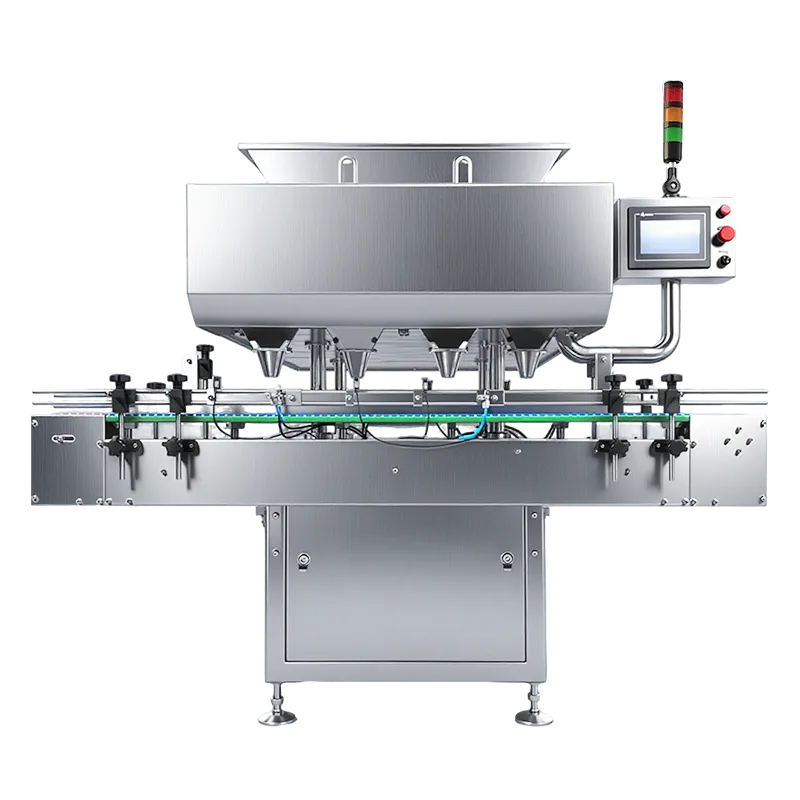
Why ±1 capsule tolerance is critical for FDA, GMP, and pharmacopeial compliance
Maintaining ±1 capsule tolerance isn’t just about operational precision—it’s a non-negotiable regulatory requirement. The FDA, Good Manufacturing Practice (GMP), and international pharmacopeias—including USP <905>—mandate ≥99.9% counting accuracy to ensure dosage integrity. Exceeding ±1 capsule per container risks under-dosing or toxicity, especially with high-potency or narrow-therapeutic-index drugs.
Consequences of non-compliance are severe:
- Patient safety breaches, including preventable adverse events
- Regulatory penalties, averaging $500,000 per FDA enforcement action (FDA 2023)
- Batch recalls, where 1 in 200 originates from counting errors—costing an average $740,000 per incident (Ponemon Institute, 2023)
Modern capsule counting machines achieve up to 99.98% accuracy using vibration-sensor technology and dual-stage verification systems. This level of precision directly satisfies USP <905> uniformity testing requirements and eliminates 98% of errors associated with manual counting.
How ISO 9001, CE, and cGMP-aligned design ensures audit-ready validation
The good ones have those built in audit trails already - things like electronic batch records, automatic calibration logs, and tracking parameters as they happen. Take cGMP compliant systems for example. They actually record every single tweak made to counting thresholds or how sensitive the sensors are set. This alone cuts down on those pesky audit issues around data integrity by about three quarters according to what many operators see in practice. And facilities are telling us they save roughly 30 man hours each month on validation work without having to worry about being caught off guard during inspections anymore.
Throughput, Flexibility, and Batch-Scale Fit for Your Capsule Counting Machine
Balancing speed (30–200 cps) with SKU variability, capsule size, and changeover efficiency
Selecting the right capsule counting machine means aligning throughput capacity with your actual production profile—not theoretical maximums. While industrial units exceed 800 units/minute, desktop models (50–200 units/minute) better serve clinics or small pharmacies with space and volume constraints. Performance depends on three interdependent variables:
- Speed-to-flexibility tradeoffs: High-speed systems (>200 cps) often sacrifice reliability with irregular softgels or micro-tablets (<3mm). Mid-range machines (80–150 cps) consistently handle capsules from 2mm to 40mm—ideal for multi-SKU environments.
- Changeover efficiency: Tool-less adjustments for size transitions cut setup time significantly. Data shows sub-5-minute changeovers boost daily output by 18% versus traditional 15+ minute recalibrations.
- Batch scalability: A Midwest pharmacy network achieved 55% higher throughput using modular counters adaptable across batch sizes—from 200 to 5,000 units—while their centrifugal sorting system reduced oblong tablet miscounts by 41% at sustained speeds of 650 cps.
Over-specifying leads to inflated energy use, maintenance overhead, and calibration complexity; underspecifying creates bottlenecks during peak demand. Industrial-grade systems deliver <0.1% error rates—five times tighter than entry-level alternatives—directly improving reconciliation accuracy during audits.
Seamless Integration of Your Capsule Counting Machine into Packaging Lines
Key integration enablers: modular feeders, vision-guided rejection, and PLC/SCADA compatibility
Getting these systems to work together properly depends on more than just connecting them physically. The real key is making sure they can communicate and function as a team. Modular feeding systems allow for quick switching between different capsule sizes and formulas. This means production teams can get from one batch to another in less than five minutes most of the time. For quality control, there's this vision guided rejection system that uses fast moving cameras to spot problems. It catches things like cracks, dents or color issues in the capsules. The system can check around 200 capsules every second and maintains almost perfect counting accuracy at 99.98%. Best part? It removes any faulty capsules before they even reach the packaging stage, which saves money and keeps customers happy.
PLC and SCADA compatibility enables centralized monitoring of OEE, rejection rates, and throughput metrics across the entire line. Synchronized conveyor control prevents downstream jams, while real-time calibration drift alerts help maintain ISO 13485 compliance without manual intervention.
Real-world retrofit: How Hangzhou Ruiyi optimized throughput for a nutraceutical contract manufacturer
One nutraceutical contract manufacturing firm was losing around 30% of their operating time when they had to switch back and forth between gelatin and vegetarian capsules for their 120 different products. They upgraded their system with these cool quick-release modular bowls that work for capsule sizes from 00 right down to size 4. Plus they added those fancy SCADA integrated sensors which automatically adjust how they count things, so nobody has to mess around with manual recalibrations anymore. After getting all this new tech in place, their production output jumped by 40%. The error rate for giving away too much product? Less than 0.01%. And according to a study from Ponemon Institute in 2023, they saved about $740,000 per year just on waste reduction alone. Getting their PLC systems synced up with the old bottling lines cut down changeover times to just 3 minutes total. This means they can now handle those small batch orders the same day they come in while still keeping everything compliant for GMP audits.
Total Cost of Ownership for a Capsule Counting Machine
Beyond purchase price: calibration labor, spare part lead times, software licensing, and uptime impact
The true cost of ownership extends far beyond the initial capital outlay. Hidden expenses include:
- Frequent calibration labor (often 2–4 hours per week for non-automated systems)
- Spare part lead times averaging 3–5 weeks for generic components
- Annual software licensing fees ($1,200–$5,000)
- Unplanned downtime—each 1% reduction in downtime can save ~$5,000 annually in pharmaceutical batch recovery alone
High-reliability machines reduce waste rates to 2–3% versus 8–10% for budget-tier units. Over a 5-year lifecycle, energy-efficient designs with modular architecture deliver 37% lower total cost of ownership—even with a 15–20% higher upfront investment—by minimizing downtime, extending service intervals, and simplifying upgrades.
FAQ
Why is maintaining ±1 capsule tolerance so crucial?
Maintaining ±1 capsule tolerance is essential for regulatory compliance and patient safety. It ensures dosage integrity and avoids risks of under-dosing or toxicity, especially critical for certain high-potency drugs.
What standards are relevant for capsule counting machines?
Relevant standards include ISO 9001 for process consistency, CE Mark for safety, and cGMP for material traceability and change control, each critical for compliance and audit readiness.
What factors influence the selection of a capsule counting machine?
Selection factors include throughput capacity, speed-to-flexibility tradeoffs, changeover efficiency, and batch scalability, all tailored to match the production profile and regulatory requirements.
How do modular feeders and vision-guided systems enhance integration?
Modular feeders allow quick size/formula changes, and vision-guided systems ensure high accuracy by detecting defects early, optimizing production and quality control.
What hidden costs should be considered in the total cost of ownership?
Consider expenses beyond the initial purchase like calibration labor, spare parts lead times, software licensing fees, and impacts of downtime, all affecting long-term cost-efficiency.
Table of Contents
- Accuracy and Regulatory Compliance for Capsule Counting Machines
- Throughput, Flexibility, and Batch-Scale Fit for Your Capsule Counting Machine
- Seamless Integration of Your Capsule Counting Machine into Packaging Lines
- Total Cost of Ownership for a Capsule Counting Machine
-
FAQ
- Why is maintaining ±1 capsule tolerance so crucial?
- What standards are relevant for capsule counting machines?
- What factors influence the selection of a capsule counting machine?
- How do modular feeders and vision-guided systems enhance integration?
- What hidden costs should be considered in the total cost of ownership?