 EN
EN

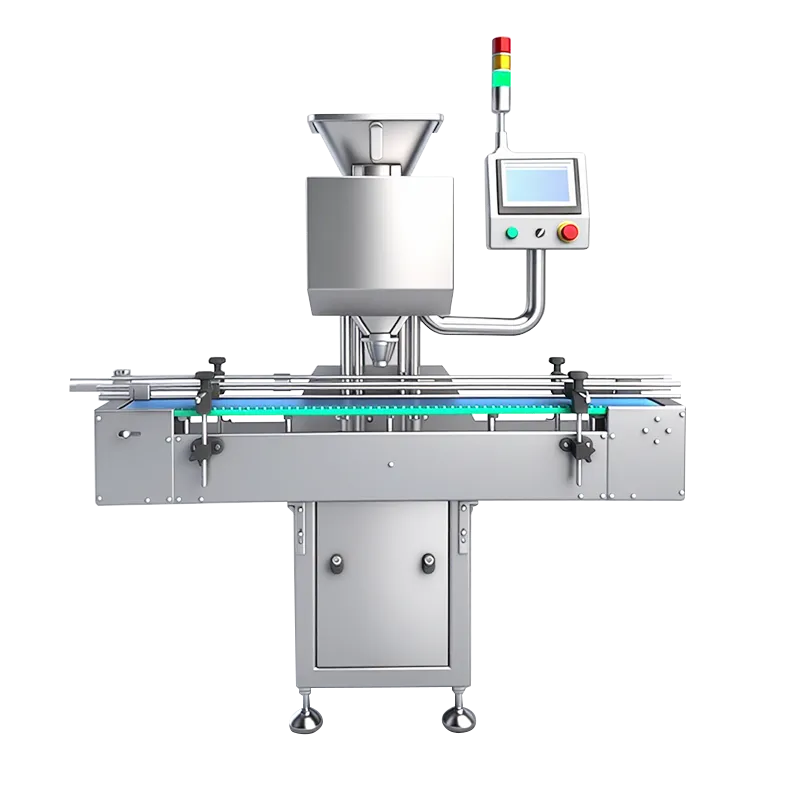
Accuracy in Pharmaceutical Tablet Counting: Significance and the Role of Tablet Counting Machines
Understanding the importance of accurate pill counting in pharmaceuticals
Getting the right number of pills counted matters a lot when it comes to dispensing medications safely, and this affects how well patients respond to their treatments. Small mistakes in counting can mess up the correct dose, which means the medicine might not work at all or could actually be harmful. Take drugs with tight safety margins, like blood thinners or certain antidepressants for example. Missing just one pill or getting an extra one can sometimes result in bad side effects such as unexpected bleeding or even higher chances of thinking about self harm. A recent look at pharmacy safety data from last year showed something alarming: almost nine out of ten mistakes made during medication dispensing happened because someone messed up while counting manually. That's why precision really counts in this field.
Consequences of inaccurate tablet counts in medication dispensing
Getting tablet counts wrong accounts for about half of all medication errors that could have been prevented, according to recent research from the Journal of Clinical Pharmacy in 2023. When someone takes too many pills, it can lead to bad reactions for roughly one in thirty patients. On the flip side, not getting enough medication is just as dangerous. Take a cancer patient who misses two cisplatin tablets during treatment cycles, their chances of surviving drop by around fourteen percent. To keep track of these issues, regulatory bodies look at things like the Therapy Accuracy Index or TAI. Hospitals that score below ninety nine percent accuracy when counting medications end up dealing with malpractice claims at a rate twenty three percent higher than those with better records.
Regulatory standards and compliance in pharmaceutical accuracy
Under the 2024 Current Good Manufacturing Practices (CGMP), the FDA sets strict standards for pill counting accuracy at ±0.5% for automated systems and ±1% when done manually. Pharmacies that don't meet these requirements face serious consequences including fines over half a million dollars each time they break the rules, and those who keep violating can expect their manufacturing licenses suspended entirely. Across Europe things are getting even stricter. The EMA now demands detailed tracking of variations between batches, which explains why around three out of four pharmacies in the EU have switched to machines for counting tablets since early 2022. All these regulations work together to keep errors extremely low, with less than one in every thousand pills ending up in patients' hands in amounts different from what was actually prescribed.
Manual Tablet Counting: Methods, Errors, and Limitations
Common manual counting techniques (e.g., tray-and-spatula, scales)
Most pharmacy techs still work with those old school tray and spatula setups, moving pills around on divided trays and counting them by eye. Weights get checked later as a double check, matching actual weights against what we know each pill should weigh. This extra step takes anywhere from 15 to 20 percent longer for every prescription filled. About a third of smaller pharmacies stick with these methods, but they really depend on someone being super consistent throughout the whole process. And let's face it, even tiny mistakes can happen when everything relies so much on human judgment rather than automated systems.
Error rates in manual counting and human error in pharmaceutical counting processes
Manual counting results in errors in up to 5% of doses, with key contributing factors including:
- Fatigue: Error rates triple during shifts longer than four hours
- Distractions: Interruptions account for 23% of outpatient pharmacy miscounts
- Tablet size: Pills under 4mm in diameter contribute to 42% of undercounts
- Visual similarity: Identical shapes across different medications cause 18% of errors
These findings underscore the limitations of relying solely on visual and tactile assessment.
Limitations of manual counting techniques affecting accuracy
Three major flaws undermine manual counting:
- Scalability issues: Counting over 500 tablets increases error likelihood by 30%
- No defect detection: Broken or chipped tablets go undetected
- Compliance gaps: Hand-counted inventories lack automated audit trails
As a result, 82% of pharmacies transitioning to automation prioritize Tablet Counting Machines—especially for controlled substances requiring stringent accountability.
Automated Tablet Counting Machines: How They Ensure Precision
How Tablet Counting Machines Operation Ensures Precision
Today's tablet counting machines combine optical sensors, mechanical feeders, plus weight verification systems so they can get error rates down under 0.1%. The process starts with vibratory plates that sort out all those little pills into neat single file lines before sending them through discharge chutes. Infrared sensors then do the actual counting work there. These machines have these extra checks built in too, like having multiple sensor arrays running at once and doing real time weight comparisons. This helps catch when tablets overlap or if some just happen to be oddly shaped. According to research published last year in pharmaceutical engineering journals, switching from hand counting to these automated systems cuts down on dosage mistakes by around four fifths compared to what humans manage.
Precision Engineering Behind Automated Counting Accuracy
Reliability stems from multi-channel vibratory feeding and sensor redundancy. Key components include:
| Feature | Impact on Accuracy |
|---|---|
| Multi-channel alignment | Prevents jams and double-counts |
| IR + photoelectric sensors | Detects fragments or damaged units |
| Automated rejection gates | Removes irregularities in real-time |
These safeguards maintain high accuracy even at speeds exceeding 200 tablets per second.
Calibration of Pill Counting Machines for Consistent Performance
The automated systems run their own calibration checks roughly every 15 minutes, relying on built-in reference weights to compensate for things like changes in humidity levels and static electricity buildup. According to independent inspections, when these machines are kept up to standard, they maintain around plus or minus 0.05 percent accuracy throughout entire production runs. That's actually about 40 percent more accurate compared to what we get from traditional manual approaches. Most experts in the field suggest doing a full recalibration cycle approximately every 500 hours of operation time, especially whenever there's a switch between different product lines being manufactured. This helps ensure consistent results across batches and reduces waste caused by measurement errors.
Factors Affecting Pill Counting Accuracy
Four primary variables influence performance:
- Tablet geometry: Irregular shapes require adjustable channel widths
- Static electricity: Anti-static brushes prevent adhesion of coated tablets
- Dust accumulation: Self-cleaning cycles remove debris between runs
- Production speed: Systems maintain 99.9% accuracy below 90% of maximum throughput
Multi-sensor validation compensates for these challenges, enabling error rates of ≤1 per 10,000 units—exceeding FDA 21 CFR Part 211 requirements.
Manual vs. Automated Tablet Counting: A Comparative Analysis
Accuracy and Reliability: Automated vs. Manual Capsule Counting Methods
When it comes to error rates, automated systems typically stay below 1%, which beats manual methods hands down since those tend to hover around 3 to 5% errors based on research from Bhagwati Pharma last year. What makes automation so reliable? Well, it just doesn't get tired, distracted, or second guess itself like humans do. Precision sensors and those PLCs we hear so much about take care of all that variability. And then there's this cool light beam tech that spots when tablets are stuck together or shaped wrong. Our QA team has seen discrepancies drop to under half a percent with these systems running. Pretty impressive stuff for anyone concerned about product consistency.
Efficiency and Error Reduction in Automated Counting Systems
The numbers tell the story pretty clearly when it comes to tablet processing speeds. Automated systems can handle anywhere from 200 to 500 tablets every minute, which beats what humans can manage at around 50 to 80 per minute. What makes these machines so efficient? They have this whole system going on with multiple checks built in. First there are those vibrating feeders that line up all the tablets properly. Then come the optical scanners double-checking the count, and finally special mechanisms kick out any defective ones that don't meet standards. Looking at real-world results, a study back in 2022 checked out 15 different pharmacies after they implemented automated systems. The results were pretty impressive actually. Most places saw their inventory problems drop by about 90 something percent, while staff costs went down roughly 40% because workers didn't need to spend as much time doing repeat checks.
Direct Comparison Between Machine and Manual Counting Outcomes
| Metric | Manual Counting | Automated Counting |
|---|---|---|
| Average Error Rate | 3-5% | <1% |
| Counting Speed | 50 pills/minute | 200 pills/minute |
| Labor Cost/10k Pills | $8.20 | $1.75 |
Case Study: Error Reduction After Switching to Tablet Counting Machines
A mid-sized compounding pharmacy achieved an 89% reduction in dispensing errors within six months of adopting automated counting. The system's self-calibrating load cells and anti-static trays resolved recurring humidity-related miscounts common in manual workflows. Post-implementation audits demonstrated a 99.4% accuracy rate across 12,000 prescriptions, fully aligned with FDA CGMP guidelines.
Industry Shift Toward Automated Tablet Counting for Reliable Accuracy
Growing industry reliance on automated accuracy in pharmaceutical packaging
Pharma companies are moving fast to adopt automated tablet counters these days because they need to hit those tough safety standards set by regulators. According to some market research from Verified Market Reports back in 2025, around 78 out of every 100 new packaging lines have gone fully automatic for counting pills. Why? Well, the FDA wants error rates below 1%, which just isn't practical with humans doing the job manually. Manual counting has always been problematic too. We've seen studies show that tired workers can miss count tablets about 4% of the time, according to a report published by Pharmaceutical Technology Review last year. That kind of mistake rate simply won't cut it anymore in today's highly regulated environment.
Benefits of automatic pill counting machines in large-scale production
Automated systems offer three core advantages:
- 99.95% counting accuracy across diverse tablet forms
- 400% faster throughput than manual methods
- Real-time quality control via integrated vision systems
In high-volume settings, these capabilities reduce production costs by $0.12 per 1,000 units while ensuring ongoing GMP compliance.
Role of leading innovators in advancing tablet counting technology
Engineering advancements continue to overcome longstanding challenges such as static interference and microdust buildup. Innovations like anti-static chambers and self-cleaning mechanisms enable sustained accuracy above 99.9% over 72-hour production cycles. As a result, 92% of pharmaceutical manufacturers now view automated counting systems as essential infrastructure rather than optional equipment.
FAQ Section
- What is the main advantage of automated tablet counting over manual counting? Automated tablet counting systems offer higher accuracy rates below 1%, compared to manual counting methods which tend to have error rates between 3 to 5%.
- Why are manual counting methods still in use? Manual counting methods, such as tray-and-spatula setups, are still employed by smaller pharmacies due to cost constraints and reliance on human expertise, although they pose accuracy challenges.
- What factors lead to errors in manual tablet counting? Factors such as fatigue, distractions, visual similarity of pills, and tablet size contribute significantly to errors in manual counting.
- How does the FDA regulate tablet counting accuracy in pharmaceuticals? The FDA requires a pill counting accuracy of ±0.5% for automated systems and ±1% for manual counting methods under the 2024 CGMP regulations.
Table of Contents
- Accuracy in Pharmaceutical Tablet Counting: Significance and the Role of Tablet Counting Machines
- Manual Tablet Counting: Methods, Errors, and Limitations
- Automated Tablet Counting Machines: How They Ensure Precision
- Manual vs. Automated Tablet Counting: A Comparative Analysis
- Industry Shift Toward Automated Tablet Counting for Reliable Accuracy