 EN
EN

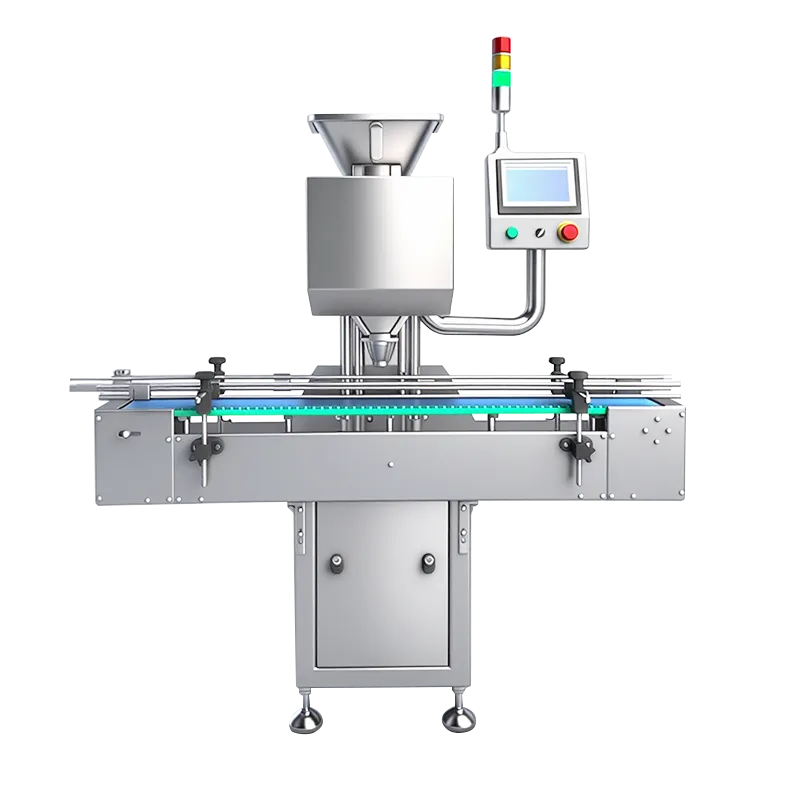
What Is a Tablet Counting Machine and Why It Matters
Defining the Tablet Counting Machine and Its Role in Pharmaceutical Packaging
Tablet counting machines represent automated solutions for counting and dispensing various medications including pills, capsules, and coated tablets within pharmaceutical production settings. These systems rely on advanced sensor technology to manage different tablet dimensions and forms at impressive rates reaching around 1200 tablets each minute. When compared to traditional manual methods, such automation helps maintain standards required by Good Manufacturing Practices (GMP) while significantly cutting down on potential contamination issues. Given how critical proper dosing really is when it comes to protecting patients' health, these devices play a vital role in meeting strict regulations and streamlining day-to-day operations across manufacturing facilities.
How Automated Systems Reduce Human Error in Pill Dispensing
The FDA has found that almost 10 percent of all medication recalls come down to simple counting mistakes when done manually. That's why many facilities are turning to automated solutions these days. These machines basically scan pills with infrared tech and have built-in ways to reject any miscounted tablets, hitting around 99.9% accuracy most of the time. Studies from various pharmaceutical labs indicate that switching to mechanical counters cuts down on dispensing errors by roughly 95% over traditional hand counting methods. What does this mean for actual operations? Consistent dosing becomes much easier to maintain between different production runs. For companies making millions of pills each month, those tiny counting errors that might seem insignificant actually add up fast and could potentially harm patients if not caught early enough.
Types of Tablet Counting Machines: Manual, Semi-Automatic, and Fully Automatic
Comparing Manual, Semi-Automatic, and Fully Automatic Tablet Counting Machines
The old school manual pill counting machines need someone standing there all day sorting and counting those tiny tablets, which works fine for little places like corner drug stores but isn't really practical anywhere bigger. Sure, these basic models save money initially costing between 60 to 80 percent less than the fancy automated ones out there. But let's face it folks get tired, eyes start to blur after hours of staring at white pills, and mistakes happen pretty regularly somewhere between 3 and 5 percent according to KBW Packaging research from last year. Now semi automatic versions have become popular because they handle feeding the pills mechanically while still requiring humans to load bottles manually. This hybrid approach cuts down errors significantly to about 1.5 to 2 percent range and speeds things up quite a bit reaching roughly 1,000 tablets per minute. For many smaller operations this sweet spot between cost savings and accuracy makes all the difference when trying to keep costs under control without sacrificing quality.
Fully automatic machines dominate large-scale operations, featuring integrated sensors, rejection systems, and throughput speeds of 4,000–6,000 tablets per minute. Infrared and photoelectric sensors enable error rates below 0.5%, offering over four times the precision of manual methods. These systems are ideal for industrial applications requiring speed, consistency, and minimal human intervention.
Cost, Speed, and Scalability Trade-Offs Between Machine Types
| Factor | Manual | Semi-Automatic | Fully Automatic |
|---|---|---|---|
| Upfront Cost | $1.5k–$3k | $6k–$12k | $18k–$50k+ |
| Labor Cost | High | Moderate | Minimal |
| Scalability | Limited | Medium | Industrial |
According to Future Market Insights data from 2024, around a quarter (about 27%) of the market belongs to semi automatic equipment because they strike a good middle ground between cost and effectiveness. Going all in on fully automatic systems means spending roughly three to four times more upfront, but this pays off big time for big operations where manual labor accounts for most expenses. Many top brands now offer modular setups that let businesses start small with semi automatic machines and gradually move toward complete automation as their output requirements increase over time. This flexibility helps companies scale without having to replace entire systems when demand spikes unexpectedly.
Core Components and Working Principle of Tablet Counting Machines
Hopper, Vibratory Plates, and Feed Gates: Managing Tablet Flow
The hopper serves as the entry point, funneling tablets into the system. Vibratory plates align tablets into single-file rows, while adjustable feed gates regulate flow to prevent jams. Vibration and gravity-based systems optimize separation, reducing bottlenecks by 30% compared to manual handling.
Sensors (Infrared and Photoelectric) for Real-Time, Precision Counting
Infrared and photoelectric sensors detect tablet passage with ±0.1% accuracy. They trigger counts only when tablets pass designated checkpoints, minimizing false readings from dust or debris. Advanced models include rejection mechanisms that address 95% of sizing errors in high-speed environments.
Control Panel and Automation Interface for Customizable Operation
Touchscreen interfaces allow operators to set batch sizes, counting thresholds, and rejection criteria. Programmable logic controllers (PLCs) automatically adjust vibration intensity and gate positions to accommodate tablets ranging from 2 mm to 20 mm in diameter, enabling quick changeovers and consistent performance.
Step-by-Step Process: From Vibration and Alignment to Bottle Filling
- Tablets enter the hopper and move along vibratory tracks.
- Sensors verify alignment and register each tablet.
- Feed gates direct tablets into measured channels.
- Conveyor belts position bottles in sync with filling cycles.
Top-tier systems achieve 1,200–1,500 tablets per minute while maintaining error rates at or below 0.05%.
Accuracy, Error Rates, and Quality Control in Tablet Counting
Industry Standards for Counting Accuracy and Acceptable Error Margins
The rules for pharmaceuticals demand that tablet counting machines stay accurate at least 99.9% of the time, keeping errors below 0.1% for most applications. These standards help manufacturers follow FDA and WHO requirements, since getting the dose right is absolutely critical. If there are too few tablets in a package, it poses serious risks to patients. Too many tablets create problems for companies financially. For medicines where mistakes can be deadly, like blood thinners, the tolerance gets even tighter, down to just 0.05%. On the other end of the spectrum, supplements generally have more flexibility, allowing variations up to about 0.3% without violating regulations.
Factors Affecting Precision: Tablet Size Variation, Jamming, and Sensor Sensitivity
Minor variations in tablet dimensions (±0.2 mm) can disrupt sensor calibration and lead to miscounts. Key challenges include:
- Size variation: Irregular shapes cause misalignment in vibratory feeders.
- Jamming: Sticky coatings or humidity-induced clumping reduce throughput by 15–40%.
-
Sensor drift: Dust buildup on infrared or photoelectric sensors decreases detection reliability by up to 20% annually without maintenance.
Regular calibration—recommended every 500 operating hours—and anti-static coatings on feed channels help maintain optimal performance.
Integrated Rejection Systems for Broken, Wrong-Sized, or Foreign Pills
Today's automated systems have several stages for checking quality. First, infrared beams scan tablets to see if they're intact. Then special cameras look at each pill and check how it matches standard shapes we've programmed into the system. When something goes wrong, like chips on the surface, pills that are too big, or even random stuff getting mixed in, those bad ones get blown out right away using compressed air. These machines can toss out between fifty to two hundred faulty tablets every single minute. A recent study from the Pharma Tech Review in 2024 showed that this kind of automated checking cuts down on bad batches by almost ninety-two percent when compared to what humans could catch manually. That's pretty impressive considering how fast production lines run nowadays.
Advanced Technology Integration in Modern Tablet Counting Machines
Vision Systems for Shape Recognition and Defect Detection
Tablet counting machines these days are getting smart with machine vision tech that combines high res cameras and some pretty advanced learning algorithms. The latest systems spot all sorts of tiny issues like chips, cracks, and weird color spots with near perfect accuracy. Traditional infrared sensors just don't cut it anymore compared to these visual inspection systems. They look at several factors at once shape, texture, how light passes through which makes them work great for those tricky coated pills or oddly shaped lozenges that regular sensors miss. And get this the optical sensors built into these systems can catch something as small as 0.5 mm on a 5 mm tablet. That means bad batches get caught way before they ever reach the packaging line, saving companies from recalls and keeping consumers safe.
Impact of Automation Level on Production Efficiency and Labor Costs
Automated systems slash workforce requirements by around 70 to 85 percent when compared to those semi automatic alternatives, and they can handle anywhere between 200 to 500 bottles every single minute. Machines connected through the Internet of Things allow operators to monitor operations live while predicting when maintenance will be needed, which cuts down on unexpected shutdowns by as much as 40%. Some pharmaceutical plants report that switching to pre set recipes has cut the time it takes to switch between various tablet types dramatically—from about half an hour down to just under ninety seconds. This kind of improvement boosts monthly production numbers by roughly 18%. Sure, these fully automated setups cost about 15 to 25% more upfront than traditional equipment, but most companies find that the boost in productivity and ability to scale makes them worth the extra expense over time.
FAQ
What is a tablet counting machine?
A tablet counting machine is an automated system used in pharmaceutical production to accurately count and dispense tablets, capsules, and coated pills quickly and efficiently.
Why are tablet counting machines important?
They are crucial for maintaining accuracy, minimizing contamination, and ensuring consistent dosing, thereby complying with strict pharmaceutical standards like GMP, FDA, and WHO.
What are the different types of tablet counting machines?
There are manual, semi-automatic, and fully automatic tablet counting machines, each with varying capabilities, costs, and levels of automation.
How do tablet counting machines work?
These machines use hoppers, vibratory plates, and sensors to align, count, and dispense tablets into bottles, operating with minimal human intervention.
What factors affect the accuracy of tablet counting machines?
Factors include tablet size variation, jamming, sensor sensitivity, and environmental conditions like static and dust, which require regular maintenance for optimal performance.
Table of Contents
- What Is a Tablet Counting Machine and Why It Matters
- Types of Tablet Counting Machines: Manual, Semi-Automatic, and Fully Automatic
- Core Components and Working Principle of Tablet Counting Machines
- Accuracy, Error Rates, and Quality Control in Tablet Counting
- Advanced Technology Integration in Modern Tablet Counting Machines
- FAQ