 EN
EN

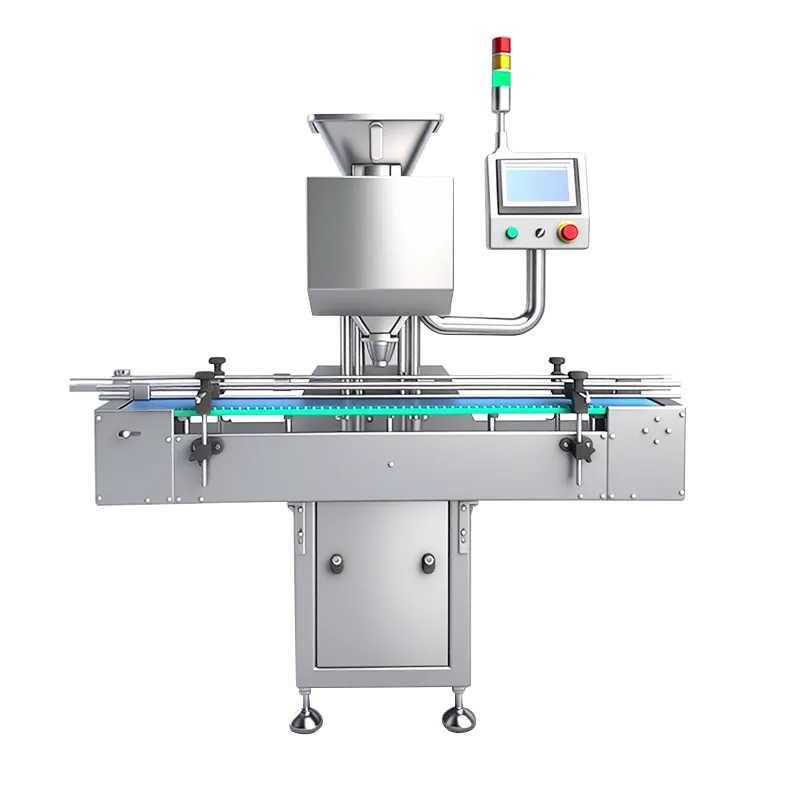
Precision Accuracy: Minimizing Waste and Ensuring Compliance
How High-Precision Optical Sensors Achieve <0.1% Counting Error
Modern capsule counting machines use multi-angle optical sensors with advanced pattern recognition to achieve counting accuracy below 0.1%. Capturing high-resolution images at speeds exceeding 1,000 capsules per second, these systems apply algorithmic cross-validation to reliably identify stacked or misoriented units. Infrared backlighting combined with edge-detection software enables consistent detection across capsule materials and colors—critical for high-value pharmaceuticals where even a single missing unit can trigger FDA compliance investigations.
This optical precision reduces material waste by 5–7% compared to mechanical counters, according to peer-reviewed pharmaceutical packaging studies—translating to ~$50,000 in annual savings per production line for mid-sized manufacturers. Integrated rejection mechanisms remove damaged or malformed capsules before packaging, while eliminating manual recounts cuts labor costs by 30%.
Regulatory Impact: FDA and EU GMP Requirements for Capsule Counting Machine Validation
Pharmaceutical manufacturers must validate capsule counting equipment under FDA 21 CFR Part 211 and EU GMP Annex 11, both of which require documented evidence of accuracy, reliability, and traceability. Validation entails three consecutive runs demonstrating ≥99.95% counting accuracy at maximum throughput, with calibration verified against NIST-traceable standards. The process includes:
- Installation Qualification (IQ) confirming correct sensor alignment and hardware configuration;
- Operational Qualification (OQ) testing performance under simulated production conditions; and
- Performance Qualification (PQ) verifying accuracy using actual capsule batches across multiple shifts and operators.
Failure to meet these requirements carries serious consequences: 63% of pharmaceutical recalls between 2020 and 2023 were linked to counting inaccuracies, per FDA enforcement reports. Validated systems must maintain secure, time-stamped audit trails for every count discrepancy—ensuring full traceability during regulatory inspections.
Throughput Performance: Balancing Speed, Capacity, and Package Format
Real-World Throughput Benchmarks: 300–1,200 cps Across Semi-Auto to Fully Integrated Capsule Counting Machine Systems
Throughput—measured in capsules per second (cps)—is the primary determinant of production scalability. Semi-automatic capsule counting machines operate at 300–500 cps, making them ideal for clinical trial batches or niche formulations. Fully integrated systems, synchronized with conveyors and vision inspection units, sustain 800–1,200 cps—delivering up to four times the output. A mid-volume facility using semi-auto units fills approximately 18,000 bottles/hour; fully integrated lines exceed 72,000. Crucially, sustained high-speed operation demands precision mechanics and thermal stability to preserve <0.1% error tolerance over extended runs.
Bottles vs. Blister Packs: How Package Type Affects Effective Cycle Time and Line Uptime
Package format significantly influences effective throughput and line availability. Bottle-filling lines experience 20–30% slower effective speeds due to sequential secondary operations—including capping, torque verification, and labeling—each introducing potential bottlenecks. Blister packaging streamlines this flow: counting feeds directly into thermoforming and sealing stations, improving uptime by ~15%. However, material constraints apply—brittle gelatin capsules risk damage above 900 cps in blister formats, whereas HDPE bottles reliably support speeds beyond 1,100 cps. One generics manufacturer standardized on blister-optimized counting units and reduced changeover time to 12 minutes, increasing annual capacity by 140 million doses.
Seamless Integration: Connecting the Capsule Counting Machine to End-to-End Packaging Lines
OPC UA and EtherCAT Interfaces Enable Plug-and-Play Synchronization with Cappers, Fillers, and Labelers
Modern capsule counting machines integrate seamlessly into end-to-end packaging lines via industry-standard communication protocols—OPC UA for secure, vendor-neutral data exchange and EtherCAT for deterministic, real-time synchronization. These interfaces enable bidirectional communication with downstream equipment such as cappers, volumetric fillers, and labelers, allowing the counting machine to share real-time status, reject logs, and batch metadata without custom middleware.
This interoperability reduces integration complexity by 60% versus proprietary solutions and eliminates cascading errors—e.g., misaligned counts are flagged before reaching the capper, preventing entire batches from being rejected. Synchronized start-stop commands ensure uniform line speed, supporting FDA 21 CFR Part 11 compliance for electronic records and signatures.
| Integration Benefit | Impact on Production |
|---|---|
| Unified machine communication | 30% faster line commissioning |
| Real-time data synchronization | 99.5% reduction in count-to-pack errors |
| Protocol standardization | 50% shorter changeover between product formats |
Plug-and-play connectivity also minimizes validation overhead during reconfigurations. Operators swap modules without reprogramming PLC logic—keeping changeovers under 15 minutes. This flexibility is essential for contract manufacturers managing diverse capsule types, dosages, and container formats across shared production lines.
Operational Flexibility: Adapting the Capsule Counting Machine for Diverse Product Lines
Rapid Changeover Protocols for Bottles, Blister Packs, and Sachets—Under 15 Minutes
Rapid changeover capability—enabling transitions between bottles, blister packs, and sachets in under 15 minutes—is a cornerstone of operational flexibility in modern pharmaceutical packaging. For contract manufacturers and facilities serving seasonal or multi-product portfolios, minimizing downtime during format switches is critical to maintaining throughput and profitability. Key enablers include tool-less track adjustments for width calibration, preset vibration profiles calibrated to capsule weight and geometry, and memory recall for container-specific parameters like fill height and ejection timing.
A 2023 packaging efficiency study found that facilities with changeovers exceeding 30 minutes experienced an 18% annual throughput loss in high-mix environments. By standardizing sub-15-minute transitions, manufacturers consistently achieve >95% line utilization—supporting agile response to demand shifts without requiring dedicated counting equipment for each package type.
FAQs on Capsule Counting Machines
What is the main benefit of using high-precision optical sensors in capsule counting machines?
High-precision optical sensors significantly improve counting accuracy to below 0.1%, reducing material waste and ensuring compliance with pharmaceutical standards.
Why is regulatory compliance critical for capsule counting machines?
Regulatory compliance ensures that the machines meet FDA and EU GMP standards, reducing the risk of recalls due to counting inaccuracies and ensuring full traceability during inspections.
How does the throughput of capsule counting machines affect production?
Throughput determines the scalability of production, with semi-automatic machines supporting 300–500 cps and fully integrated systems reaching 800–1,200 cps.
What are the advantages of integrating capsule counting machines into end-to-end packaging lines?
Integration reduces errors, enhances synchronization, and provides real-time data sharing, improving overall line efficiency and compliance with electronic record requirements.
Table of Contents
- Precision Accuracy: Minimizing Waste and Ensuring Compliance
- Throughput Performance: Balancing Speed, Capacity, and Package Format
- Seamless Integration: Connecting the Capsule Counting Machine to End-to-End Packaging Lines
- Operational Flexibility: Adapting the Capsule Counting Machine for Diverse Product Lines
-
FAQs on Capsule Counting Machines
- What is the main benefit of using high-precision optical sensors in capsule counting machines?
- Why is regulatory compliance critical for capsule counting machines?
- How does the throughput of capsule counting machines affect production?
- What are the advantages of integrating capsule counting machines into end-to-end packaging lines?