 EN
EN

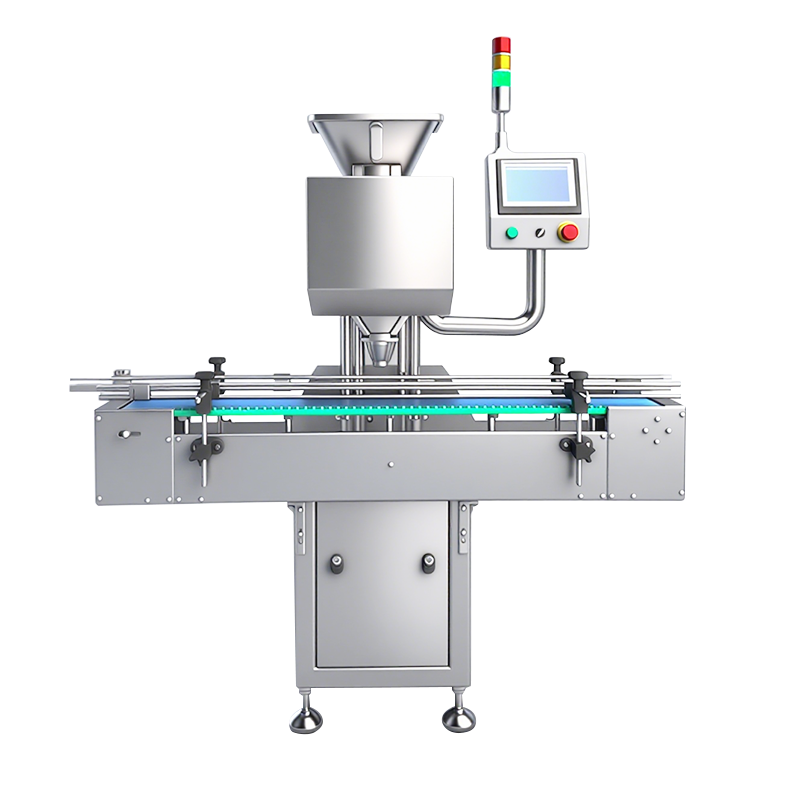
The Bottleneck: Manual Capsule Counting and Its Operational Costs
Labor-Intensive Processes, Human Error, and Compliance Risks
Manual capsule counting is inherently labor-intensive and error-prone. Skilled operators typically count only 40–60 capsules per minute—requiring roughly 20 workers to package 100,000 units in an 8-hour shift. Repetitive motion increases fatigue-related inaccuracies, elevating error rates to 2.1% compared to automated systems’ 0.3%. These errors—such as double-counting or spillage—directly compromise dosage integrity and trigger documentation gaps that heighten regulatory exposure under FDA cGMP and EU Annex 1 requirements. Because manual workflows cannot be fully de-staffed—even with semi-automated aids—they cap batch sizes at a few thousand capsules, creating systemic bottlenecks that constrain scalability and responsiveness.
Quantifying Downtime: Line Clearance, Changeovers, and Validation Delays
Batch transitions are especially costly under manual counting. Mandatory line clearance—verifying zero residual capsules—consumes hours of otherwise productive time. Validation protocols for manual counts extend changeovers by 27%, while unplanned stoppages for recounting or correction compound delays. Industry data shows manual methods lengthen validation cycles by 40% versus automated alternatives, disrupting scheduling during peak demand. In contrast, smart capsule counting machines standardize these processes, enabling continuous flow and eliminating the need for repeated human verification.
The Solution: Implementing a Smart Capsule Counting Machine
Dual-Verification Technology: Vision + Gravimetric Accuracy
Modern capsule counting machines eliminate variability through dual-verification: high-resolution vision sensors detect physical defects and perform optical counting, while integrated gravimetric scales cross-check weight thresholds in real time. This layered approach ensures ≤0.3% counting error—well below the 2.1% industry benchmark for manual methods. A 2024 multi-site study across 120 pharmaceutical facilities confirmed these machines process 300–1,000 capsules/minute with 99.4% accuracy and reduce recounts by 89%.
Seamless Integration with Filling and Blister Lines via OPC UA
OPC UA (Open Platform Communications Unified Architecture) enables secure, real-time interoperability between capsule counters, fillers, and blister packaging lines. This standardized industrial communication protocol automates batch handoffs, eliminates manual recalibration, and triggers automatic rejection of out-of-spec capsules using integrated sensor feedback. As a result, changeovers accelerate by 27%, validation becomes predictable and auditable, and GMP compliance is maintained continuously—not just at audit time.
Measurable Gains: Productivity, Compliance, and ROI
42% Faster Line Clearance and 27% Reduced Changeover Downtime
Automated batch documentation cut line clearance validation time by 42%, while integrated sensors reduced changeover delays by 27%. These improvements unlocked 18 additional production hours monthly—equivalent to $740k in annualized output (Ponemon Institute, 2023). Real-time gravimetric alerts also prevented unplanned stoppages by flagging weight deviations before they impacted final product quality.
Beyond Speed: Lower Rejection Rates, Audit Readiness, and Lifecycle Cost Savings
The benefits extended across quality, compliance, and total cost of ownership:
- 19% lower rejection rates, driven by dual-vision defect detection that surpasses human visual inspection
- 65% reduction in audit preparation time, enabled by auto-generated, 21 CFR Part 11-compliant electronic logs
- 31% lower lifecycle costs over five years, due to reduced maintenance, calibration, and operator training
These gains delivered a 14-month ROI. Critically, the system’s built-in error prevention mitigated regulatory risk—particularly valuable given that compliance failures now cost pharmaceutical manufacturers an average of $2.3 million per incident (2024 Pharma Compliance Benchmark).
Frequently Asked Questions (FAQs)
Why is manual capsule counting considered inefficient?
Manual capsule counting is inefficient due to its labor-intensive nature, high error rates, and limited scalability compared to automated systems.
What are the key benefits of using a smart capsule counting machine?
Smart capsule counting machines offer enhanced accuracy, reduced recounts, lower lifecycle costs, and improved compliance through technology such as dual-verification and seamless integration with packaging lines.
How do smart capsule counting machines ensure accuracy?
These machines use high-resolution vision sensors combined with gravimetric scales for real-time cross-checking, maintaining counting errors to a minimum.
What protocol helps in the integration of these machines with packaging lines?
OPC UA (Open Platform Communications Unified Architecture) ensures secure and efficient interoperability between capsule counting machines and packaging lines.
What are the financial advantages of adopting smart capsule counting systems?
Adopting such systems results in productivity gains, reduced downtime, and lower rejection rates, leading to a substantial return on investment and cost savings.
Table of Contents
- The Bottleneck: Manual Capsule Counting and Its Operational Costs
- The Solution: Implementing a Smart Capsule Counting Machine
- Measurable Gains: Productivity, Compliance, and ROI
-
Frequently Asked Questions (FAQs)
- Why is manual capsule counting considered inefficient?
- What are the key benefits of using a smart capsule counting machine?
- How do smart capsule counting machines ensure accuracy?
- What protocol helps in the integration of these machines with packaging lines?
- What are the financial advantages of adopting smart capsule counting systems?