 EN
EN

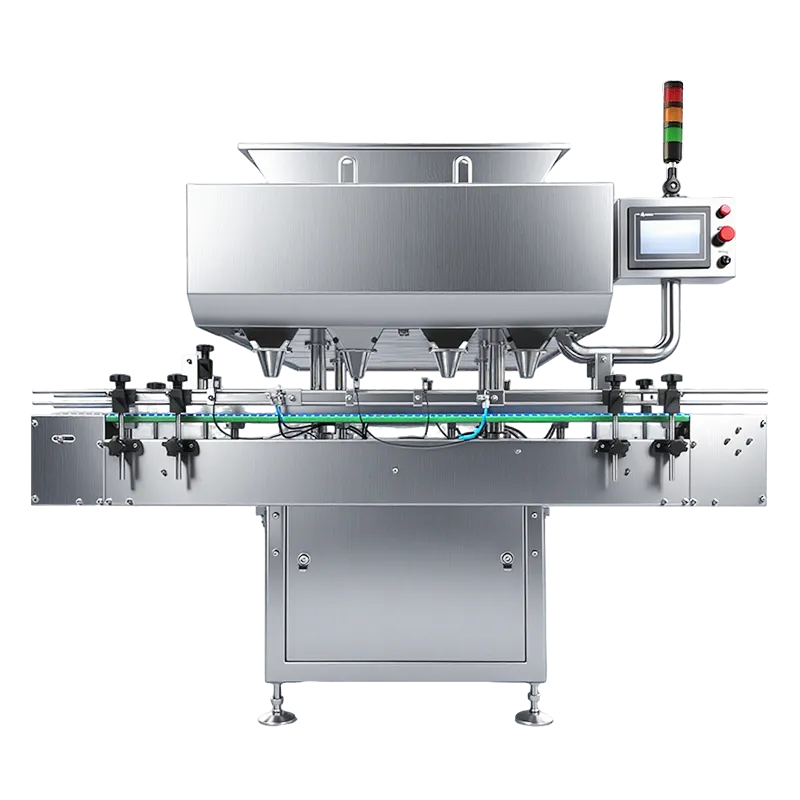
Understanding Labor Cost Reduction Through Automatic Counting Machines
Understanding Labor Cost Reduction Through Automation
Automatic counting machines streamline labor-intensive inventory tasks by operating 24/7 without fatigue, replacing repetitive manual roles and minimizing human error. A textile manufacturer reduced its counting staff by 60% after deployment, reallocating employees to higher-value machine maintenance and oversight roles.
How Automating the Counting Process in Manufacturing Cuts Overhead
Automated counting eliminates costly overtime associated with manual bulk verification and reduces material waste from miscounts. In pharmaceutical packaging, facilities report 90% faster batch processing—enabling same-day order fulfillment without hiring additional personnel.
Data: Average Labor Savings After Implementing Automatic Counting Machines
| Metric | Manual Process | Automated System | Improvement |
|---|---|---|---|
| Counting Speed | 500 units/hr | 8,000 units/hr | 16x faster |
| Error Rate | 4.2% | 0.15% | 96% reduction |
| Labor Costs Per 10k Units | $7.80 | $0.95 | 88% savings |
Case Study: Electronics Manufacturer Reduces Staffing Needs by 40%
An electronics producer eliminated 23 manual counting positions after installing AI-powered systems, achieving $478,000 in annual labor savings. Equipped with infrared sensing arrays, the machines deliver 99.97% component recognition accuracy. Redeployed staff now manage calibration and data analysis, while production throughput increased by 22% despite lower headcount.
Manual vs. Automated Counting: Accuracy, Efficiency, and Operational Impact
Challenges of Manual Counting in High-Volume Production
Manual counting creates bottlenecks in high-volume environments, where workers take an average of 62 seconds to count 100 units—a task automated systems complete in just 8 seconds. In automotive manufacturing, error rates reach up to 15% due to fatigue and distraction, costing $22 per miscounted batch in rework labor.
Efficiency and Accuracy in Counting: Automated or Electronic Counters Outperform Humans
Automatic counters achieve 99.9% accuracy using AI-driven optical sensors and weight-based validation, far surpassing the 85% typical of manual methods. One pharmaceutical company cut daily labor hours by 20% by shifting staff to quality assurance, enabled by high-precision systems that process 1,200 units per minute.
Study: Error Rates Drop from 5% to 0.2% with Automatic Counting Machine Use
A 2024 industry analysis revealed that adopting automated counting reduced error rates from 5% to 0.2%, cutting production line stoppages by 92%. For electronics manufacturers, this translated into $178,000 in annual savings by preventing material waste from over- or under-counted components.
Trend: Shift from Labor-Intensive to Technology-Driven Workflows
57% of manufacturers now prioritize automated counting solutions—a 28-point increase since 2021. This transition allows factories to scale output for custom orders without expanding teams, as demonstrated by a textile firm that doubled production volume using 18% fewer line workers through integrated counting-conveyor systems.
Calculating ROI and Long-Term Cost Savings of Automatic Counting Machines
Breakdown of Direct and Indirect Labor Cost Control Benefits
Counting machines cut down on labor expenses in several ways. The most obvious is getting rid of those 2 to 3 people who manually count items during each shift. But there's also money saved when we don't have to deal with the mess of recounting stuff that humans get wrong, plus all the time spent training new staff after mistakes happen. According to research published last year, factories that switched to automated counting systems saw their counting labor costs drop anywhere between 30% and almost half. These savings mainly come from less overtime pay needed and just plain better workflow overall.
ROI of Automated Counting Systems Within 14 Months on Average
Most facilities recoup their investment in automatic counting systems within 14–18 months. A pharmaceutical packaging operation achieved 75% ROI in 14 months through $150,000 in annual labor savings against a $200,000 system cost. Industry-wide, 78% of manufacturers reach full payback within two years by redeploying staff to quality control and operational oversight.
Controversy Analysis: Upfront Costs vs Long-Term Savings in Automation of Bulk Counting Operations
Premium systems do come with hefty price tags ranging from around $200k to half a million dollars upfront, but they cut down errors by about 90 percent compared to those 5% mistakes we see in manual work. The Ponemon Institute reported last year that this actually saves companies roughly $740k each year in wasted materials and time. Some folks worry about ongoing maintenance issues, sure enough, but when looking at the big picture over five years, these automated solutions still end up costing 60% less than sticking with old school manual methods. Getting good returns really hinges on matching what the machines can handle per hour (somewhere between 1,200 and 15 thousand units) with how much stuff needs to be produced daily.
Workforce Optimization and Increased Productivity in Automated Factories
How Reducing Manual Labor Through Technology Boosts Output
When we take away all those boring repetitive jobs, automatic counting machines actually give workers time to focus on creative work and figuring out better ways to do things. According to some research from Bain & Company last year, factories that have implemented these kinds of automated counting systems saw their productivity jump by around 30 percent over just twelve months. The best part? These machines keep going nonstop day after day without getting tired or making mistakes, which really helps smooth out production lines that are always racing against deadlines. No more waiting for someone to count parts manually when there's a backlog building up somewhere else in the factory.
Workforce Productivity in Factories: Reallocation of Staff to Higher-Value Tasks
With counting automated, 63% of manufacturers reassign employees to roles in quality control, maintenance, or data analytics. ERP industry research shows this shift improves overall workforce utilization by 18–22%, as teams focus on strategic improvements rather than routine counts.
Example: Automotive Parts Supplier Increases Throughput by 60%
An automotive components plant integrated automatic counting into its assembly line, cutting manual inspection labor by 75%. The change enabled a 60% increase in daily output while maintaining 99.8% counting accuracy. Former counters now monitor machine calibration and real-time analytics, enhancing operational responsiveness.
Strategy: Integrating High-Speed Counting Machines into Lean Manufacturing
Forward-thinking manufacturers align automatic counting with lean principles by:
- Minimizing waste: Real-time tracking prevents overproduction
- Enhancing flow: Synchronized counters maintain steady material movement
- Empowering teams: Cross-trained operators respond to system alerts proactively
A 2023 automotive case study showed that combining automatic counting with just-in-time workflows reduced lead times by 40% and lowered labor costs by $12.50 per unit.
Industry Applications and Technological Advancements in Automatic Counting Machines
Automated counting systems deliver significant labor cost reductions across industries, with adopters reporting 35–60% savings depending on application complexity (2024 Automation Efficiency Report). These systems are now essential in sectors demanding precision and speed, including pharmaceuticals, agriculture, and automotive manufacturing.
Comparing cost-effectiveness across industries using automated counters
- Pharmaceutical: Achieves 99.98% accuracy for blister packs vs. 92% manually
- Agriculture: Processes 12,000 seeds/minute vs. 800/minute manually
- Automotive: Cuts component recounting costs by $18.22 per 1,000 units
Food packaging plants using these systems report 54% faster line clearance compared to manual methods, according to recent manufacturing efficiency studies.
Impact of automated machines on labor costs in pharmaceutical packaging
A major vaccine producer reduced quality control staffing by 40% after deploying vision-based counting systems, maintaining 100% batch consistency. The technology replaced 12 full-time manual counters per shift, with ROI achieved in 11 months through payroll reduction and minimized error-related waste.
Innovation trend: AI-enhanced sensors in next-gen counting systems
Machine learning algorithms now detect microscopic defects during counting, reducing false rejects by 63% in beta testing. Early adopters of AI-driven systems report 80% fewer production halts due to counting errors compared to traditional optical sensors. These systems continuously adapt detection parameters, achieving 0.01% error rates in high-speed tablet applications.
Frequently Asked Questions
What are automatic counting machines used for?
Automatic counting machines are used for tracking and verifying product quantities in manufacturing, packaging, and other inventory tasks to improve accuracy and reduce labor costs.
How do automatic counting machines reduce labor costs?
They reduce labor costs by eliminating the need for manual counting, minimizing errors, and reducing overtime and rework due to miscounts.
What is the ROI timeline for implementing automatic counting machines?
Most companies see a return on investment within 14 to 18 months due to labor savings and operational efficiency gains.
In which industries are automatic counting machines commonly used?
They are commonly used in pharmaceuticals, automotive manufacturing, agriculture, and food packaging, where precision and speed are critical.
Table of Contents
- Understanding Labor Cost Reduction Through Automatic Counting Machines
- Manual vs. Automated Counting: Accuracy, Efficiency, and Operational Impact
- Calculating ROI and Long-Term Cost Savings of Automatic Counting Machines
- Workforce Optimization and Increased Productivity in Automated Factories
-
Industry Applications and Technological Advancements in Automatic Counting Machines
- Comparing cost-effectiveness across industries using automated counters
- Impact of automated machines on labor costs in pharmaceutical packaging
- Innovation trend: AI-enhanced sensors in next-gen counting systems
- Frequently Asked Questions
- What are automatic counting machines used for?
- How do automatic counting machines reduce labor costs?
- What is the ROI timeline for implementing automatic counting machines?
- In which industries are automatic counting machines commonly used?