 EN
EN

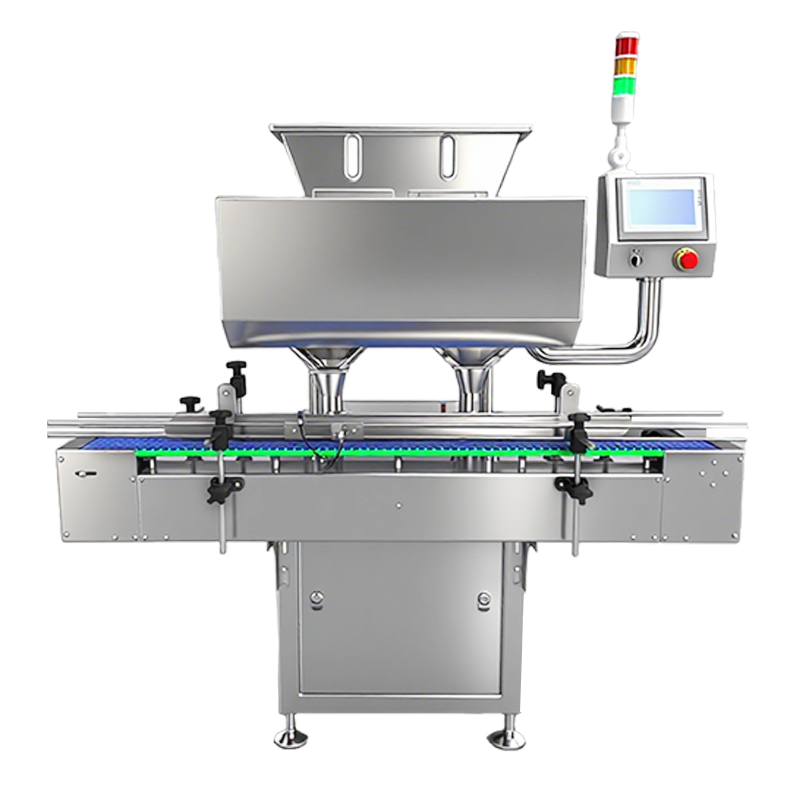
Regulatory Foundations for Capsule Counting Machines
FDA 21 CFR Parts 111, 210, and 211: Key Requirements for Capsule Counting Machine Design and Operation
Capsule counting machines must comply with FDA 21 CFR Part 211’s equipment qualification standards, mandating validated cleaning procedures to prevent cross-contamination and material transfer. Under Part 210’s current good manufacturing practice (cGMP) framework, systems require documented calibration protocols ensuring counting accuracy within ±1% tolerance—a critical threshold for high-risk medications. Part 111’s quality control provisions necessitate built-in safeguards against miscounts, including automatic rejection of damaged capsules and real-time weight verification. All product-contact components must be constructed from FDA-grade stainless steel (e.g., 316L) or compliant polymers resistant to degradation from cleaning agents and solvents. Physical separation between counting chambers and operator zones satisfies Part 211’s contamination control requirements, while audit trails—captured per §211.68—log every counting event with immutable timestamps and user attribution.
Global Harmonization: How EMA Annex 15 and WHO TRS 986 Align with U.S. cGMP for Capsule Counting Machines
EMA Annex 15 and WHO Technical Report Series (TRS) 986 Chapter 4 reinforce the same core validation and data integrity expectations as FDA cGMP. All three frameworks mandate Installation/Operational/Performance Qualification (IQ/OQ/PQ) for capsule counting machines—particularly for automated rejection and verification subsystems. WHO TRS 986 explicitly endorses ALCOA+ principles, requiring electronic records that are attributable, legible, contemporaneous, original, accurate, complete, consistent, enduring, and available—mirroring FDA 21 CFR Part 11 and EMA Annex 11. Maintenance documentation intervals in Annex 15 align directly with 21 CFR §211.67’s preventive maintenance requirements, while traceability from final count back to raw materials satisfies both EMA Annex 11 and FDA §211.188 batch record rules. This convergence significantly reduces redundant validation effort for global manufacturers deploying capsule counting systems across multiple regulatory jurisdictions.
cGMP Implementation in Capsule Counting Machine Operations
Preventing Cross-Contamination Through Validated Cleanability and Material Contact Design
cGMP-compliant capsule counting machines must integrate design-for-cleanability features: surfaces with ≤ 0.4 µm Ra roughness, crevice-free construction, and sealed bearings to eliminate residue traps. Product-contact materials must conform to USP <661> and FDA 21 CFR Part 211.65—typically pharmaceutical-grade 316L stainless steel or FDA-listed polymers proven stable under repeated cleaning and sanitization. IP54-rated enclosures isolate moving parts from product streams, and modular component design enables targeted sanitization without full disassembly. Facilities using non-validated cleaning protocols experienced a 12% higher rate of contamination-related recalls in 2023, underscoring the operational necessity—not just regulatory expectation—of cleanability validation.
IQ/OQ/PQ Validation, Calibration, and Preventive Maintenance Protocols for Reliable Performance
Robust IQ/OQ/PQ execution is foundational to sustained cGMP compliance. Installation Qualification verifies correct assembly and environmental integration; Operational Qualification confirms functionality across defined operating ranges; Performance Qualification demonstrates consistent accuracy under actual production conditions—including worst-case capsule sizes, speeds, and environmental loads. Calibration must follow NIST-traceable standards with ±0.5% counting accuracy tolerance, verified quarterly using certified test weights and placebo capsules. Preventive maintenance schedules should include optical sensor validation every 500 operating hours, mechanical wear component replacement at 10,000-hour intervals, and backup battery checks to preserve audit trail integrity. Per the 2023 FDA Compliance Report, machines lacking documented PQ accounted for 23% of inspection-related production halts. Real-time statistical process control (SPC) dashboards must trigger automated deviation alerts when counts exceed preset thresholds—enabling immediate intervention in alignment with ALCOA+ expectations.
Data Integrity and Accuracy Assurance in Automated Capsule Counting
FDA-Compliant Rejection Systems, Weight Verification, and Real-Time Accuracy Monitoring
Modern capsule counting machines deploy layered verification: optical sensors detect physical defects (cracks, chips, discoloration), while precision load cells perform unit-weight verification against calibrated thresholds to identify underfilled or overfilled capsules. Rejection mechanisms—validated to >99.98% accuracy—automatically isolate non-conforming units without operator intervention. Vibration and environmental sensors feed into real-time SPC dashboards, triggering recalibration or alerting operators to interference before accuracy drifts beyond ±1%. This dual-sensor architecture reduces human counting errors by 99.5% and ensures full traceability from individual capsule detection through final packaging reconciliation.
ALCOA+ Principles in Practice: Audit Trails, Electronic Signatures, and Secure Data Handling for Capsule Counting Machines
ALCOA+ compliance is embedded—not bolted on—in validated capsule counting systems. Every action—calibration, count initiation, rejection event, or parameter change—generates a cryptographically signed audit trail with timestamp, operator ID, and contextual metadata. Role-based electronic signatures restrict access and prevent unauthorized data modification. Data encryption during transmission and Write Once, Read Many (WORM) storage meet the enduring and unalterable record requirements of 21 CFR Part 11. Automated backups to logically segregated, access-controlled servers ensure availability and continuity across 10+ years of operational history—fully supporting FDA inspection readiness and long-term batch record integrity.
FAQ
What are the key regulatory standards for capsule counting machines?
Capsule counting machines must comply with FDA regulations such as 21 CFR Parts 111, 210, and 211. These address equipment design, cleaning validation, contamination control, and audit trails. Global standards like EMA Annex 15 and WHO TRS 986 mandate IQ/OQ/PQ protocols and ALCOA+ data integrity principles.
How is cross-contamination prevented in capsule counting machines?
Validated cleanability is ensured with design features like crevice-free surfaces, modular components, and FDA-approved materials like 316L stainless steel. IP54-rated enclosures and stringent cleaning protocols further mitigate cross-contamination risks.
Why is ALCOA+ compliance important for capsule counting machines?
ALCOA+ principles ensure data integrity by making electronic records attributable, legible, contemporaneous, original, accurate, and secure. This is crucial for maintaining FDA approval and compliance with global cGMP standards.
What is included in IQ/OQ/PQ validation for capsule counting machines?
IQ (Installation Qualification) ensures correct assembly, OQ (Operational Qualification) checks functionality under operating conditions, and PQ (Performance Qualification) tests accuracy and reliability during real-world production scenarios.
What technologies improve accuracy in automated capsule counting?
Accuracy is enhanced by dual verification systems such as optical sensors for defects and load cells for weight verification. Real-time SPC dashboards enable performance monitoring and deviation alerts to ensure count precision within ±1% tolerance.