 EN
EN

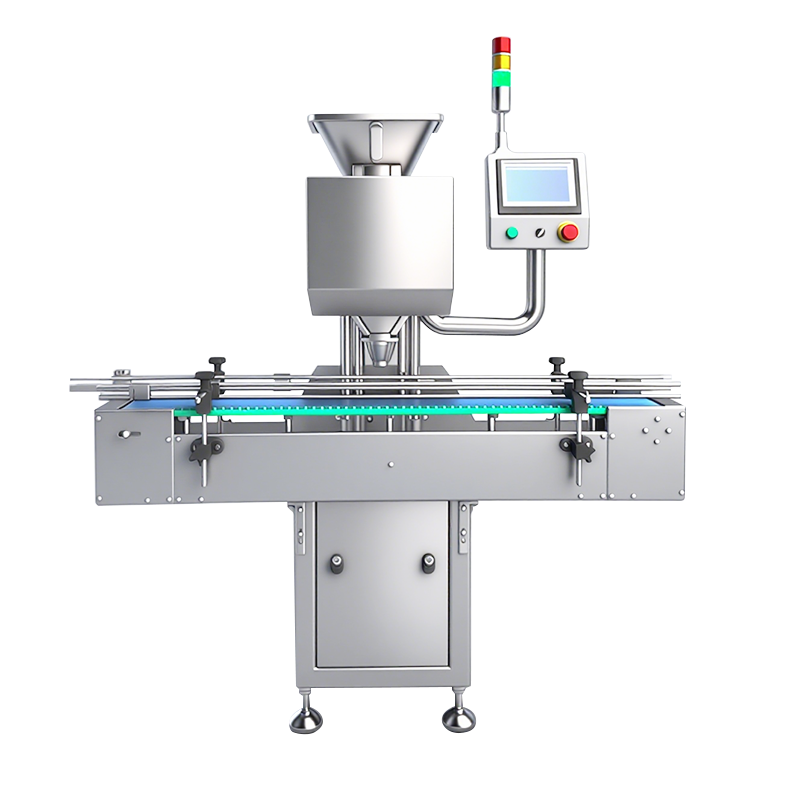
Smart Automation and Industry 4.0 Integration in Capsule Counting Machines
IoT-Enabled Real-Time Monitoring and Predictive Maintenance
Modern capsule counting machines leverage Internet of Things (IoT) connectivity to transform maintenance protocols and operational visibility. Integrated sensors track performance metrics—including vibration, temperature, and throughput—to flag anomalies before they escalate into failures. In 2023, pharmaceutical facilities using IoT-enabled systems reported a 25% reduction in unplanned outages by deploying predictive maintenance algorithms (PharmaTech Journal 2023). This real-time oversight minimizes downtime, extends equipment lifespan, and supports continuous compliance with regulatory standards such as FDA 21 CFR Part 11 and EU Annex 11.
AI-Driven Process Control and Adaptive Counting Algorithms
Industry 4.0 integration goes beyond hardware monitoring: artificial intelligence enables dynamic process optimization. Machine learning algorithms analyze historical production data to self-calibrate counting parameters in milliseconds—adapting instantly to capsule size variations, surface imperfections, or hygroscopic tendencies that cause sticking. For example, adaptive systems automatically adjust feeder speeds and air-pressure settings for challenging formulations, sustaining counting accuracy above 99.97%. This eliminates manual recalibration and boosts throughput by up to 40% in high-volume environments.
Key enhancements include:
- Neural networks detecting micro-defects during high-speed counting
- Real-time weight verification synchronized with optical sensors
- Self-learning algorithms that refine tolerance thresholds per batch
Together, IoT and AI establish a new standard for precision, scalability, and operational resilience in pharmaceutical manufacturing.
High-Precision Vision-Based Counting Systems for Capsule Counting Machines
CCD/CMOS Imaging Advancements and Multi-Angle Optical Sensing
Modern vision-based capsule counting machines use high-resolution CCD and CMOS sensors operating at full production-line speeds. Multi-angle optical sensing—achieved through strategically positioned cameras and synchronized lighting—overcomes traditional limitations like capsule overlap or irregular geometry. By capturing capsules from multiple perspectives simultaneously, these systems achieve counting accuracy exceeding 99.99%, even for transparent or glossy formulations that challenge infrared alternatives. As a result, manufacturers eliminate manual verification stages and reduce operational costs by up to 30%, according to recent automation efficiency studies.
Deep Learning Models for Defect-Aware Capsule Recognition
Deep learning models now enable simultaneous counting and quality control. Trained on millions of capsule images, these AI systems detect microfractures, discoloration, and deformities in real time—comparing each unit against ideal parameters. When paired with high-speed imaging hardware, they reject defective capsules at rates exceeding 500 per minute without compromising throughput. Their continuous learning capability allows seamless adaptation to new geometries—such as softgels or gummies—without manual intervention. This defect-aware functionality reduces downstream quality failures by 47% (PharmaTech Journal, 2023), reinforcing alignment with ICH Q5A and ISO 13485 quality assurance expectations.
Evolving Physical Design: Compact, Modular, and Multi-Channel Capsule Counting Machines
Space-Efficient Modular Architectures for Scalable Production Lines
Pharmaceutical manufacturers increasingly prioritize floor space optimization and production flexibility—driving demand for modular capsule counting machines. These systems feature interchangeable components that allow rapid reconfiguration between capsule formats and batch sizes without additional machinery. A single unit can transition from processing 500-capsule R&D batches to handling 200,000-unit commercial runs by swapping counting channels or feed mechanisms. Changeover time drops by up to 70% compared to fixed-configuration systems, while the compact footprint—often 40% smaller than traditional models—enables seamless integration into existing lines. Multi-channel designs further enhance efficiency by permitting concurrent counting of different formulations, making them especially valuable for contract manufacturers managing seasonal demand spikes or product phase transitions. These architectural innovations deliver three critical advantages: reduced capital expenditure through equipment consolidation, minimized operational disruption during scale-up, and future-proofed adaptability for emerging dosage forms.
Specialized Capsule Counting Machines for Challenging Formulations
Precision Counting Solutions for Gummies, Softgels, and Irregular Dosage Forms
Conventional capsule counting machines often miscount or damage irregular shapes like gummies or softgels. Modern specialized systems resolve this through adaptive sensor calibration and gentle handling mechanisms. Adjustable optical sensors detect variations in size, texture, and transparency—essential for accurately counting sticky gummies or translucent softgels. Advanced vibration control stabilizes irregular items during conveyance, while machine learning algorithms distinguish overlapping units with 99.8% accuracy. These capabilities ensure traceability and compliance with FDA 21 CFR Part 11 requirements.
| Feature | Benefit |
|---|---|
| Multi-spectrum imaging | Detects transparent/opaque capsules equally |
| Dynamic vibration dampening | Prevents softgel deformation |
| Shape-adaptive chutes | Handles oblong/irregular geometries |
Pharmaceutical manufacturers report 30% fewer rejects when counting challenging forms with specialized systems. The technology supports precise dosing for pediatric chewables, CBD softgels, and bi-layer tablets—formats growing at 12% annually (PharmaTech Journal 2023). By integrating tailored solutions, facilities maintain throughput without sacrificing accuracy for non-standard dosage forms.
FAQs
Q: How does IoT contribute to capsule counting machine efficiency?
A: IoT connectivity allows for real-time monitoring and predictive maintenance, reducing unplanned outages and supporting regulatory compliance.
Q: What role do AI and machine learning play in these machines?
A: AI-driven algorithms optimize the counting process, adapt to variations in formulations, and enhance accuracy and throughput.
Q: What are the benefits of modular capsule counting machines?
A: Modular designs offer flexibility, reduced changeover time, and efficient use of space, supporting various batch sizes and formulations.
Q: How do these machines handle irregular dosage forms?
A: Specialized systems use adaptive sensors and machine learning to accurately count and handle gummies, softgels, and other irregular shapes.
Table of Contents
- Smart Automation and Industry 4.0 Integration in Capsule Counting Machines
- High-Precision Vision-Based Counting Systems for Capsule Counting Machines
- Evolving Physical Design: Compact, Modular, and Multi-Channel Capsule Counting Machines
- Specialized Capsule Counting Machines for Challenging Formulations