EN
EN


When purchasing a tablet counter for the North American market, many buyers assume that CE certification is enough.
However, in the United States and Canada, CE and FDA serve very different purposes—and misunderstanding this difference can lead to customs delays, audit failures, or rejected installations.
This article explains the real CE vs FDA concerns for tablet counters, helping pharmaceutical, nutraceutical, and supplement manufacturers make compliant decisions.
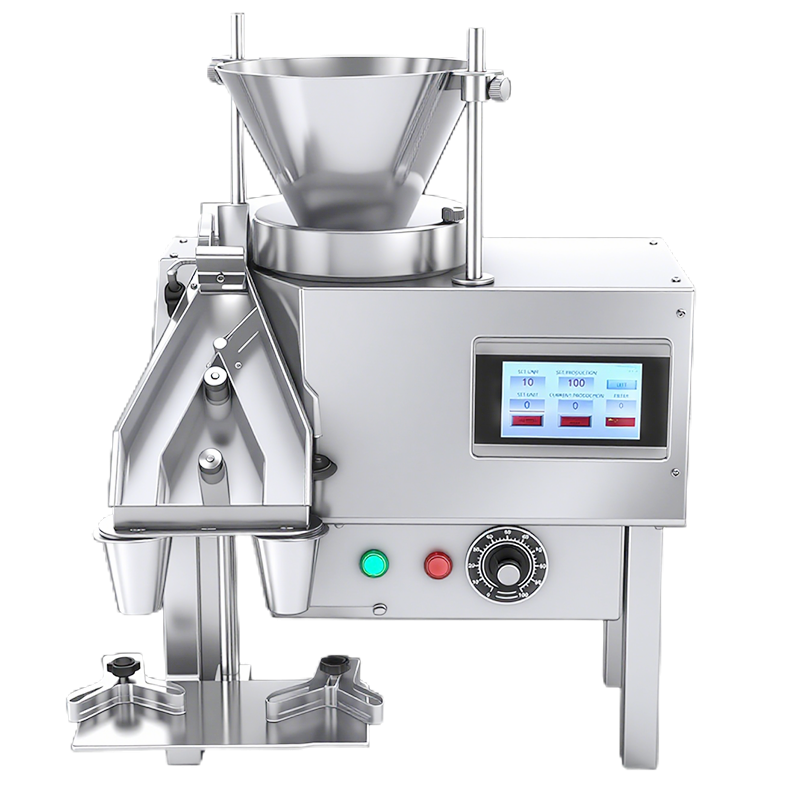
CE certification confirms that a tablet counting machine complies with EU machinery and safety directives, such as:
Electrical safety (Low Voltage Directive)
EMC (Electromagnetic Compatibility)
Mechanical safety and risk assessment
CE focuses on machine safety, not pharmaceutical process compliance.
Operator safety
Electrical & mechanical design
Emergency stop & guarding
Basic machine conformity
Product quality or accuracy validation
GMP compliance
Pharmaceutical data integrity
Process validation
👉 CE alone is NOT sufficient for FDA-regulated production in North America.
U.S. Food and Drug Administration regulation focuses on process control, data integrity, and GMP compliance, not just machine safety.
Cleanable, contamination-resistant design
Food/pharma-grade contact materials
Controlled product flow to avoid cross-contamination
Documented accuracy testing
Repeatability and reliability records
Validation protocols (IQ / OQ / PQ)
Secure HMI access levels
Audit trails (if electronic data is stored)
Traceable production records
FDA inspectors may ask:
How is counting accuracy verified?
How do you prevent mix-ups?
How is the machine cleaned and documented?
| Aspect | CE Certification | FDA Requirements |
|---|---|---|
| Focus | Machine safety | Process & product compliance |
| Region | Europe | United States |
| GMP | ❌ Not required | ✅ Mandatory |
| Validation | ❌ Not required | ✅ IQ/OQ/PQ |
| Accuracy control | ❌ Optional | ✅ Critical |
| Data integrity | ❌ Not covered | ✅ Required |
❌ Assuming CE = FDA approval
❌ Buying machines without validation support
❌ Ignoring cleaning & changeover documentation
❌ No audit-ready documentation
These mistakes often surface only during FDA inspection, when it’s already too late.
When sourcing a tablet counter for the U.S. or Canada, ensure the supplier can provide:
✅ CE certification (machine safety baseline)
✅ GMP-oriented machine design
✅ Validation documents (IQ/OQ/PQ templates)
✅ Counting accuracy testing reports
✅ FDA-audit-friendly documentation
✅ Experience with U.S. customers
Yes—but only if it is FDA-ready.
CE is a starting point, not the finish line.
For FDA-regulated production, the user (manufacturer) is responsible for ensuring:
GMP compliance
Validation
SOPs and documentation
A professional supplier should actively support this process.
For North America:
CE ensures the machine is safe
FDA ensures your production is compliant
The smartest buyers choose tablet counters that are CE-certified AND designed with FDA/GMP requirements in mind—avoiding costly retrofits, audit risks, and compliance failures.
Q: Does FDA issue a certificate for tablet counters?
A: No. FDA does not “approve” machines. Compliance is verified through inspections.
Q: Is CE mandatory in the U.S.?
A: No, but CE helps with safety, insurance, and global standardization.
Q: Can FDA reject a production line using a CE-only machine?
A: Yes—if GMP, validation, or data integrity requirements are not met.
If you’re planning to sell or manufacture in North America, choosing the right tablet counter from the beginning saves time, money, and regulatory risk.
📧 Email: [email protected]
📱 WhatsApp: +86 138 6815 9610
🌐 Website: www.ruiyimech.com