EN
EN


China is one of the world’s largest suppliers of tablet and capsule counting machines, offering strong price advantages and flexible customization.
However, many U.S. buyers encounter serious problems after import—often during installation, validation, or FDA inspection.
Understanding these risks before placing an order can save months of delay and thousands of dollars.
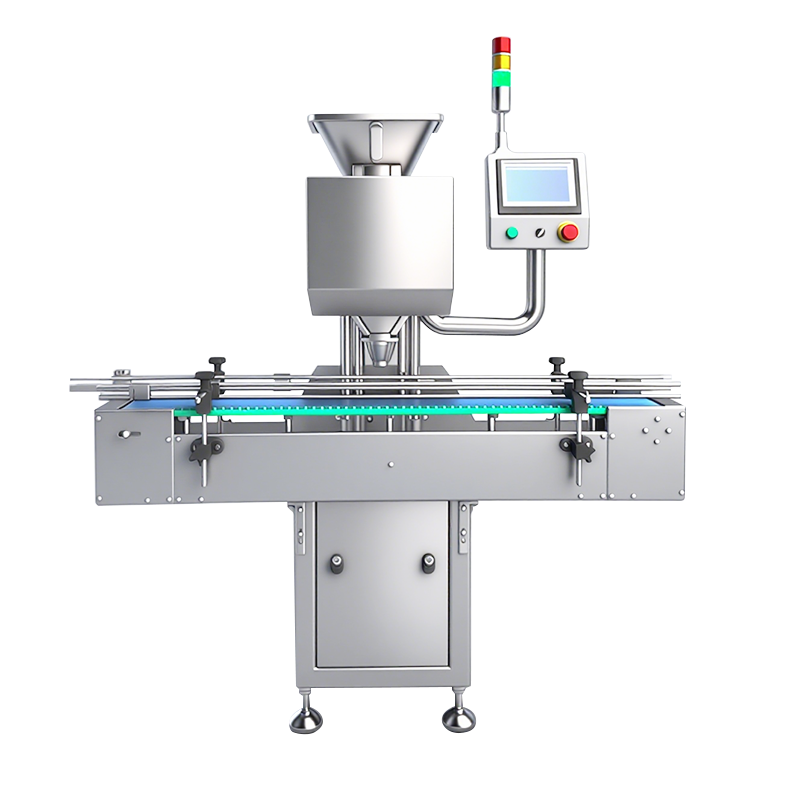
One of the most common mistakes is believing that CE certification is sufficient for the U.S. market.
CE certification only confirms:
Electrical and mechanical safety
Compliance with EU machinery directives
It does NOT guarantee:
GMP compliance
Validation readiness
FDA inspection acceptance
In the U.S., compliance is governed by U.S. Food and Drug Administration, not CE standards.
Many low-cost counting machines are originally designed for general industrial use, not pharmaceutical environments.
Common GMP-related issues include:
Poor cleanability and dead corners
Mixed-material contact surfaces
No contamination control between products
These issues often surface only during FDA audits, when fixes are expensive or impossible.
U.S. pharmaceutical and nutraceutical manufacturers must validate equipment.
Typical problems buyers face:
No IQ/OQ/PQ documentation provided
No counting accuracy validation data
Supplier unfamiliar with U.S. validation logic
Without validation, machines cannot be legally used in regulated production.
After installation, many buyers discover:
Inconsistent counting accuracy
Tablet chipping or capsule deformation
Sensitivity issues with different product shapes
This leads to:
Batch rejection
Customer complaints
Regulatory risk
Accuracy is not just a performance issue—it is a compliance requirement.
During FDA inspections, buyers are often asked:
How is counting accuracy verified?
How do you prevent mix-ups?
How is cleaning documented?
Machines imported without audit-ready documentation may trigger:
Form 483 observations
Production suspension
Mandatory corrective actions
Some U.S. buyers experience:
Missing or incorrect HS codes
Incomplete shipping documents
Delays due to unclear machine classification
These issues can hold equipment at the port for weeks, increasing costs.
Before importing a counting machine from China, buyers should ensure:
✅ CE certification for machine safety
✅ GMP-oriented mechanical design
✅ Validation document support (IQ / OQ / PQ)
✅ Proven counting accuracy data
✅ FDA inspection experience
✅ Clear export & customs documentation
Choosing the right supplier matters more than choosing the lowest price.
Many U.S. buyers don’t fail at import—they fail at compliance.
A counting machine that:
Cannot be validated
Fails FDA inspection
Causes accuracy issues
is far more expensive than a properly designed, FDA-ready solution.
Smart buyers focus on long-term compliance, reliability, and audit readiness, not just upfront cost.
Q: Can I import a counting machine without FDA approval?
A: FDA does not approve machines, but your production must comply with FDA regulations.
Q: Is CE certification required in the U.S.?
A: No, but it helps establish basic safety and quality standards.
Q: Who is responsible for FDA compliance—the supplier or buyer?
A: The buyer (manufacturer) is responsible, but a capable supplier should fully support compliance.
Avoid costly mistakes by choosing equipment designed for GMP compliance, validation, and FDA inspection readiness.
📧 Email: [email protected]
📱 WhatsApp: +86 138 6815 9610
🌐 Website: www.ruiyimech.com