 EN
EN


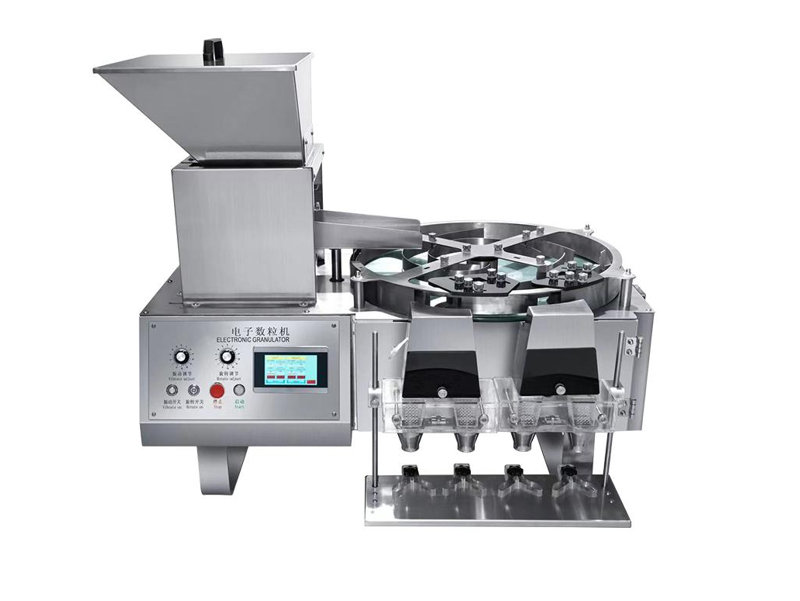
Why Preventive Maintenance Is Non-Negotiable for Counting Machines
An automatic counting machine represents a significant capital investment for any pharmaceutical or nutraceutical manufacturer. When properly maintained, a high-quality counting line from Hangzhou Ruiyi Machinery Technology Co., Ltd. can deliver 10 to 15 years of reliable service with a counting accuracy of ±0.1%. However, neglected equipment can see accuracy degrade to ±2% or worse within the first three years, leading to costly product recalls, regulatory non-compliance, and unplanned downtime that costs manufacturers an average of $4,600 per hour according to industry downtime surveys conducted in 2024.
Preventive maintenance is not an optional activity — it is the single most effective strategy for protecting your return on investment. A well-structured maintenance program reduces unscheduled downtime by 35% to 45% and extends machine service life by 30% compared to reactive repair approaches. For facilities running multiple shifts, the difference between a planned 2-hour maintenance window and an unplanned 8-hour breakdown represents tens of thousands of dollars in lost production capacity.
The global pharmaceutical packaging equipment market was valued at approximately $10.5 billion in 2025 and is projected to reach $14.3 billion by 2030 (MarketsandMarkets, July 2025). Within this expanding market, counting and filling machines account for a significant share, driven by growing demand for solid-dose pharmaceutical packaging across Asia Pacific, the Middle East, and Africa — all key markets served by Ruiyi Machinery's export operations spanning over 50 countries.
Daily Maintenance Checklist: The 10-Minute Routine That Prevents 80% of Breakdowns
The daily inspection routine requires no specialized tools and can be completed by your line operator in under 10 minutes. Operators should be trained to treat this checklist as a mandatory start-of-shift procedure, not an afterthought. Based on the maintenance guidelines recommended for Ruiyi Machinery's fully automatic counting machines, the following checks should be performed at the beginning of every production shift:
Visual and Surface Inspection
- Clean all product contact surfaces using a lint-free cloth and approved pharmaceutical-grade cleaning solution. Residue from tablets, capsules, or softgels can accumulate in counting channels and sensor areas, directly impacting counting accuracy.
- Inspect the infeed hopper and vibratory tray for any foreign material, damaged tablets, or capsule fragments. Even small debris can cause miscounts or jam the feeding mechanism.
- Check dust collection filters and vacuum ports. Tablet and capsule dust is abrasive and, when allowed to accumulate, accelerates wear on precision components including optical sensors and counting wheels.
- Verify the emergency stop function by pressing and releasing the E-stop button, then confirming the machine does not restart until the reset procedure is completed. This is a critical safety check required by CE machinery directives.
Sensor and Electronic Verification
- Confirm photoelectric sensor alignment by running a small test batch of 100 units and comparing the machine count against a manual verification count. Any deviation exceeding ±0.3% warrants recalibration before starting production.
- Check the HMI touchscreen display for any active warning indicators, error logs, or parameter drift. Modern Ruiyi counting machines log operational data that can reveal early warning signs of component wear.
- Inspect all cable connections for signs of loosening, particularly on the vibratory feeder control unit and counting sensor module. Vibration-induced loosening is a common but easily preventable cause of intermittent faults.
Weekly and Monthly Maintenance: Deeper Preventive Measures
Weekly Tasks
Weekly maintenance requires approximately 30 to 45 minutes and should be performed by a trained maintenance technician, not the line operator. These tasks go beyond surface-level inspection and address mechanical wear patterns that develop over continuous operation.
- Lubricate all designated grease points using the manufacturer-recommended food-grade or pharmaceutical-grade lubricant. Ruiyi Machinery's counting machines are designed with sealed bearings at critical points, but drive chains, cam mechanisms, and linear guides require periodic lubrication per the equipment manual schedule.
- Inspect and clean all photoelectric sensor lenses using optical-grade cleaning wipes. Dust accumulation on sensor lenses is the number one cause of false counts and rejected batches in high-speed counting applications.
- Check belt tension and alignment on the bottle conveyor system and discharge chute. Misaligned belts cause bottles to wobble during filling, increasing spillage and reducing net content accuracy.
- Verify counting channel gate timing by observing the fill-discharge cycle for at least 20 bottles. Gates that open too early cause underfills; gates that open too late reduce throughput.
Monthly Tasks
- Calibrate the counting system using a certified reference sample set. This involves running calibration mode on the machine — a standardized procedure documented in Ruiyi Machinery's equipment manual — and confirming that the system meets the ±0.1% accuracy specification across multiple product types and batch sizes.
- Inspect vibratory feeder coil resistance using a digital multimeter. Coil degradation is gradual but measurable; a resistance deviation of more than 10% from the baseline reading (taken when the machine was first commissioned) indicates that the coil should be replaced during the next scheduled downtime.
- Replace or clean air filters on the electrical cabinet cooling fans. Overheating is the leading cause of PLC and HMI failures in pharmaceutical production environments, particularly in facilities located in tropical climates common across Southeast Asia and Africa.
Common Failure Modes and How to Prevent Them
Understanding the most frequent failure modes allows maintenance teams to target their efforts where they matter most. The table below summarizes the four most common counting machine failures observed across pharmaceutical and food packaging lines, along with their root causes, symptoms, and preventive measures.
| Failure Mode | Primary Cause | Warning Signs | Preventive Action |
|---|---|---|---|
| Inaccurate counting (±1% or worse) | Dirty or misaligned optical sensors; worn counting wheel channels | Increasing reject rate; customer complaints about short fills | Daily sensor cleaning; monthly calibration; replace counting wheels at 5,000-hour intervals |
| Product jamming in feed chute | Worn vibratory feeder springs; incorrect amplitude setting for product type | Intermittent flow interruptions; operator must manually clear jams | Weekly spring inspection; adjust vibration amplitude per product specification sheet |
| Bottle misalignment at filling station | Conveyor belt stretch; worn star-wheel timing mechanism | Bottles tipping during fill; product spillage around filling area | Monthly belt tension check; star-wheel inspection every 3 months; replace star-wheel at signs of tooth wear |
| PLC/HMI communication errors | Loose terminal connections; electrical noise from nearby equipment; overheating | Intermittent screen freezes; unexplained machine stops; parameter reset errors | Quarterly terminal tightening; ensure dedicated power circuit; verify cabinet cooling system monthly |
Annual Overhaul and Spare Parts Strategy
The Case for Annual Overhaul
An annual comprehensive overhaul — typically requiring 2 to 3 days of downtime — is recommended for counting machines operating more than 2,000 hours per year. This overhaul should be scheduled during a planned production shutdown and should include:
- Complete disassembly, cleaning, and inspection of all counting channels, feeding mechanisms, and discharge gates
- Replacement of all wear components including O-rings, seals, belts, and conveyor rollers regardless of apparent condition
- Full electrical system inspection including PLC backup battery replacement, terminal torque verification, and insulation resistance testing on all motor windings
- Software update and parameter backup — Ruiyi Machinery provides periodic firmware updates that improve counting algorithm performance and add compatibility with new product formats
Critical Spare Parts Inventory
Every facility operating automatic counting machines should maintain an on-site inventory of critical spare parts. Lead times for specialized pharmaceutical machinery components can range from 2 to 8 weeks depending on the destination country, and the cost of extended downtime far exceeds the carrying cost of a well-planned spare parts inventory.
- Photoelectric sensor module — 1 complete unit per machine. Sensors are the most failure-prone electronic component due to their exposed position in the counting path.
- Counting wheel or disc set — 1 set per machine. Counting wheels wear predictably; replacement at the 5,000-hour mark prevents accuracy drift.
- Vibratory feeder spring set — 2 sets per machine. Springs fatigue under constant vibration and should be replaced annually in high-utilization environments.
- Conveyor belt and drive belt set — 1 set per machine. These are consumable items with relatively short lead times but significant downtime impact if not stocked.
- PLC backup battery — 1 per machine. A dead PLC battery causes complete loss of machine parameters and production data.
Ruiyi Machinery provides a recommended spare parts list customized to each machine model upon delivery, along with part numbers and procurement channels. Maintaining contact with the manufacturer's after-sales team ensures that any revised part specifications or superseded components are communicated before the next maintenance cycle.
Training Your Team: Operator vs. Technician Maintenance Roles
Effective maintenance programs clearly distinguish between operator-level and technician-level responsibilities. The World Health Organization's GMP guidelines for pharmaceutical manufacturing emphasize that equipment maintenance is a shared responsibility requiring defined competency levels for each role. Operators should be trained and certified on daily inspection and cleaning procedures, while more complex tasks — calibration, electrical testing, mechanical disassembly — must be reserved for qualified maintenance technicians.
Ruiyi Machinery supports this approach by providing comprehensive equipment manuals that separate routine operator procedures from technical maintenance procedures, reducing the risk that untrained personnel will attempt repairs beyond their competency. The company's after-sales team offers remote training sessions via video call and can dispatch field service engineers for on-site training during new equipment commissioning. This dual-tier maintenance model aligns with ISO 9001 quality management principles and supports pharmaceutical manufacturers in maintaining GMP-compliant maintenance records.
Conclusion: Maintenance as a Competitive Advantage
A counting machine that delivers ±0.1% accuracy with 99.5% uptime is not merely a piece of equipment — it is a competitive asset. In markets where pharmaceutical manufacturers compete on both price and quality, consistent counting accuracy eliminates costly overfills (which erode margins) and underfills (which trigger regulatory action). The maintenance practices outlined in this article, when implemented systematically, transform your counting line from a potential bottleneck into a reliable production workhorse.
Need a Maintenance Plan Tailored to Your Equipment?
Contact Hangzhou Ruiyi Machinery Technology Co., Ltd. for a customized preventive maintenance schedule specific to your counting machine model and production environment. Our technical team provides free maintenance consultations and can supply genuine OEM spare parts with full traceability and CE/ISO 9001 compliance documentation.
tel: +86-13868159610
email: [email protected]
Data sources: MarketsandMarkets Pharmaceutical Packaging Equipment Market Report, July 2025; Industry downtime benchmarking survey, 2024; WHO GMP Guidelines for Pharmaceutical Manufacturing Equipment Maintenance.
Table of Contents
- Why Preventive Maintenance Is Non-Negotiable for Counting Machines
- Daily Maintenance Checklist: The 10-Minute Routine That Prevents 80% of Breakdowns
- Weekly and Monthly Maintenance: Deeper Preventive Measures
- Common Failure Modes and How to Prevent Them
- Annual Overhaul and Spare Parts Strategy
- Training Your Team: Operator vs. Technician Maintenance Roles
- Conclusion: Maintenance as a Competitive Advantage